$120,000 in grants will support new materials, products, supply chains and educational programs across New York State.
The New York Fashion Innovation Center (NYFIC) has announced 12 recipients of its fourth grant round, committing $120,000 to projects ranging from regenerated wool fibers and algae-cellulose embellishments to upcycled apparel and textile education.
Announced on September 18, the funding addresses a practical challenge for New York’s textile industry: connecting the state’s agricultural resources and recovered materials with the expertise, processing capacity and markets needed to turn them into finished goods.
NYFIC is a statewide initiative supported by Governor Kathy Hochul and funded through Empire State Development’s Division of Science, Technology and Innovation (NYSTAR). The program aims to advance sustainable textile innovation and strengthen New York’s end-to-end supply chain.
“This round is about turning overlooked materials into opportunity. From low-grade wool and farm byproducts to algae and mycelium, these grantees are creating the products, markets, and connections New York’s textile industry needs to grow.”
— Susan Easton, Product & Marketing Director, NYFIC
Finding Value in Wool
Wool features prominently among the selected projects, with recipients exploring uses for waste fiber and low-grade fleece alongside new commercial applications.
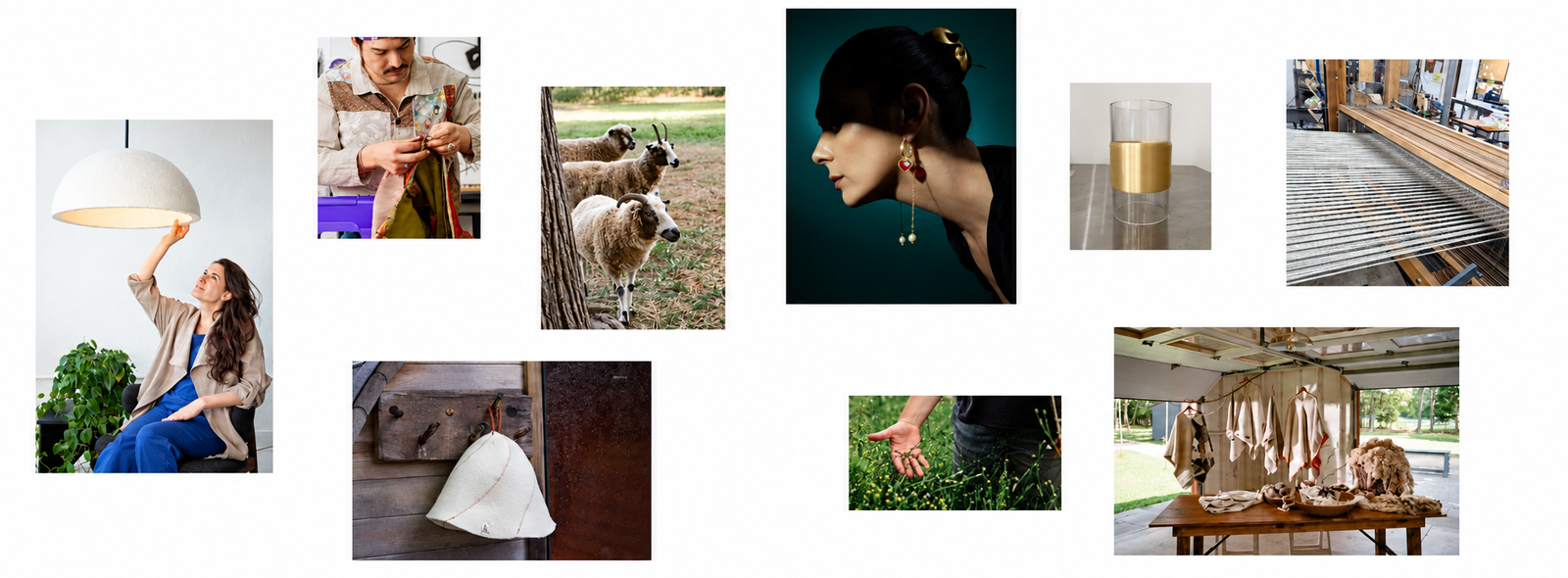
In Brooklyn, Luca Cera of Finiks Forge will extract keratin from wool waste generated by New York farms, mills and processors to develop regenerated fibers for yarn and other textiles. At Syracuse University, Li Jiang and Lihong Lao will convert low-grade wool into BioWool batting and liners for quilted garments and bags, bringing together design, engineering and student collaboration.
Other recipients are targeting specific consumer markets. Claire Moore of Brooklyn-based LowLou will expand the production and commercialization of sauna hats made from New York-grown and processed wool. In Mechanicville, Lisa Strubel of Flock & Loom will launch a limited-edition collection of proprietary patterned blankets made with wool grown and woven in the state.
Two further projects address sourcing. Claire Repsholdt of Hog Farm in Brookhaven will build a collaborative Long Island wool supply chain to turn locally raised fiber into artisanal home textiles. Delmar-based Kristi Wiedemann will study New York sheep farms to identify barriers to greater use of their wool and opportunities to expand certification of environmental land management practices.
Expanding the Material Mix
For Adrienne Carlile of Flax Fiber Farm in Cochecton, the priority is processing. She will adapt existing small-scale mill equipment to spin New York-grown flax and hemp, producing four prototype bast-fiber yarns and addressing a gap between cultivation and textile manufacturing.
In Brooklyn, Aradhita Parasrampuria of Cellsense will produce two commercial capsule collections featuring compostable algae-cellulose beads and embellishments. The project focuses on developing scalable, plastic-free alternatives to conventional sequins and beaded textiles.
Danielle Trofe of MushLume Lighting, also based in Brooklyn, will develop and test a mycelium-based acoustic wall system incorporating hemp, New York agricultural byproducts and regenerative wool. Her project extends the funding’s scope into interiors, with the aim of creating non-toxic, compostable acoustic materials.
Building Skills Through Practice
Education and workforce training are also central to the round. Mama Farm in Brookhaven will launch an immersive farm-to-fiber program connecting New York fashion and textile students with fiber animals, land stewardship, natural materials and the businesses involved in their production.
In Manhattan, Julian McCleary of The BAD JUJU Design will transform reclaimed and deadstock textiles from New York waste streams into upcycled apparel and accessories. Community sewing workshops and circular fashion education will accompany the work.
Flora Montes of Bronx Fashion NYC will expand Fashion Redefined, a hands-on program introducing Bronx youth to upcycling, ethical design, styling and creative career pathways.
Support Beyond the Grant
Recipients will have access to mentorship through NYFIC’s statewide consortium, which includes Rensselaer Polytechnic Institute, the Fashion Institute of Technology, SUNY Morrisville, Hudson Valley Textile Project, Made X Hudson and The Field to Fiber Company.
Additional resources include sourcing connections through the Northeast Fiber Exchange, opportunities to showcase work at industry events and business development support. NYFIC’s three-month accelerator covers customer discovery, business planning and go-to-market strategy.
The NYFIC Lab at Rensselaer Polytechnic Institute, scheduled to open to the public in fall 2026, will provide fiber and textile prototyping, testing and development facilities.
That combination of funding, technical resources and commercial guidance gives recipients support beyond the initial experiment, helping them pursue the next stages of production and market development.
Further information is available through NYFIC’s grant program.