


The Indian designer’s Arc Echo collection brings reclaimed textiles and traditional embroidery into contemporary fashion, while her reflections at the BRICS+ Fashion Summit examine the changing relationship between artificial intelligence and human creativity.
Indian designer Kanika Goyal is exploring the creative potential of textile reuse through Arc Echo, a collection that transforms upcycled denim into contemporary silhouettes enriched with traditional Indian embroidery. Presented at Moscow Fashion Week in September 2026, the collection reflects an approach in which existing materials and artisanal expertise become central to the design process rather than secondary considerations.
Originally introduced at London Fashion Week in February 2024, Arc Echo gained renewed attention following Goyal’s participation in the BRICS+ Fashion Summit in Moscow in October 2026, brought her views on artificial intelligence and craftsmanship into focus, highlighting a wider conversation about how fashion can embrace technological innovation while preserving the skills, cultural knowledge and creative judgement that underpin its production.
Reconstructing Materials, Rethinking Design
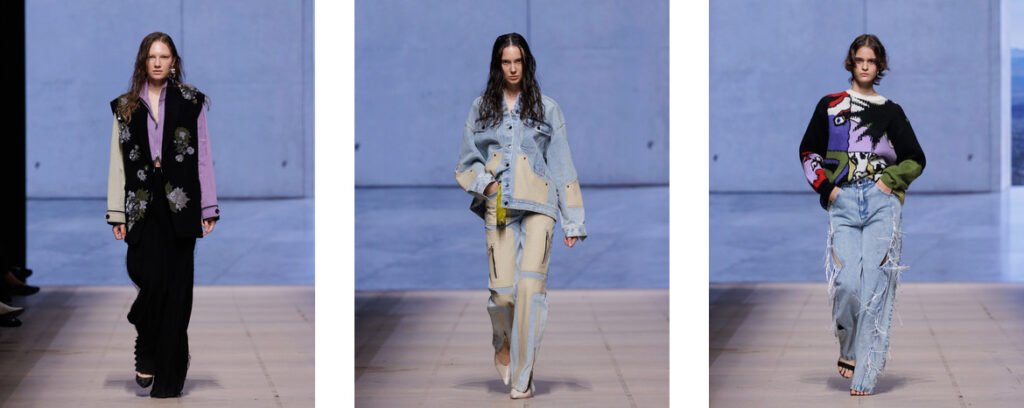
At the centre of Arc Echo is an exploration of memory, identity and transformation, expressed through unconventional construction and contrasting textile surfaces. Narrow strips of reclaimed denim are reassembled into jackets and trousers, while mosaic knitwear and interwoven fabrics contribute to the collection’s layered visual language. Hand embroidery completed by artisans in New Delhi introduces another dimension, connecting experimental silhouettes with established Indian textile techniques.
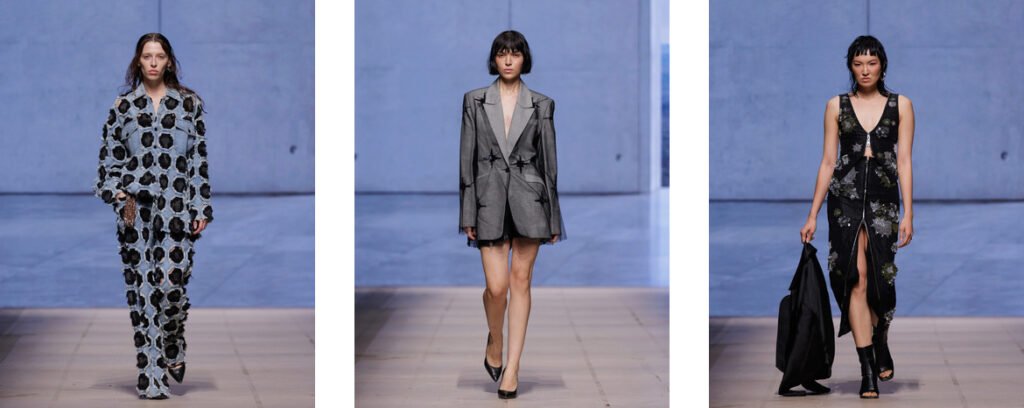
Rather than allowing the origins of its materials to dictate the aesthetic, Goyal integrates textile reuse into a broader contemporary design vocabulary. Reconstructed fabrics become part of the garments’ identity, demonstrating how existing resources can provide opportunities for creative experimentation without relying exclusively on newly manufactured textiles.
The approach also reflects practical challenges facing designers interested in circular production. Unlike conventional fabric sourcing, which typically depends on standardised materials available in predictable quantities, working with reclaimed textiles requires flexibility in construction and manufacturing. Variations in fabric composition, condition and availability can influence everything from pattern development to production consistency.
For independent labels, translating these techniques into commercially viable production requires reliable sourcing, technical expertise and careful cost management. Although Arc Echo demonstrates the design possibilities of reclaimed materials, publicly available information does not establish the proportion of upcycled textiles used across the collection or the extent to which these methods have been incorporated into KGL’s wider commercial operations.
Indian Craftsmanship Beyond Traditional Aesthetics
Goyal’s work also contributes to a broader conversation about the evolving role of Indian craftsmanship in contemporary fashion. Rather than reproducing traditional techniques within familiar silhouettes, the designer uses embroidery to create new relationships between materials, textures and construction.
Speaking about the label’s approach at the BRICS+ Fashion Summit, Goyal explained that the continued relevance of craftsmanship depends on its ability to evolve. She described how KGL combines hand embroidery with contemporary materials and silhouettes, arguing that this adaptation allows traditional skills to remain meaningful to younger generations.
Her perspective reflects a wider development within Indian fashion, where designers are increasingly interpreting established textile traditions through experimental forms and international design influences. These approaches are also changing how Indian craftsmanship is positioned within the global luxury market.
Sunil Sethi, Chairman of the Fashion Design Council of India (FDCI), highlighted this shift during the summit, pointing to designers including Anamika Khanna, Rahul Mishra, Falguni & Shane Peacock, and Sabyasachi, whose work brings traditional techniques into contemporary collections.
His comments underline the commercial opportunities associated with India’s textile heritage, particularly as international fashion audiences increasingly recognise the value of specialist craftsmanship. Yet maintaining these traditions requires more than their visibility on international runways. Long-term artisan livelihoods depend on fair remuneration, sustained demand and production relationships that recognise the economic value of skilled work.
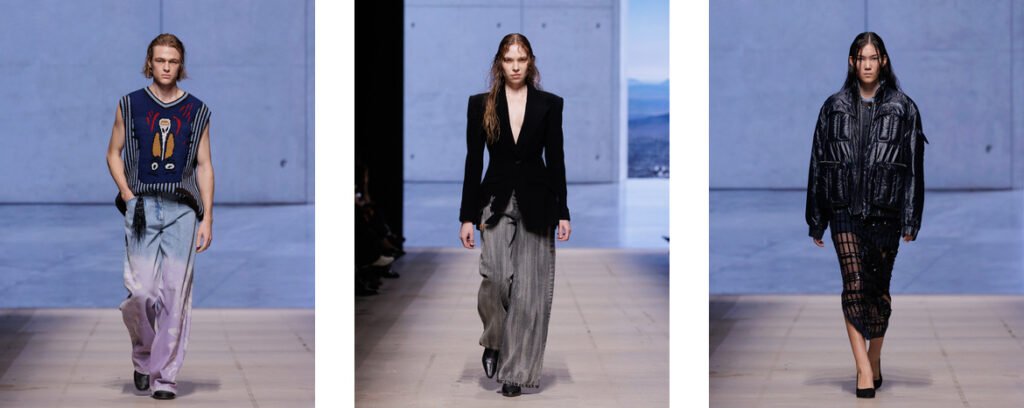
Within Arc Echo, embroidery demonstrates how established techniques can contribute to a contemporary design identity. The specific employment and remuneration arrangements behind the collection, however, have not been publicly detailed.
Artificial Intelligence and the Limits of Creative Automation
Beyond materials and craftsmanship, Goyal’s participation in the BRICS+ Fashion Summit introduced another dimension to the discussion: the growing influence of artificial intelligence on fashion design.
During a panel examining whether AI should be regarded as a creative partner or a tool, the designer discussed how digital technologies could help emerging labels explore concepts without the substantial initial investment traditionally associated with visualisation, photography and specialist 3D development.
For smaller fashion businesses, these tools could make early-stage experimentation more accessible, allowing designers to assess ideas before committing resources to physical sampling.
The distinction is particularly relevant to collections involving reclaimed materials and artisanal production, where decisions depend on an understanding of fabric behaviour, garment construction and the physical processes of making. While artificial intelligence can generate visual possibilities, translating those ideas into functional garments requires technical knowledge and practical experience.
Goyal’s position reflects an emerging debate within fashion about the boundaries of automation and authorship. As AI becomes more accessible, designers must determine how to incorporate it into their workflows without surrendering the creative decisions that distinguish their work.
The challenge extends beyond efficiency. Technologies capable of reproducing visual references also raise questions about originality, intellectual property and the protection of culturally specific design traditions. For an industry increasingly interested in preserving craftsmanship, these concerns are likely to become more significant as digital design systems evolve.
From the Runway to Responsible Production
The presentation of Arc Echo at Moscow Fashion Week, through a collaboration involving FDCI, offered Goyal another international platform for a collection first introduced two years earlier. Its renewed visibility comes as Indian designers are gaining recognition for approaches that combine cultural knowledge with contemporary experimentation.
For the wider industry, the significance of collections such as Arc Echo extends beyond their creative use of existing materials. Textile reuse may reduce dependence on virgin resources in specific applications, but its environmental benefits depend on sourcing, processing, durability and production scale. Similarly, the incorporation of traditional craftsmanship raises questions about the economic structures supporting the people responsible for its execution.
These considerations are particularly important for independent designers balancing experimentation with commercial realities. Alternative materials and specialised production techniques can establish a distinctive creative identity, but their long-term viability depends on consistent supply, transparent practices and sustainable business relationships.
Goyal’s work illustrates how reclaimed denim, artisanal embroidery and contemporary construction can coexist within a collection without making sustainability its defining visual statement. It also points to a wider opportunity for Indian fashion: developing new design languages from existing resources and inherited expertise while responding to the technological and commercial demands of a changing industry.
The question is no longer simply whether traditional craftsmanship and material innovation belong in contemporary fashion, but how designers can build production models that allow both to remain relevant beyond the runway.
Further information: Kanika Goyal Label · Fashion Design Council of India · BRICS+ Fashion Summit