
At the Musée des Arts Décoratifs in Paris, an exhibition brings together four designers whose residencies in Japan have shaped new approaches to materials, craftsmanship and contemporary design. From bamboo sculpture and experimental textile pigments to incense rituals and architectural jewellery, their work explores how traditional knowledge can inform contemporary creative practice
The exchange between traditional craftsmanship and contemporary design is increasingly moving beyond questions of preservation towards new forms of experimentation. At the Musée des Arts Décoratifs in Paris, Paris > Kyoto > Paris. Quatre designers de retour du Japon examines this relationship through the work of four French designers whose residencies at Villa Kujoyama in Kyoto have informed distinct approaches to materials, techniques and artistic production.
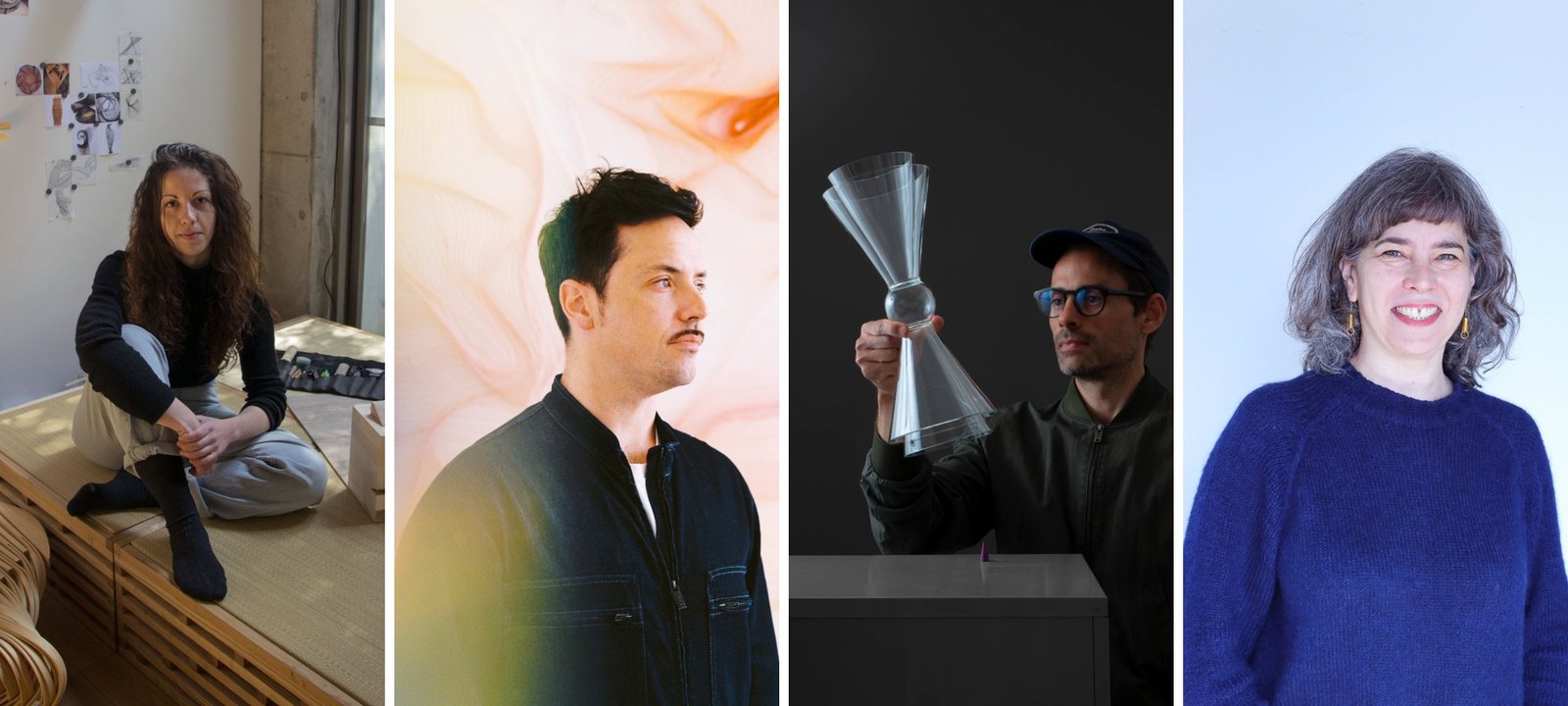
Running from 10 September 2026 to 3 January 2027, the exhibition brings together approximately 20 works and installations by Nina Fradet, Tony Jouanneau, Felipe Ribon and Marion Vidal. Presented throughout the museum’s permanent galleries, their projects draw on Japanese traditions ranging from bamboo weaving and textile binding to incense rituals and the tea ceremony. Rather than reproducing established forms, the designers reinterpret these practices through disciplines including architecture, fashion, biology and contemporary art, exploring how inherited knowledge can contribute to new creative languages.
Organised in conjunction with Paris Design Week, the exhibition forms part of the museum’s Sur invitation / Designprogramme, launched in 2025 to support emerging creative practices and encourage dialogue between contemporary design and historical collections. Curated by Juliette Pollet, curator responsible for modern and contemporary collections from 1960 onwards, alongside Julia Balduini and Marianne Brabant, the presentation places cultural exchange and technical experimentation at the centre of its curatorial approach.
Four Practices at the Intersection of Craft and Contemporary Design
The exhibition examines how specialised knowledge is transmitted, adapted and transformed across cultural and disciplinary boundaries. Each designer approaches Japanese craftsmanship from a different perspective, translating techniques and rituals encountered during their residency into works that reflect their individual artistic practice.
Nina Fradet explores the structural and expressive possibilities of natural materials through sculpture. Trained in cabinetmaking at École Boulle in Paris, she has developed an approach combining traditional Japanese bamboo weaving, known as takezaiku, with European woodworking techniques. Her 2024 residency at Villa Kujoyama expanded this investigation, particularly through the relationship between material structures and the human body.
Her project, Burnt Flesh. Mémoire du corps et anatomie de ses fibres, comprises six sculptures and ten drawings inspired by the fibrous networks of human musculature. Drawing on anatomical illustrations by Frank H. Netter, Fradet translates the tensions and interconnections of muscle tissue into intricate structures of charred and woven wood. The works connect anatomical observation with traditional craft techniques, including references to dorozome, a Japanese dyeing process involving plant tannins and iron-rich mud.
Tony Jouanneau’s contribution takes the exhibition into the field of experimental textile design. His ECHIRO series emerged from research conducted with Marie Albéric, a CNRS researcher at Sorbonne Université, into natural pigments extracted from sea urchin skeletons and spines. Developed further during his 2023 residency at Villa Kujoyama, the project investigates how marine-derived colourants can be incorporated into textile dyeing and sculptural fabric treatments.
Working with Hiroaki Kuno, a master of shibori at Kunosen Factory in Arimatsu, and textile artisan Harumi Sugiura, Jouanneau combined experimental pigments with Japanese techniques of binding, folding and pleating. The resulting silk works draw inspiration from the topography and ecosystems of the Japanese archipelago, translating scientific research and artisanal expertise into layered textile surfaces.
The first artwork in the ECHIRO series was presented at Collectible Design Fair in Brussels in 2025 through Aleor Craft & Biodesign, founded by Nathalie Guiot. Its inclusion in the Paris exhibition places the project within a wider examination of how scientific experimentation and traditional craftsmanship can intersect in contemporary material design.
Jouanneau’s research extends beyond ECHIRO. Since 2017, he has developed Atelier Sumbiosis, a textile finishing laboratory investigating biological approaches to colour and surface treatment, including microalgae-based dyeing, patterns generated through insect activity and bacterial printing on fabrics. His practice has also attracted commissions and collaborations associated with luxury houses including Dior, Hermès and Boucheron, demonstrating the relevance of experimental craftsmanship to the luxury sector.
In 2024, Jouanneau received the Grand Prix de la Création de la Ville de Paris in the Prix Engagement Métiers d’Artcategory, recognising his approach to craftsmanship and responsible creation. Although his research suggests possibilities for alternative textile processes, ECHIRO remains an experimental artistic application rather than a commercially established replacement for conventional industrial dyeing.
Felipe Ribon approaches Japanese craftsmanship through sensory experience and the cultural significance of incense. Trained in environmental engineering before graduating from ENSCI–Les Ateliers, the designer and photographer has developed a practice examining how objects influence perception and interaction with their surroundings.
During his 2017 residency at Villa Kujoyama, Ribon studied Japanese incense traditions and their associated rituals. His sculptural incense burners, including Stardust II (2024), are designed to diffuse multiple fragrances simultaneously. Within blown-glass structures, streams of smoke interact and circulate, producing changing olfactory compositions. Presented in dialogue with the museum’s medieval collections, the works connect contemporary sensory design with historical practices of fragrance and contemplation.
Marion Vidal brings the exhibition closer to the relationship between fashion, jewellery and architecture. Having studied architecture in Paris and Milan before pursuing fashion and accessories at the Royal Academy of Fine Arts Antwerp, Vidal established her eponymous label in 2005. Her practice examines jewellery as both a wearable object and a form of spatial and sensory expression.
During her 2025 residency at Villa Kujoyama, Vidal explored bamboo craftsmanship and Japanese ceremonial practices, particularly the tea ceremony, or chanoyu. Her project, Cérémonie du bijou, translates these observations into an installation examining the everyday rituals associated with jewellery: selecting, wearing, adjusting, removing and storing personal adornments.
Combining elements of a screen, dressing table and architectural display, the installation creates a dedicated space in which jewellery retains significance beyond the moment it is worn. Accompanied by jewellery pieces and preparatory research, the project considers how objects acquire meaning through repeated gestures and their relationship with the body and domestic environment.
The Value of Cultural Exchange in Material Innovation
Together, the four designers present Japanese craftsmanship not as a fixed aesthetic tradition but as a body of technical and cultural knowledge capable of informing contemporary creative practice. Their projects move between sculpture, textiles, sensory objects and jewellery, demonstrating how sustained engagement with traditional techniques can generate new approaches to form, material and function.
Villa Kujoyama has played a central role in facilitating these exchanges. Located in Kyoto, the residency is part of France’s international cultural cooperation network and operates under the Institut français du Japon in coordination with the Institut français, with principal support from the Fondation Bettencourt Schueller. Its programme enables artists and designers to develop research through direct engagement with Japanese craftspeople, institutions and cultural practices.
The exhibition also raises questions about the relationship between experimentation and commercial application. Jouanneau’s use of sea urchin-derived pigments, for example, illustrates the creative possibilities of biological materials, although their environmental performance and potential for industrial adoption would require further assessment. Similarly, Fradet’s sculptural investigations and Vidal’s reinterpretation of jewellery rituals demonstrate how traditional techniques can acquire new relevance without necessarily being translated into mass production.
For the fashion and design industries, these projects offer a perspective on innovation that extends beyond technological development. They suggest that material research can benefit from the knowledge embedded in established craft traditions, particularly when scientific enquiry and contemporary design are supported by sustained collaboration with specialist practitioners.
By bringing these works into dialogue with its permanent collections, the Musée des Arts Décoratifs places contemporary experimentation within a longer history of making and material culture. Paris > Kyoto > Paris ultimately presents cultural exchange as a process of transformation, in which inherited techniques are neither replicated nor abandoned but reinterpreted to address new artistic and material questions.
Paris > Kyoto > Paris. Quatre designers de retour du Japon is on view until 3 January 2027 at the Musée des Arts Décoratifs, 107 rue de Rivoli, Paris. Further information is available on the museum’s official website