Using seaweed, mushrooms, lichen and other organic materials, the Dutch fashion artist explores the possibilities of wearable sculpture and the relationship between design, nature and material value.
Fashion’s exploration of alternative materials is increasingly extending beyond conventional textiles. While much of the industry’s attention remains focused on developing commercially viable fibres and reducing the environmental impact of production, artists working at the intersection of fashion and material experimentation are pursuing a different set of questions: what makes a material suitable for clothing, and how might its natural properties influence design?.
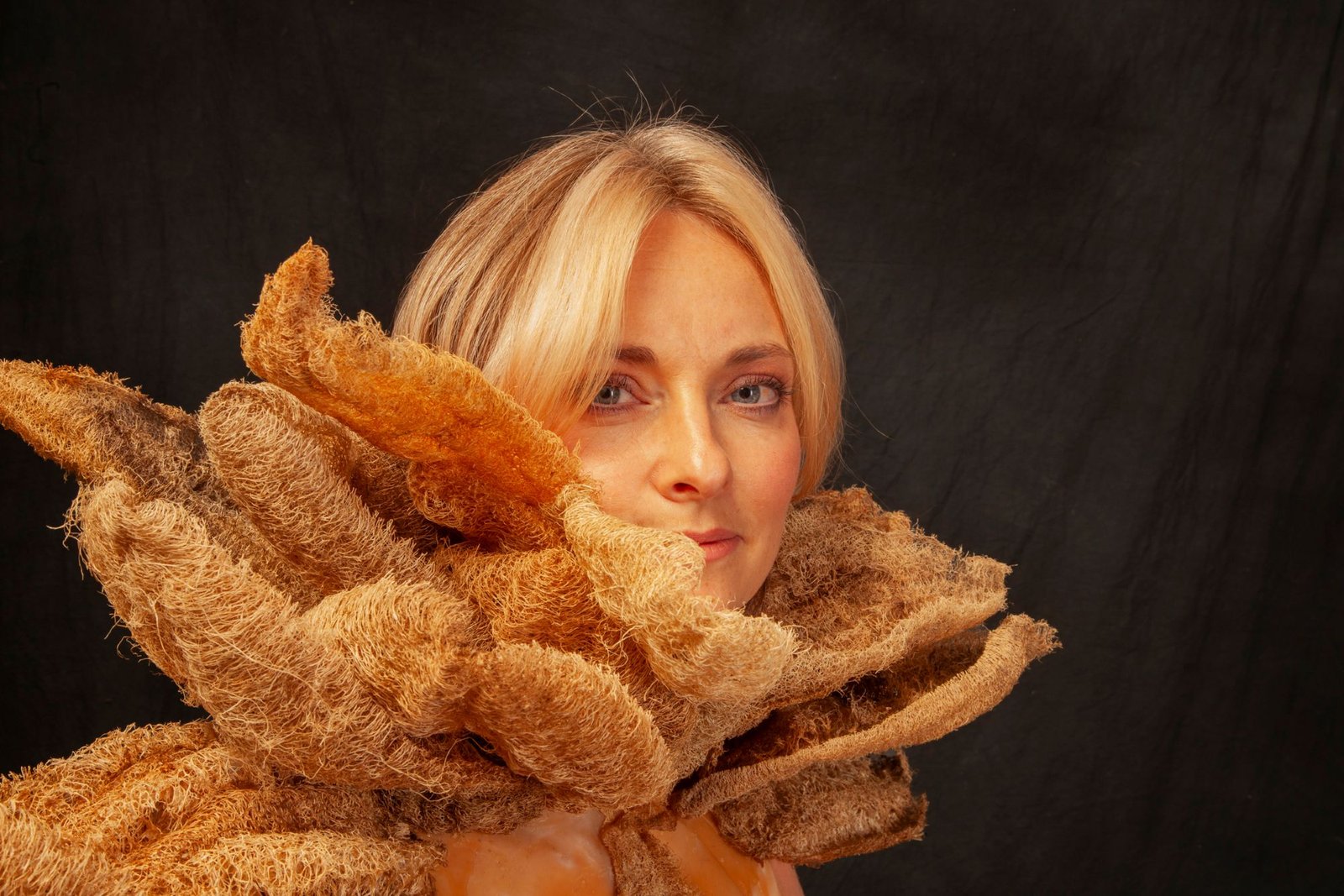
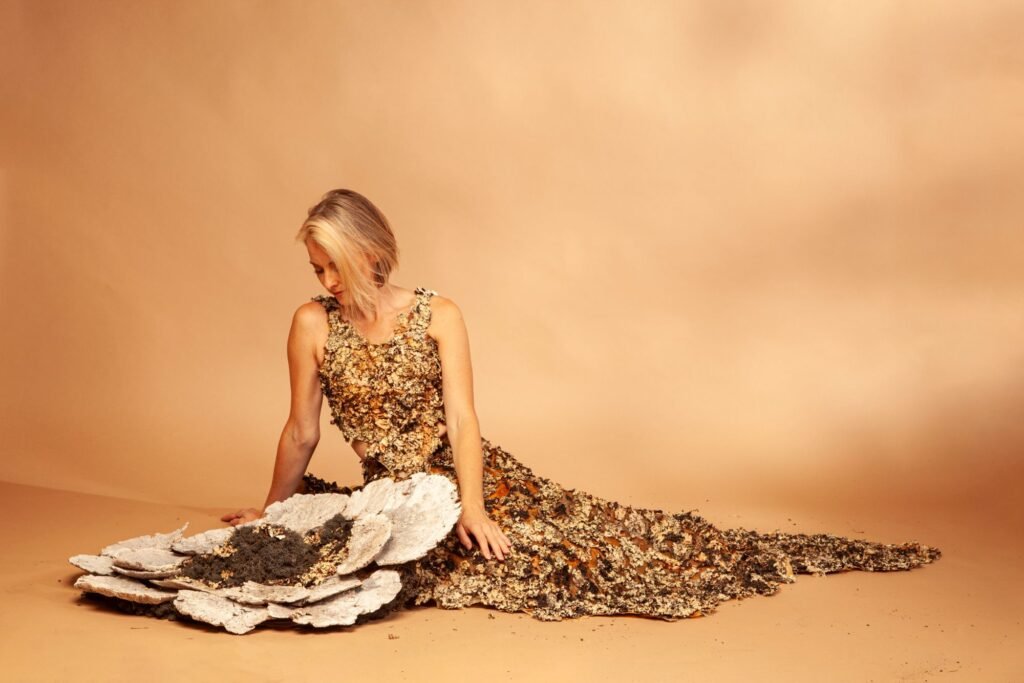
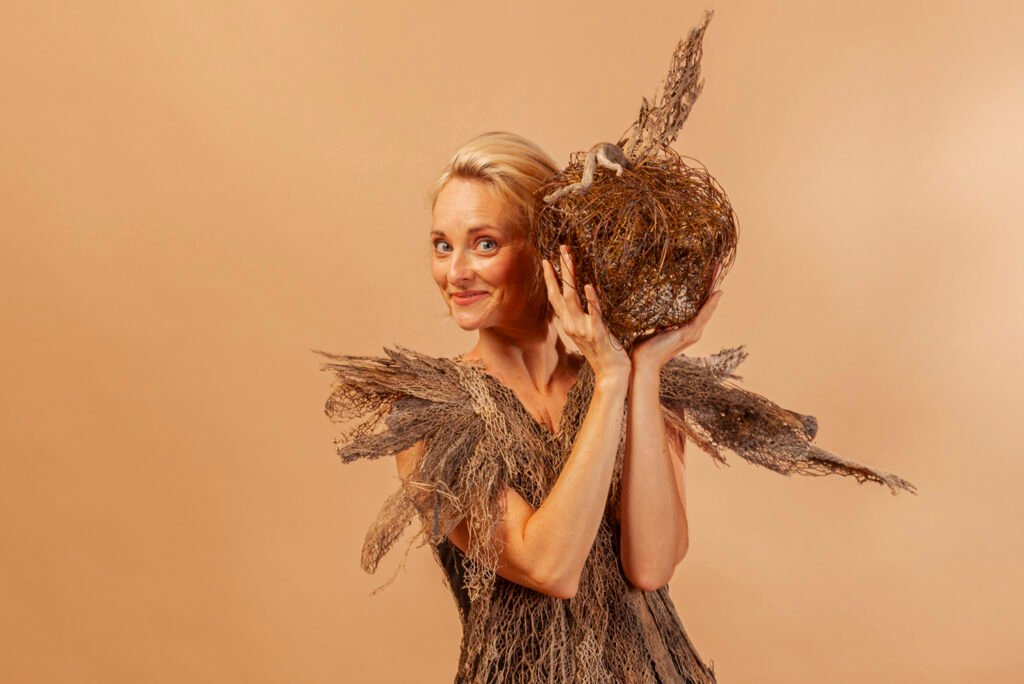
Dutch fashion artist Agnes van Dijk approaches these questions through BioArtFashion, a series of sculptural wearable artworks created from seaweed, mushrooms, lichen and other organic residual materials. Combining experimental preservation techniques with an interest in ecological relationships, the project challenges conventional distinctions between clothing, sculpture and materials typically regarded as waste.
Rather than disguising their origins or attempting to imitate traditional fabrics, Van Dijk allows the textures, structures and irregularities of organic matter to inform her creations. The resulting works reflect an approach to fashion in which the characteristics of the material are central to both the design process and its artistic expression.
Where Biology Meets Wearable Art
The conceptual foundation of BioArtFashion lies in the interconnectedness of natural ecosystems. Drawing inspiration from the largely invisible networks associated with fungi and other organisms, Van Dijk explores the relationships between humans, plants, animals and their environments. These biological connections provide a framework for the project, informing how natural materials are brought together and transformed into wearable forms.
The choice of materials is central to this exploration. Seaweed, mushrooms and lichen are not ordinarily associated with durable clothing, largely because of their vulnerability to environmental conditions and natural decomposition. Their use requires an approach that differs considerably from established textile practices, where consistency, predictable performance and standardised processing are fundamental to production.
BioArtFashion is best understood as an artistic investigation into material possibilities.
Van Dijk has developed a non-toxic preservation technique which, according to the project’s press materials, enables organic materials to remain flexible, skin-friendly and repairable while retaining their original characteristics. Each work emerges through a labour-intensive process of collecting, preserving and experimenting by hand, with the behaviour of individual materials influencing the final construction.
The technique allows Van Dijk to work with substances that would otherwise be difficult to incorporate into wearable objects. rather than a commercially validated alternative to conventional textiles.
Rethinking Material Value
Beyond its experimental construction, BioArtFashion questions how materials acquire value and why some are routinely dismissed as unsuitable for further use. Organic residual matter, often associated with deterioration or disposal, becomes the foundation of objects requiring considerable artistic attention and manual craftsmanship.
This transformation carries particular relevance within fashion, where material selection is shaped not only by functionality but also by perceptions of quality, desirability and commercial worth. By working with substances outside established textile supply chains, Van Dijk challenges the assumption that a material’s value depends on its compatibility with conventional manufacturing processes.
The project also introduces a tension between preservation and the natural life cycle of organic matter. Seaweed, fungi and lichen are subject to biological processes of growth and decomposition, yet Van Dijk intervenes in those processes to create objects intended to retain their form. Her work consequently raises questions about permanence in design and the extent to which natural materials can be adapted for human use without losing the characteristics that make them distinctive.
In an industry where the replacement of products remains closely tied to commercial growth, the possibility of maintaining and repairing an object offers a different perspective on longevity.
Repairability adds another dimension to this discussion. In an industry where the replacement of products remains closely tied to commercial growth, the possibility of maintaining and repairing an object offers a different perspective on longevity. For Van Dijk, preservation becomes part of the creative process itself, rather than simply a technical consideration applied after a piece has been completed.
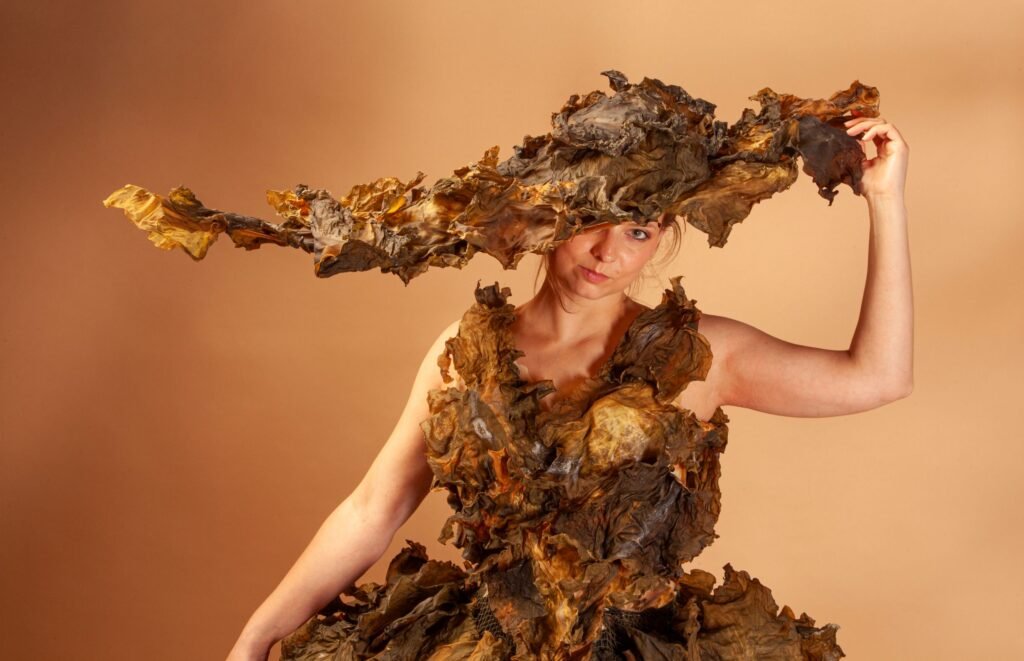
The result is a body of work that addresses consumption and disposability through material transformation rather than through the familiar visual language of environmental campaigning. Its critique emerges from the objects themselves: materials ordinarily considered temporary or expendable are given a new context through craftsmanship and artistic interpretation.
Beyond the Conventional Definition of Fashion
BioArtFashion occupies a space in which the boundaries between clothing and art become less clearly defined. The works are constructed to be wearable, yet their purpose extends beyond the practical requirements of everyday dress. Their sculptural forms serve as expressions of ecological relationships, inviting viewers to consider the biological origins of the materials and the processes involved in their transformation.
Van Dijk’s work demonstrates the value of that freedom. By allowing organic matter to determine aspects of form and construction, she explores a design process that responds to the properties of materials rather than requiring them to conform to predetermined expectations.
This distinction is important when considering the project’s place within wider developments in material innovation. Commercial textile research must ultimately address questions of performance, production capacity, cost and market adoption. Artistic experimentation operates under different conditions, allowing creators to investigate possibilities without the immediate requirement to produce a standardised or commercially viable product.
Van Dijk’s work demonstrates the value of that freedom. By allowing organic matter to determine aspects of form and construction, she explores a design process that responds to the properties of materials rather than requiring them to conform to predetermined expectations.
The project does not present a comprehensive solution to fashion’s environmental challenges. Its contribution lies instead in expanding the conversation about what fashion materials can be, how they are valued and the relationship between creative practice and the natural systems from which those materials originate.
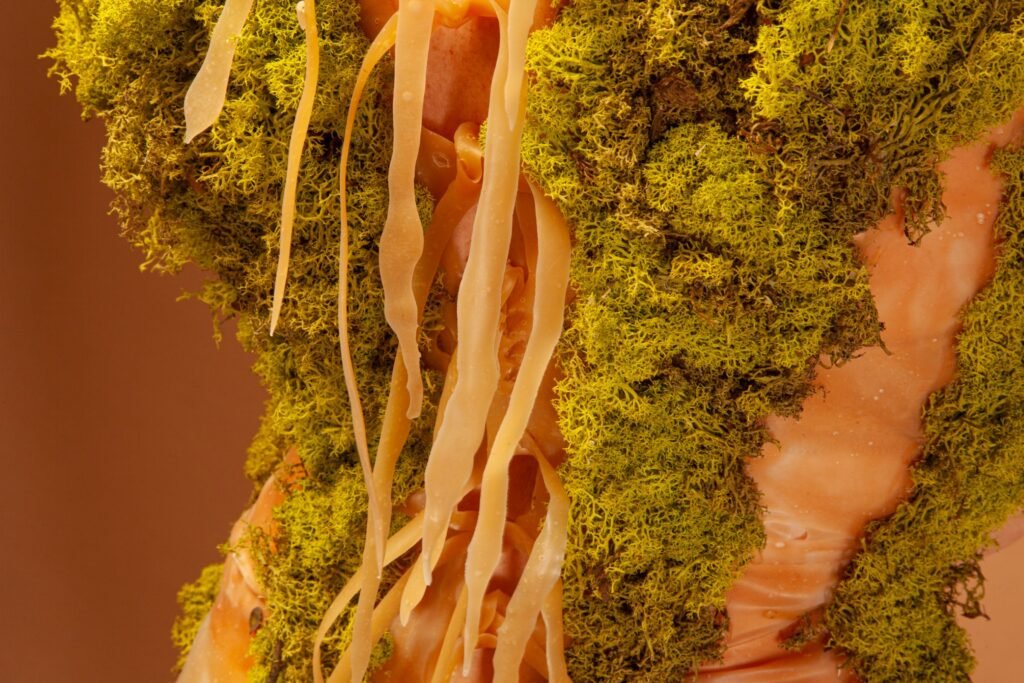
Through BioArtFashion, Agnes van Dijk places material experimentation at the centre of an artistic practice concerned with ecological interdependence and the consequences of disposability. Her wearable sculptures suggest that reconsidering fashion’s relationship with nature may begin not with the invention of entirely new materials, but with a closer examination of those already around us.
For more information about Agnes van Dijk and her work, visit her official website or explore the BioArtFashion project. The project is also featured at Dutch Design Week 2026, taking place from 17 to 25 October in Eindhoven, the Netherlands.
Photography: François Eyck. Project information: Agnes van Dijk ModeKunst FashionArt.