At Lisbon’s Museu do Design, two exhibitions challenge conventional perceptions of jewellery, tracing its evolution from a field of artistic experimentation to a medium for questioning humanity’s relationship with nature, technology and the wider world.
Jewellery has long occupied an ambiguous position between fashion, craftsmanship and fine art. Its proximity to the body, association with personal identity and historical ties to luxury have often defined how it is perceived and valued. Yet contemporary jewellery has developed a language that extends far beyond ornament, challenging established ideas about materials, function and the cultural significance of objects.
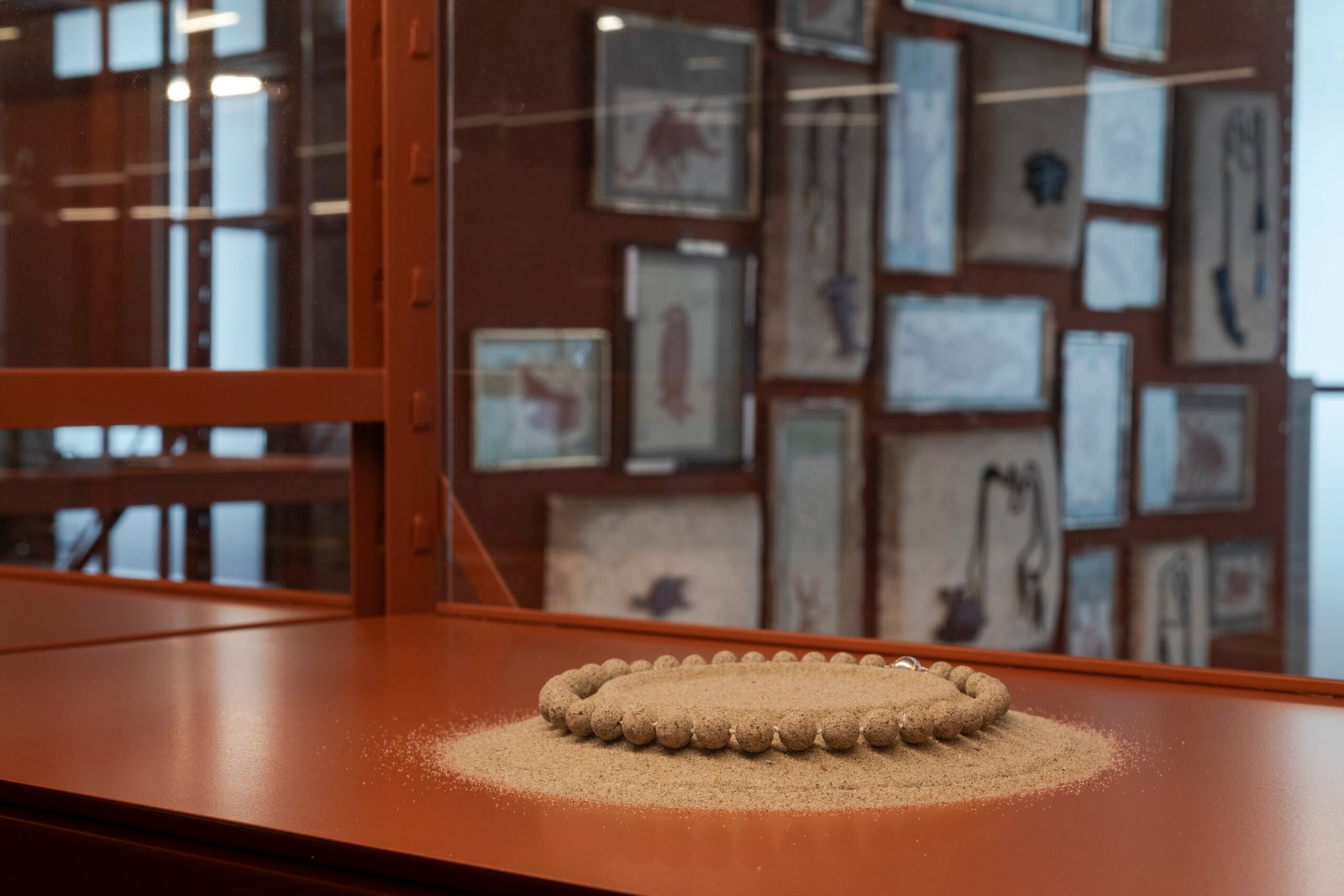
At MUDE – Museu do Design in Lisbon, two exhibitions bring this broader understanding of jewellery into focus. Tereza Seabra Collection. Contemporary Jewellery and Coexistences — Jewellery and the Beauty of the World, on view until 31 January 2027, approach the discipline from different perspectives: one through the legacy of artistic experimentation and collecting, the other through the ecological, technological and cultural questions confronting contemporary society.
Presented in conjunction with the third Lisbon Contemporary Jewellery Biennial, the exhibitions offer more than a survey of jewellery as an artistic practice. They invite a reconsideration of what jewellery can communicate, how objects acquire meaning and whether design can help reshape the relationship between human activity and the natural world.
Tereza Seabra and the Evolution of Jewellery as an Art Form
For much of its history, jewellery has been understood through the value of its materials, the refinement of its craftsmanship and its relationship with the wearer. Contemporary jewellery has increasingly challenged these conventions, shifting attention towards artistic intention, experimentation and the expressive possibilities of form.
Tereza Seabra has played a significant role in this evolution. Born in 1944, the Portuguese artist, educator, researcher and gallery owner has spent decades engaging with contemporary jewellery, assembling a private collection that reflects the discipline’s expanding creative vocabulary since the late 1960s.
Her decision to donate the collection to the Municipality of Lisbon, for inclusion in MUDE’s holdings, carries significance beyond the transfer of individual artworks. It contributes to the institutional recognition of a discipline that has historically moved between the worlds of applied arts, design and contemporary artistic practice.
MUDE’s commitment to contemporary jewellery dates back to a museological vision first outlined in 2011, which materialised in 2019 with the establishment of Portugal’s first public collection dedicated to the field. Seabra’s donation builds on that foundation, bringing an extensive body of work into the public sphere and reinforcing the importance of preserving jewellery’s artistic and cultural history.
The collection comprises 346 works by 196 artists, including 84 Portuguese and 112 international practitioners. Rather than constructing a conventional chronological account, the exhibition is organised into twelve sections that connect works through shared qualities of colour, scale, materiality, form, technique and typology.
This approach shifts attention away from individual objects as isolated expressions of craftsmanship and towards the relationships between different artistic practices. Materials and techniques become part of a wider visual dialogue, revealing how jewellery can operate as an experimental medium rather than a category defined by preciousness or commercial value.
Equally important is the relationship between the object and the body. Unlike sculpture or other forms of visual art, jewellery is frequently conceived in direct relation to human movement, scale and physical presence. Its meaning can change when worn, introducing an intimate dimension to the encounter between artistic intention and personal expression.
Curated by Manuel Castro Caldas, Marta Costa Reis and Tereza Seabra, with exhibition design by Fernando Brízio in collaboration with Diogo Dias João, the exhibition is accompanied by a bilingual catalogue. Its wider significance lies not only in the breadth of the collection, but in the recognition of contemporary jewellery as a field with its own artistic history, intellectual foundations and cultural relevance.
Coexistences: When Jewellery Becomes a Conversation About the Planet
If the Tereza Seabra collection examines how contemporary jewellery has developed its artistic identity, Coexistences – Jewellery and the Beauty of the World asks what that identity might contribute to the present.
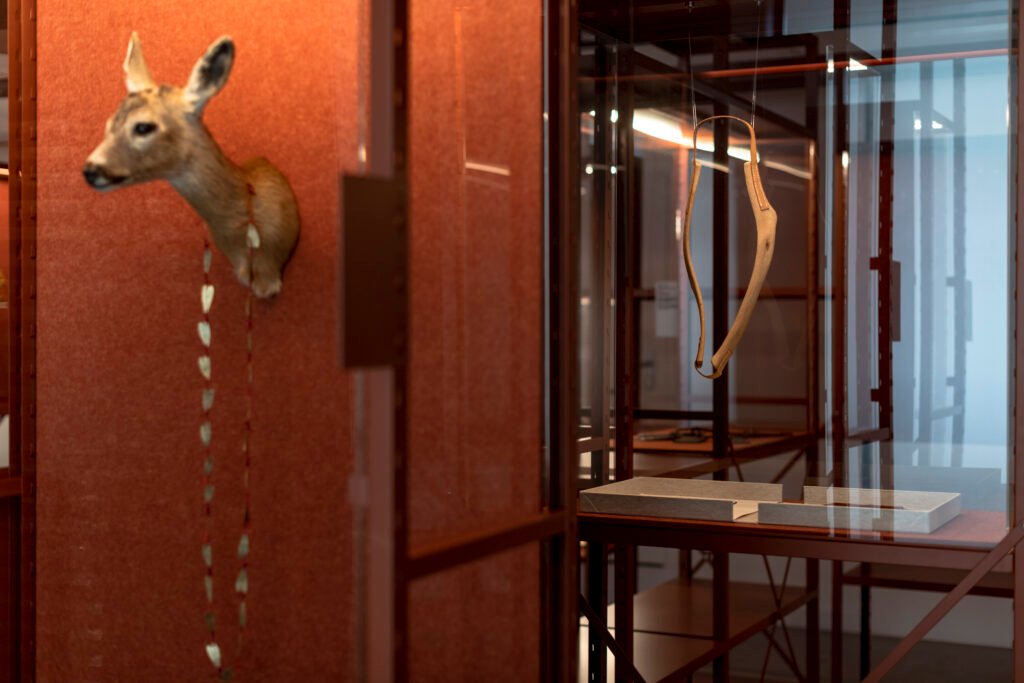
The principal exhibition of the third Lisbon Contemporary Jewellery Biennial, organised by PIN – Portuguese Contemporary Jewellery Association and MUDE, brings together 156 works by 70 artists. Curated by Marta Costa Reis and Patrícia Domingues, with exhibition design by Miguel Vieira Baptista, it places jewellery within a much wider conversation about ecology, technology, cultural knowledge and the relationship between human beings and the natural world.
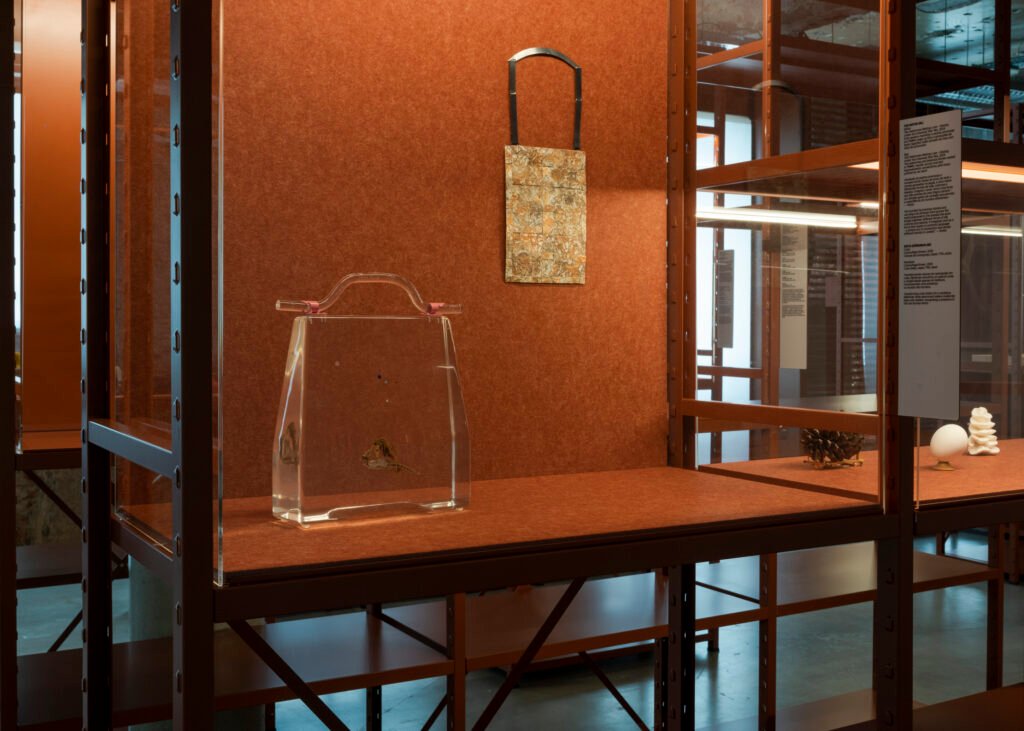
At the centre of Coexistences is a challenge to the idea that humanity exists independently of nature. Its curatorial framework draws on ecological systems, artificial intelligence, global networks and Indigenous knowledge systems to examine the interconnections shaping a world undergoing environmental and technological transformation.
The exhibition’s engagement with the climate crisis is particularly significant. Rather than approaching environmental responsibility solely through the familiar language of sustainable materials or production methods, it raises a more fundamental question: how might design change if nature were understood not as a resource to be controlled, but as a system of which humanity is an inseparable part?
This distinction moves the conversation beyond the conventional boundaries of sustainable design. In an industry where environmental progress is frequently measured through material substitution, resource efficiency and circular production, Coexistences introduces a philosophical dimension, examining the assumptions that determine how objects are created, consumed and valued.
The concept of interspecies solidarity is central to this perspective. By extending ethical consideration beyond human needs, the exhibition proposes a more expansive understanding of design responsibility, one that recognises the relationships between different forms of life and the environments they share.
The inclusion of Indigenous ways of knowing adds another dimension to this discussion, bringing alternative understandings of nature and coexistence into conversation with artificial intelligence and global technological networks. Their juxtaposition raises questions about whose knowledge informs contemporary design and how different cultural perspectives might contribute to rethinking humanity’s relationship with the planet.
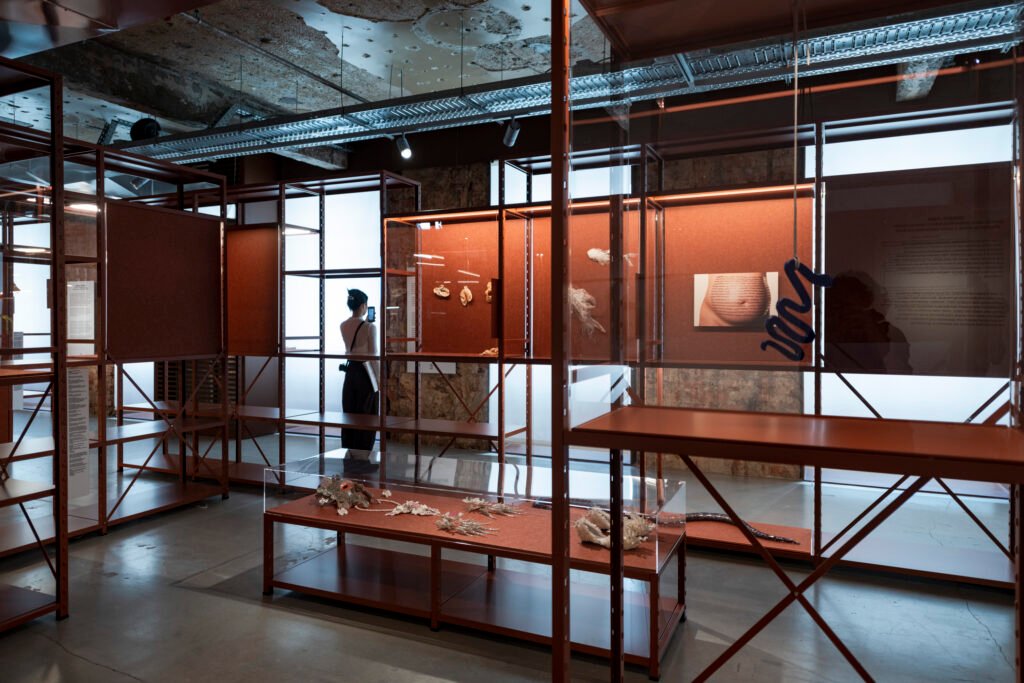
For fashion, jewellery and the wider creative industries, these ideas are especially relevant at a time when sustainability is increasingly discussed through technical innovation, regulatory requirements and commercial commitments. Such developments remain important, but they do not necessarily address the cultural attitudes that underpin patterns of production and consumption.
Coexistences offers a different point of entry. It considers design not simply as a means of producing better objects, but as a practice capable of questioning the values and relationships that shape the material world. Its environmental relevance lies in this critical framework rather than in any universal claim about the sustainability of the works on display.
The exhibition also demonstrates how contemporary jewellery can engage with subjects that might initially appear far removed from adornment. By bringing ecological thought, cultural knowledge and technological change into the same curatorial conversation, it expands the intellectual territory of a discipline traditionally associated with objects of intimate scale.
Viewed together, the two exhibitions reveal a compelling tension between jewellery’s history and its contemporary possibilities. Seabra’s collection documents the artistic experimentation that helped establish jewellery as a recognised design discipline, while Coexistences examines how that creative freedom can be directed towards questions extending beyond the object itself.
At MUDE, the significance of contemporary jewellery is therefore not confined to what is worn, displayed or collected. It lies increasingly in what these objects can reveal about the societies that produce them, the cultural values they embody and the relationships between humanity and the world it inhabits.
Tereza Seabra Collection. Contemporary Jewellery and Coexistences – Jewellery and the Beauty of the World are on view at MUDE – Museu do Design, Rua Augusta 24, Lisbon, until 31 January 2027. Further information is available at www.mude.pt