Returning to Accra on 25 October, the Obroni Wawu October Festival brings together independent makers, secondhand fashion and creative enterprise for its fifth-anniversary edition, The Upcycling Bazaar.
As the global fashion industry continues to debate how to scale circular business models, Ghana’s Kantamanto Market offers a perspective grounded in decades of practical experience. Through an extensive network of traders, tailors, repairers and independent makers, garments discarded elsewhere are given new commercial and creative value. This October, the community’s contribution to fashion’s circular economy takes centre stage as the Obroni Wawu October (OWO) Festival celebrates its fifth anniversary.
Scheduled for 25 October 2026 at Untamed Empire in Accra, The Upcycling Bazaar will bring together thrift vendors, upcycling businesses and local creatives for a celebration of fashion, culture and commerce. Presented in partnership with Untamed Empire and powered by The Or Foundation, the event reflects a growing effort to recognise the people and skills sustaining Ghana’s secondhand clothing economy.
The anniversary comes at a time when circularity has become a strategic priority for fashion businesses worldwide. Yet while brands invest in resale platforms, recycling technologies and alternative production systems, markets such as Kantamanto demonstrate that garment reuse is already embedded in established commercial networks, supported by specialised labour and local entrepreneurship.
Kantamanto and the Economics of Clothing Reuse
Located in Accra, Kantamanto is one of the world’s most significant secondhand clothing markets and an important destination for garments entering Ghana through international trade.
Within the market, imported clothing passes through multiple stages of sorting, resale, alteration and repair. Traders assess the quality and commercial potential of individual pieces, while tailors and other skilled workers adapt garments to meet local demand. Designers and upcycling businesses also draw on these existing materials to create products that would otherwise require new textile inputs.
This network illustrates an often-overlooked dimension of circular fashion: the economic infrastructure required to keep clothing in use.
Although resale and upcycling are increasingly positioned as innovations within the international fashion industry, they have long formed part of Kantamanto’s everyday commercial activity. The market’s workers possess practical knowledge of material quality, garment construction and consumer preferences, enabling clothing to retain value beyond its original ownership.
However, the system also exposes the inequalities embedded in global textile flows. Not every imported garment can be resold or repaired, leaving local communities to manage the consequences of excess clothing production and disposal elsewhere.
For The Or Foundation, whose work focuses on textile circularity and environmental justice, recognising the contributions of Kantamanto’s workers is inseparable from addressing these wider challenges.
The Upcycling Bazaar: Where Design Meets Enterprise
For its fifth-anniversary edition, OWO is expanding its collaboration with Untamed Empire to create what organisers describe as the festival’s largest upcycled and thrift fashion experience to date.
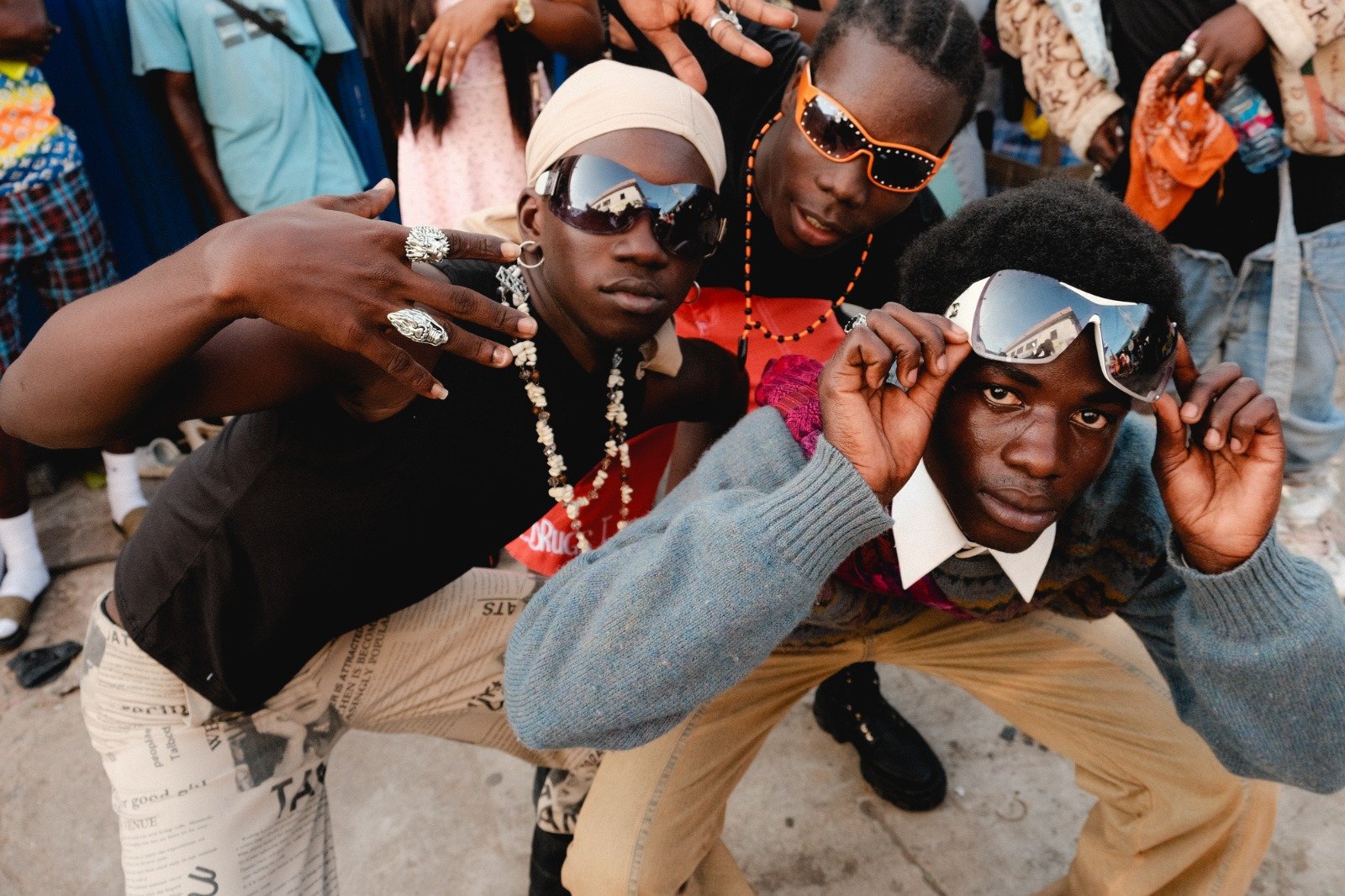
The Upcycling Bazaar will offer visitors the opportunity to discover independent makers, shop one-of-a-kind pieces and explore fashion created through reuse and reconstruction. The programme will also bring together music, food and cultural activities, reflecting the influence of Kantamanto beyond the secondhand clothing trade.
Its significance lies not simply in promoting secondhand fashion as a consumer choice, but in highlighting the businesses and individuals responsible for making reuse possible.
For emerging designers, working with existing garments can provide both a creative framework and an alternative approach to sourcing materials. Upcycling requires an understanding of garment construction, fabric characteristics and the possibilities of transforming previously manufactured clothing into new designs.
Unlike conventional production, where materials can often be ordered to predetermined specifications, designing with recovered garments introduces constraints that can shape the final product. The availability, condition and composition of each piece become part of the creative process.
Events such as OWO also create opportunities for small businesses to connect directly with consumers. By bringing independent makers and thrift entrepreneurs into a shared marketplace, the festival places commercial activity alongside cultural expression.
A Month of Community-Led Activities
The main festival forms the culmination of a wider October programme marking five years of OWO. Activities began with Kayayei Night on 3 October, followed by the OWO Block Party on 4 October. On 10 October, the festival collaborated with Tide Turners on a beach cleanup, extending its programme into environmental action.
Further activities included Shop for OWO-Day on 11 October and the OWO x Kanta Health Walk on 18 October, reflecting the organisers’ emphasis on community participation alongside fashion and commerce.
Ahead of Sunday’s festival, OWO will host Circle Talk: Remade in Ghana on Saturday, 24 October. The discussion is part of the anniversary programme, adding a platform for conversation to a series of events celebrating Ghana’s creative and community networks.
Together, these activities position OWO as more than a seasonal marketplace. They connect the cultural identity of secondhand fashion with wider questions of environmental responsibility, community participation and economic opportunity.
Five Years of Making Circular Fashion Visible
The fifth anniversary of Obroni Wawu October reflects a broader shift in how the contribution of secondhand clothing communities is being recognised.
In international sustainability discussions, circular fashion is frequently framed around emerging technologies, corporate commitments and new commercial models. Yet the infrastructure supporting garment reuse also depends on people whose work is often less visible: traders who identify resale opportunities, tailors who restore damaged clothing and makers who transform existing materials into new products.
Kantamanto’s experience offers an important counterpoint to the assumption that circularity must be developed primarily through new systems. It demonstrates the commercial and creative value already generated through repair, redistribution and remanufacturing, while revealing the limitations of placing responsibility for excess textiles on receiving communities.
OWO Festival brings these realities into a public cultural setting, celebrating the creativity associated with Kantamanto while creating space for independent businesses to engage with a wider audience.
As The Upcycling Bazaar prepares to open on 25 October, its fifth-anniversary edition places the people behind Ghana’s secondhand fashion economy at the centre of the narrative.
For an industry searching for ways to extend the life of clothing, their expertise is not a peripheral contribution to circular fashion. It is part of the foundation on which a more responsible textile economy must be built.
Event Information
Event: Obroni Wawu October Festival 2026 — The Upcycling Bazaar
Date: Sunday, 25 October 2026
Time: 12:00–20:00
Venue: Untamed Empire, Accra, Ghana
Additional event: OWO Circle Talk: Remade in Ghana — Saturday, 24 October 2026
Official website: Visit OWO Festival
Tickets and registration: Tickets & Registration
Instagram: Follow OWO Festival on Instagram