At Green Fashion Week Milan 2026, Kristina Burja presented architectural silhouettes, sculptural accessories and materials made using recovered nylon and brewing and distilling by-products.
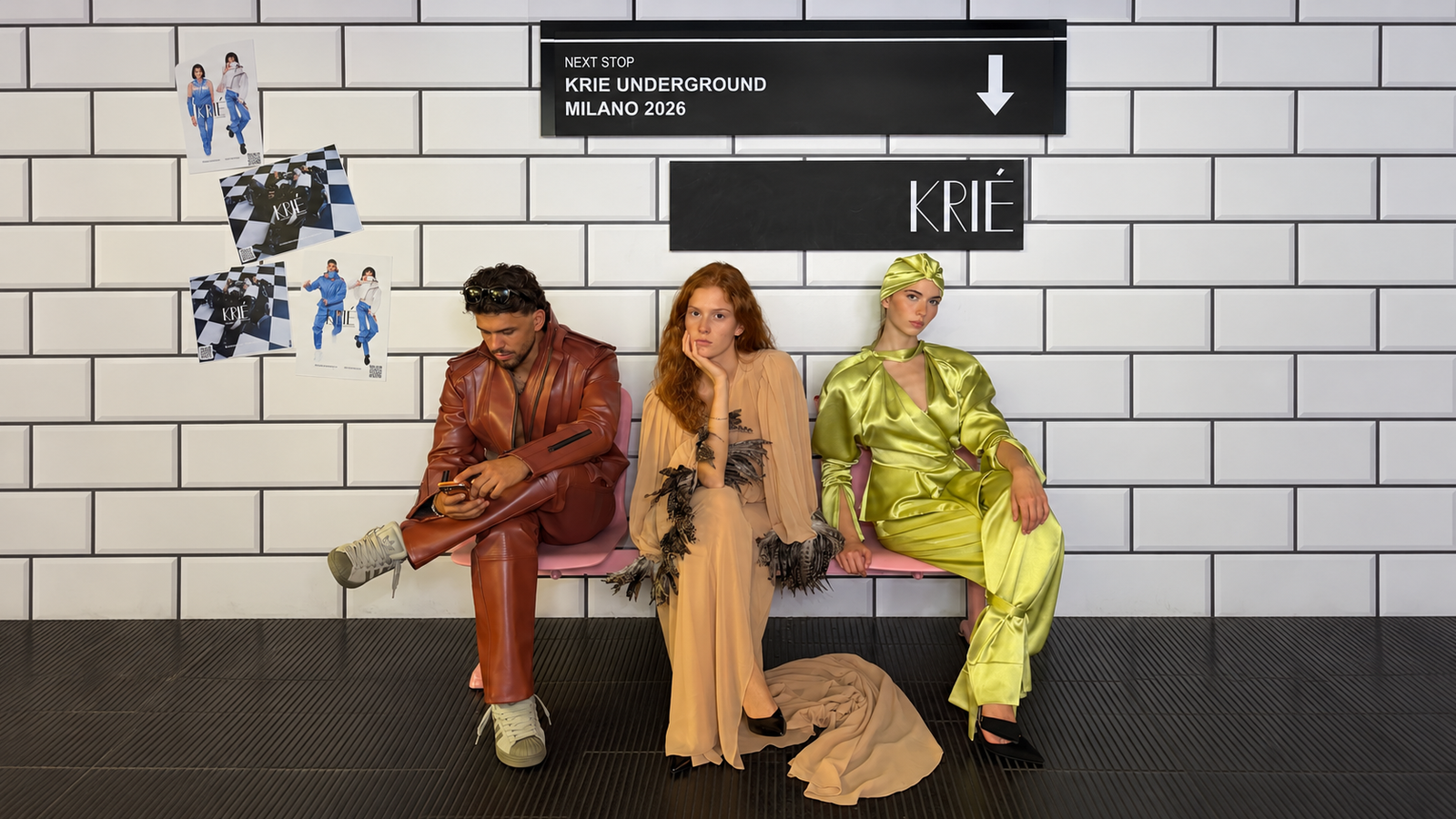
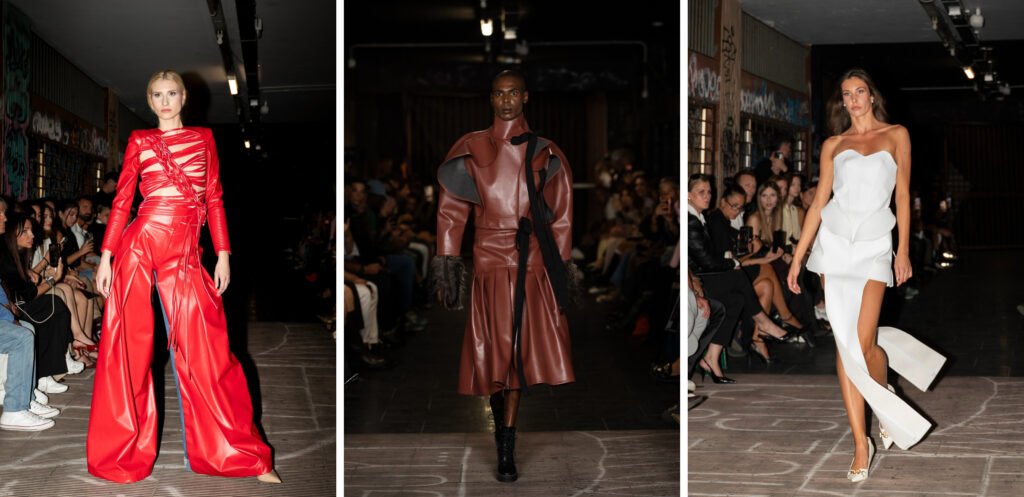
Krie Design returned to Milan with a collection that gave material experimentation an assertive visual identity. Presented at Green Fashion Week during Milan Fashion Week in September 2026, Milano Underground combined architectural volumes, sculptural headwear and an oversized bag with references to the city’s underground infrastructure.
“Sustainability does not limit design, but opens up possibilities for innovation, experimentation and a new definition of luxury.” — Kristina Burja
For founder and designer Kristina Burja, the presentation marked ten years of collaboration with Green Fashion Week. It also brought together two established interests within her practice: developing clothes from unconventional resources and creating designs whose appeal extends beyond a season.
The setting made the collection’s premise tangible. The Major Virtual Tunnel occupies a repurposed, 250-metre underground passage connecting Piazza De Angeli and Via Frua. Its transformation into a venue for fashion, retail and digital experiences offered a parallel to Burja’s work with materials recovered from other uses.
Architecture, Scale and Everyday Objects
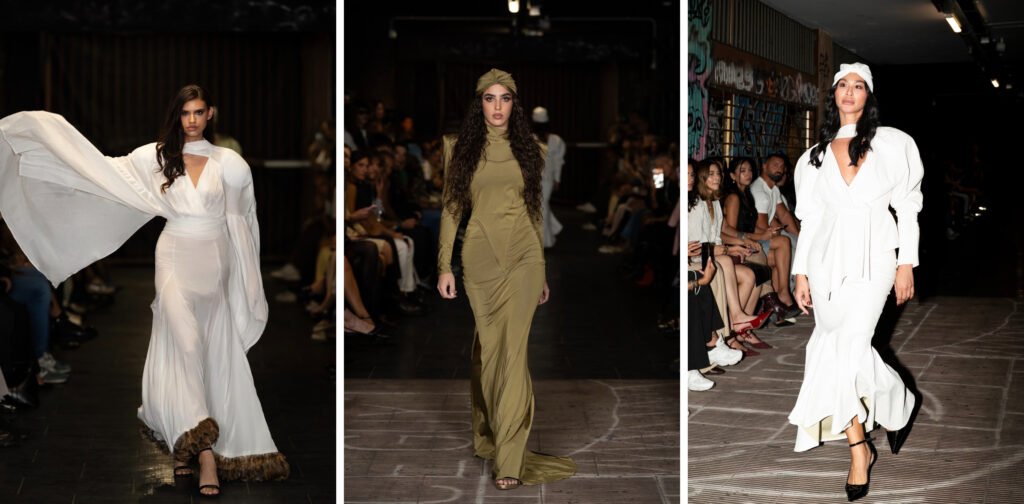
Milano Underground spans jackets, dresses, skirts and accessories, with statement silhouettes and construction central to its character. Burja carried the architectural references beyond the garments through a sculptural headpiece that appeared across several looks, establishing continuity throughout the presentation.
La Ladra approached proportion through a familiar wardrobe object. The oversized bag, whose name translates from Italian as “the thief”, was designed to accommodate, in Burja’s words, “literally everything”. Its exaggerated dimensions made it a prominent part of the silhouette while retaining a practical purpose. According to the label, it also attracted attention on Milan’s streets, where passers-by stopped to photograph it and ask about the design.
A red look introduced a contrasting accent, drawing on the designer’s references to Milan’s underground and its M1 line. Alongside the recurring headwear and expansive bag, it gave the collection specific points of recognition: colour, scale and an interest in objects that change the proportions of the complete look.
These elements also helped connect the clothes to their surroundings. Rather than serving only as a backdrop, the underground passage informed the collection’s name and its account of transformation.
A Material Connection to Croatia
Milano Underground combines ECONYL® regenerated nylon, Sabant Beer Skin™ and Gin Skin™, bringing resources associated with fishing, brewing and distilling into Burja’s design process.
Developed by Croatian company Sabant, Beer Skin™ and Gin Skin™ are made using by-products of beer and gin production. Available in different colours, textures, finishes and backings, they offer options for garments and accessories. Their inclusion extends Krie’s material exploration alongside its established use of regenerated nylon.
ECONYL® connects the collection to Krie’s collaboration with Provir and Croatian fishermen. Through the initiative developed with fisherman Božidar Blaslov, discarded fishing nets are collected and sent for regeneration. According to the label’s latest figures, the project has collected and dispatched 130 tonnes in just over two years. That figure describes the wider recovery initiative, rather than the amount of material used in Milano Underground.
The partnership gives the collection a connection to the Adriatic beyond visual inspiration. It links Krie’s international presentations to the work of recovering discarded equipment along the Croatian coast, while Sabant’s materials introduce another example of cooperation between fashion and industries outside it.
Together, these relationships provide the collection with a material foundation. Burja’s task as a designer is to translate those resources into clothes and accessories with an identity of their own—a concern expressed most clearly through Milano Underground’s emphasis on volume and construction.
The Bow Dress and Emotional Longevity
Alongside its experiments with materials, Krie has built a philosophy around versatility and continued wear. Founded by Burja in 2008, the label produces in Croatia and describes its wardrobe as one intended to work across occasions and seasons.
The Bow Dress remains an important example. Introduced in 2019 and originally created for longtime collaborator Marijana Batinić, it became one of Krie’s most recognisable designs. It subsequently found an audience in the Middle East and was exhibited in the Croatian Pavilion at Expo 2020 Dubai.
In its brand dossier, Krie presents the dress as an expression of emotional longevity: a garment women continue to value after its initial release. Its appeal across different ages, body types and cultural backgrounds is central to the label’s account of how it developed internationally.
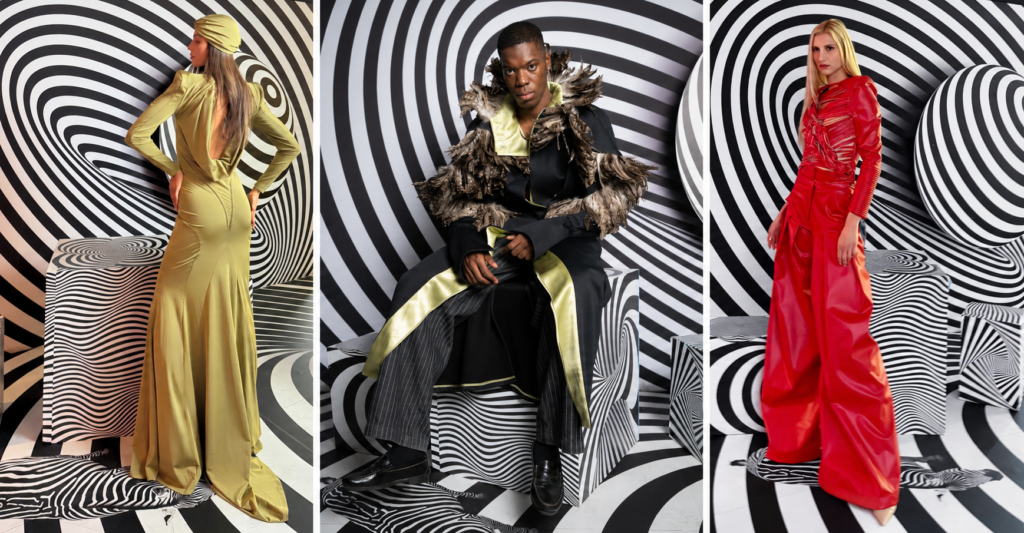
This adds another dimension to the material experimentation seen in Milan. A garment’s origins are one consideration; its ability to remain desirable and useful is another. The Bow Dress gives that second ambition a specific place in Krie’s history, demonstrating why an established design can remain relevant alongside a new collection.
A Consistent Identity Across Markets
Krie describes its expansion into Europe, the United States and the Middle East as growth built around a consistent design philosophy. According to its dossier, women in different markets responded to the same qualities—femininity, versatility and an emotional connection to the clothes—without the label having to reshape its creative identity for each audience.
The Bow Dress is the clearest example offered in support of that position. Milano Underground develops the same broader philosophy through a different aesthetic, introducing more architectural forms and conspicuous accessories while continuing Burja’s interest in the relationship between appearance, function and material choice.
“Luxury is no longer defined solely by how something looks, but also by how it is made.” — Kristina Burja
In Milano Underground, that definition takes shape through the meeting of a Croatian material network and a distinctly Milanese setting. The oversized bag, recurring headpiece and red accent give the collection its immediate presence; the work behind its materials connects it to the practices Burja has developed over the past decade.
Explore Krie Design: Website | Instagram @kriedesign