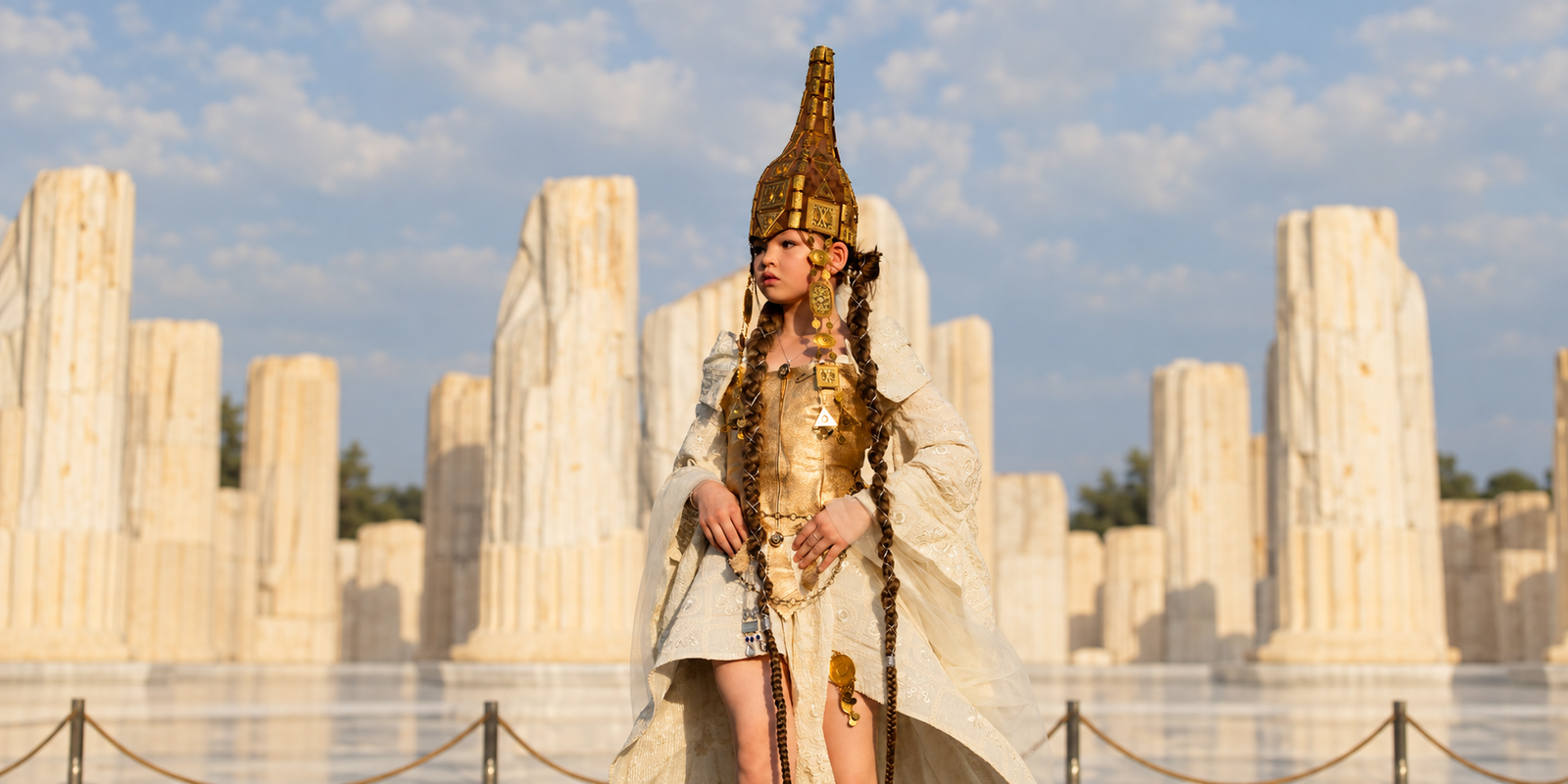
When Sabina Volskaya founded Volskaya Atelier in Kazakhstan in 2017, she set out to create distinctive designer clothing for children and teenagers. As the label develops, she faces a question familiar to many independent designers: how to turn international visibility into sustained commercial growth while retaining a clear creative identity.
Volskaya Atelier is built on the belief that children have aesthetic preferences of their own. For Volskaya, childrenswear should make room for individuality, with comfort and practicality informing rather than precluding ambitious design.
The approach that means addressing two audiences at once
Parents make purchasing decisions based on quality and function; children determine whether a garment becomes part of their everyday wardrobe. Volskaya aims to accommodate both, adapting expressive silhouettes and elements of adult fashion to younger wearers.
She locates the label’s cultural identity in the environment that shaped her. Kazakhstan informs her work through its mix of cultures, the character of its people, and the mood and form of her collections. She sees heritage as material for contemporary interpretation, extending beyond familiar motifs or direct references to traditional dress.
Showing internationally offered a chance to test whether that design language resonated beyond Kazakhstan.
Participation in the Oriental Fashion Show in Paris brought Volskaya Atelier attention and professional connections. Following Volskaya’s participation in an event at UNESCO headquarters in Paris, organisers also said they were preparing a letter acknowledging her contribution.
Yet Volskaya increasingly distinguishes public recognition from the ability to operate internationally. Interest in a collection must be supported by production capacity, reliable delivery, consistent quality and effective logistics. She sees the label’s next phase as strengthening those foundations and establishing lasting relationships with overseas partners.
Speaking to The Fashion Issue, Volskaya discusses her evolving understanding of her customers, the less obvious expressions of cultural identity, and how she assesses opportunities abroad.
TFI: What gap in the market did you hope to address when you launched Volskaya Atelier in 2017? What did the early years reveal about the size of your audience?
When I founded Volskaya Atelier, I wanted to create clothes with character—pieces that were difficult to find in the mass market. As the business developed, I realised the audience was much broader than I had initially imagined. The label gradually grew alongside its customers.
Why did you choose to focus on children and teenagers? Which conventions of childrenswear did you want to challenge?
I have always felt that childrenswear is too often treated as a simpler category of design. I wanted to show that children and teenagers can wear interesting designer clothes, develop their own style and express themselves through it.
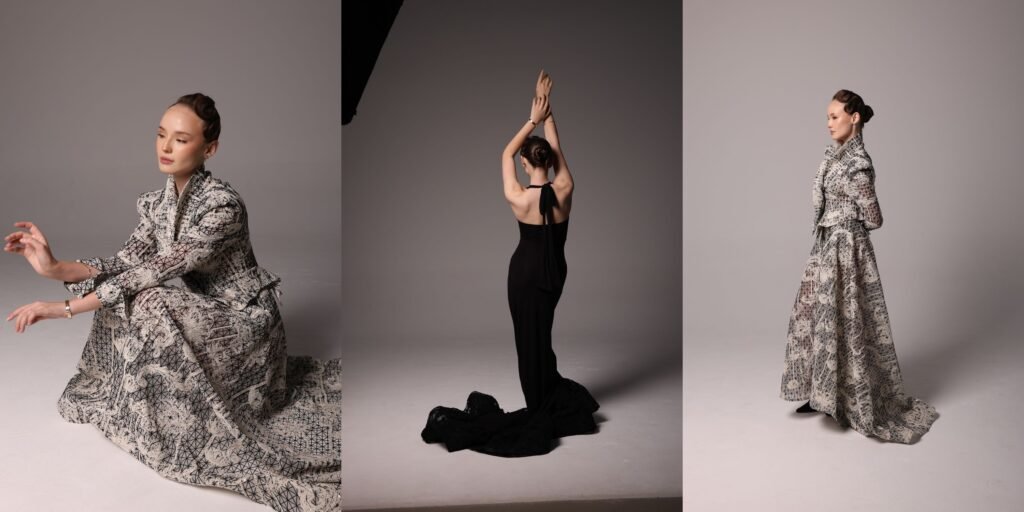
How do you reconcile expressive design with the practical requirements of childrenswear? How do you adapt the silhouettes and construction techniques of adult fashion?
The priority is to retain the idea and character of a garment while adapting it for a child. The clothes should be expressive, but they also need to be comfortable and reflect the wearer’s individuality. We don’t simply reproduce the techniques used in adult fashion.
The parent is the buyer, but the child is the wearer. How do you serve both audiences when their preferences differ?
I try to consider both perspectives. Parents generally value quality, practicality and comfort, while children care about how they look and feel in the clothes. For me, a good result is one that satisfies both.
How do cultural expectations around family, gender roles and appropriate dress shape demand in Kazakhstan? How much room do they leave for experimentation?
Culture influences people’s choices, and Kazakhstan is no exception. I understand that and take it into account, but I don’t want to place rigid limits on creativity. Clothing can sometimes offer a slightly different perspective.
You connect your design identity to Kazakhstan without relying on national motifs. How does that cultural influence appear in your work, and why might it be less apparent to an international audience?
Kazakhstan’s influence on me extends beyond national motifs. It is more evident in my approach to form, texture and detail. I am drawn to expressive silhouettes, the interplay of softness and structure, and close attention to fit. When choosing materials, I want a garment to feel as well made as it looks. I think the cultural environment in which I grew up has shaped that understanding of clothing. I am more interested in conveying its influence through mood, form and detail than in reproducing traditional dress.
For me, it is about reinterpretation and development. Heritage doesn’t have to be reproduced literally.
What role does cultural heritage play in the evolution of your design language?
For me, it is about reinterpretation and development. Heritage doesn’t have to be reproduced literally. I enjoy taking familiar ideas and giving them a contemporary reading.
What did working in Kazakhstan teach you about running a business? What needed to change when the label began operating internationally?
Working in Kazakhstan taught me to be flexible and make decisions quickly. When entering overseas markets, positioning and pricing required the most reconsideration. In a new market, you need to understand which brands customers compare you with, the price they expect and what they are willing to pay for. Terms with partners, logistics and production costs also change. The most important adjustment was adapting the commercial side of the business to a new market while preserving the label’s style and identity.
What advantages does producing in Kazakhstan offer in terms of oversight and day-to-day operations? Where does the local infrastructure limit growth?
A major advantage for me is being able to oversee the process directly and work with people I trust. To support further growth, I would like to see more developed fashion infrastructure within the country, from production to opportunities for international promotion.
How is Volskaya Atelier’s business model structured today? What role do international projects play in its development?
At present, I work through capsule collections, creating a new capsule for each show. But I don’t limit myself to a single area: there are collections, individual commissions and collaborations with partners. My priority now is to develop the label so that international projects become an ongoing part of the business rather than one-off engagements.
How do you distinguish the purpose of a runway collection from that of your commercial offering? What have sales prompted you to reconsider?
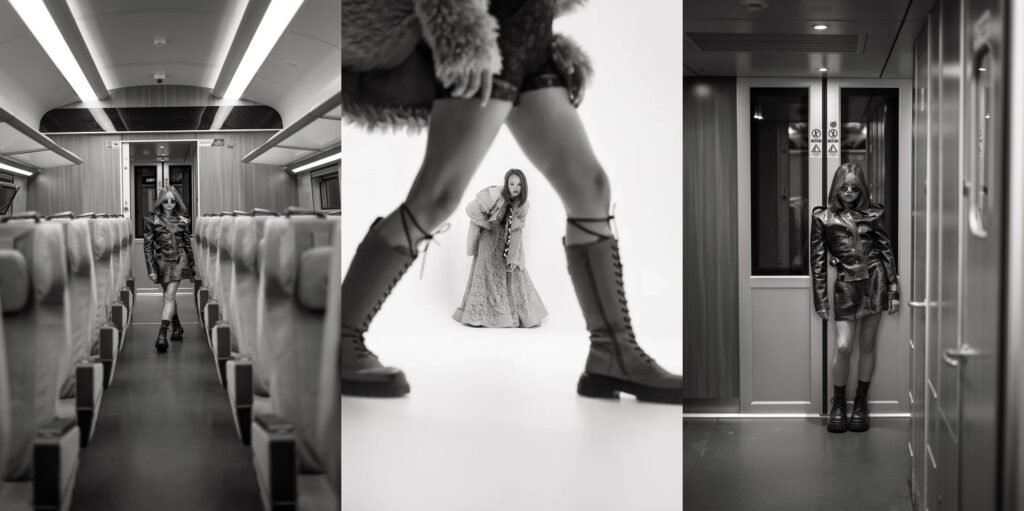
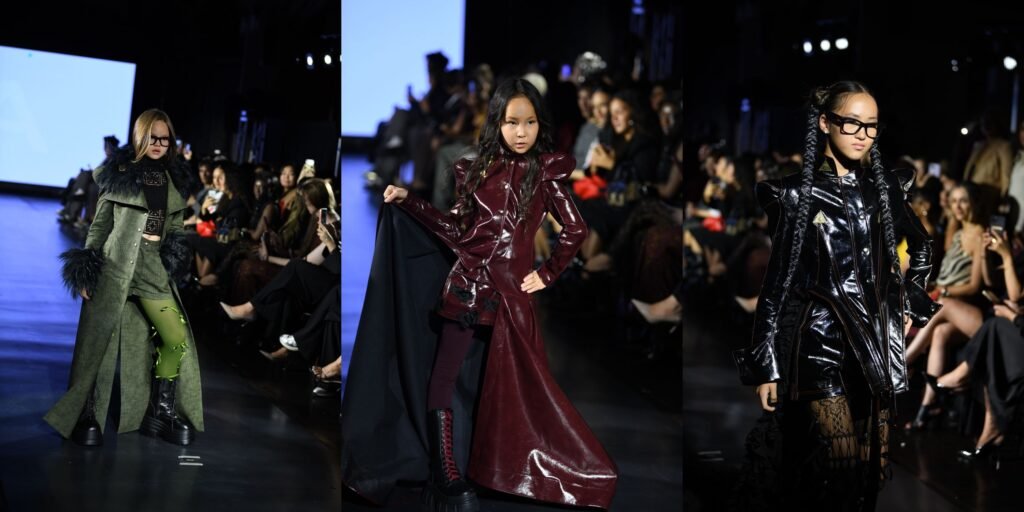
The runway allows us to be bolder and communicate the label’s vision more fully. A commercial collection has to account for the customer’s everyday life. Sales are the clearest indication of what people actually want to wear, rather than simply see on the runway.
Which overseas show has been most significant for Volskaya Atelier’s international development?
One of the most important was the Oriental Fashion Show in Paris. We presented a children’s haute couture collection, which brought the label international attention and new professional connections. It was especially important to see that our work resonated with an audience beyond Kazakhstan.
How do you assess the return on an overseas show? What distinguishes a platform with commercial potential from one that primarily raises a label’s profile?
I am much more selective about platforms now. It is important to understand who will be in the audience, which professional connections are possible and what participation can offer the label after the show. A beautiful runway presentation is no longer enough.
What needs to be in place to turn an overseas buyer’s interest into an order?
Interest after a show is only the beginning. What matters next is delivery timelines, production, consistent quality, logistics and the ability to fulfil the required volume. International markets quickly reveal whether a label is ready organisationally as well as creatively.
How does the label’s origin shape its reception among international buyers? How much context do you need to provide about Kazakhstan’s fashion industry?
For many people, Kazakhstan remains unfamiliar as a fashion market, so sometimes I need to introduce that context first. But I want Volskaya Atelier to be judged primarily on its design, quality and standard of execution. The label’s origin is an important part of my story, but it is not the only reason I want people to take an interest.
What would turn attention to Central Asian designers into long-term investment, orders and the development of the region’s fashion industry?
There is no shortage of talented designers in the region. But lasting growth requires infrastructure, production, professional platforms, education and an effective system for engaging with international markets. Those foundations would allow the interest in Central Asia to develop into something more enduring.
What is currently limiting Volskaya Atelier’s ability to scale, and what will its next phase of growth involve? What role will Kazakhstan continue to play?
Production capacity is currently the main constraint on scaling Volskaya Atelier. Maintaining quality and overseeing every stage of the work are important to me, so I don’t want to increase orders too quickly. The next phase involves expanding production, organising processes more clearly and strengthening the team. That will allow us to increase volumes, fulfil orders faster and develop sales outside Kazakhstan more actively. Kazakhstan remains part of Volskaya Atelier’s identity, regardless of the market in which we operate. As I grow the business internationally, I want to preserve my own design signature.
Follow Volskaya Atelier on Instagram: @volskaya_atelier
*This interview has been edited for clarity.