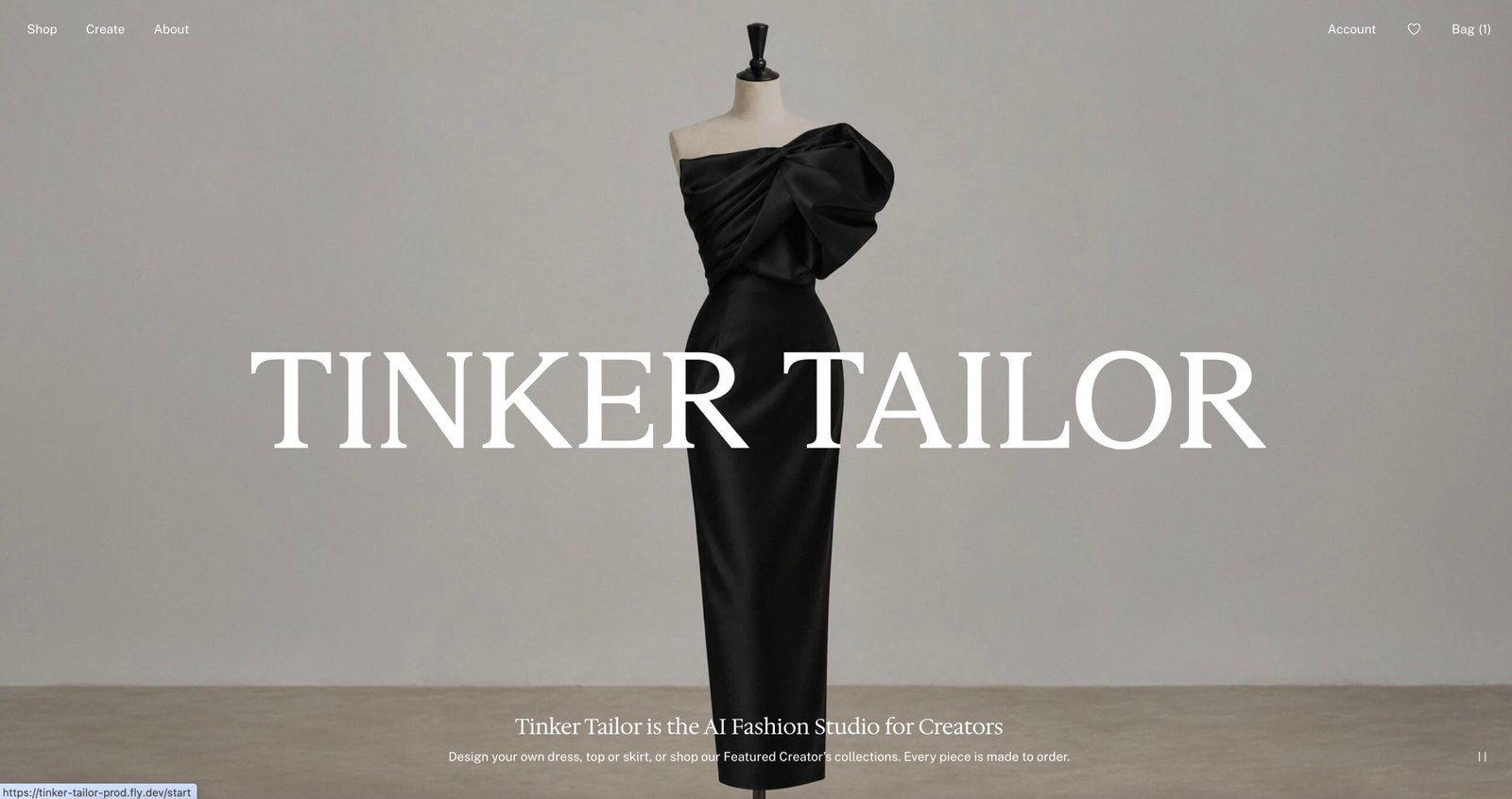
Tinker Tailor, the new venture from Moda Operandi co-founder Áslaug Magnúsdóttir, lets shoppers design their own clothes. Its business hinges on whether manufacturers can deliver that level of customisation at a price and speed customers will accept.
At Moda Operandi, Áslaug Magnúsdóttir helped build a business around a wager that shoppers would commit to buying runway looks months before they could wear them. With Tinker Tailor, which launched on 19 November, she is testing whether customers want a say in what gets made. The platform lets them customise dresses, tops and skirts with an AI design assistant, preview the result in 3D and place an order for the garment to be made.
At Moda Operandi, preorders gave customers access to runway pieces that might never make it onto a retailer’s buying list. Tinker Tailor gives them a say in the design itself, from the silhouette to the fabric and print. Both businesses ask shoppers to commit before a garment is ready to ship. With Tinker Tailor, that decision can rest on a rendering of a piece the customer has configured.
The Atelier Behind the Algorithm
Tara, Tinker Tailor’s AI design assistant, helps shoppers translate a description into a set of choices they can refine in the design studio. The available combinations draw on a library of patterns and compatible components developed by the company’s New York atelier team. That library defines what the platform can offer and gives its manufacturing partners a common set of patterns to work from, even when customers order different versions of the same style.
Tinker Tailor’s Creator Marketplace
The same production system lets creators sell their own designs through dedicated storefronts. Tinker Tailor launched with collections from Mary Leest, Paula Dhier, Eugenia Kuzmina, Sanaz Dizaj Parham and Janet Gunn. Creators use the platform’s design tools and earn a commission on sales. Tinker Tailor handles manufacturing and fulfilment, allowing creators to test demand without financing an initial run of stock.
The Economics of Making One Garment at a Time
Making each garment after a customer places an order reduces Tinker Tailor’s exposure to unsold finished stock. In a conventional production run, manufacturers can cut and sew batches of the same style. Tinker Tailor’s partners must manage individual orders across different combinations of fabrics and silhouettes while keeping quality, costs and lead times consistent.
Manufacturing against confirmed demand addresses one source of surplus: finished garments made in anticipation of sales that never materialise. The launch announcement leaves open how the company buys and holds fabric, manages cutting waste and handles returns or remakes. Those practices will help determine how much waste the model can prevent across production and fulfilment.
Icelandic venture capital firm Brunnur Ventures led Tinker Tailor’s investment round. For the company, repeat orders will be an early test of whether shoppers value the finished garment enough to return. The design tool can win a first order. Fit, finish and delivery will help earn the second.
Shoppers can register to design their own garments or shop the launch collections. Creators interested in selling through the platform can apply to become a Featured Creator. Register and start designing · Shop Featured Creator collections · Apply to become a Featured Creator