
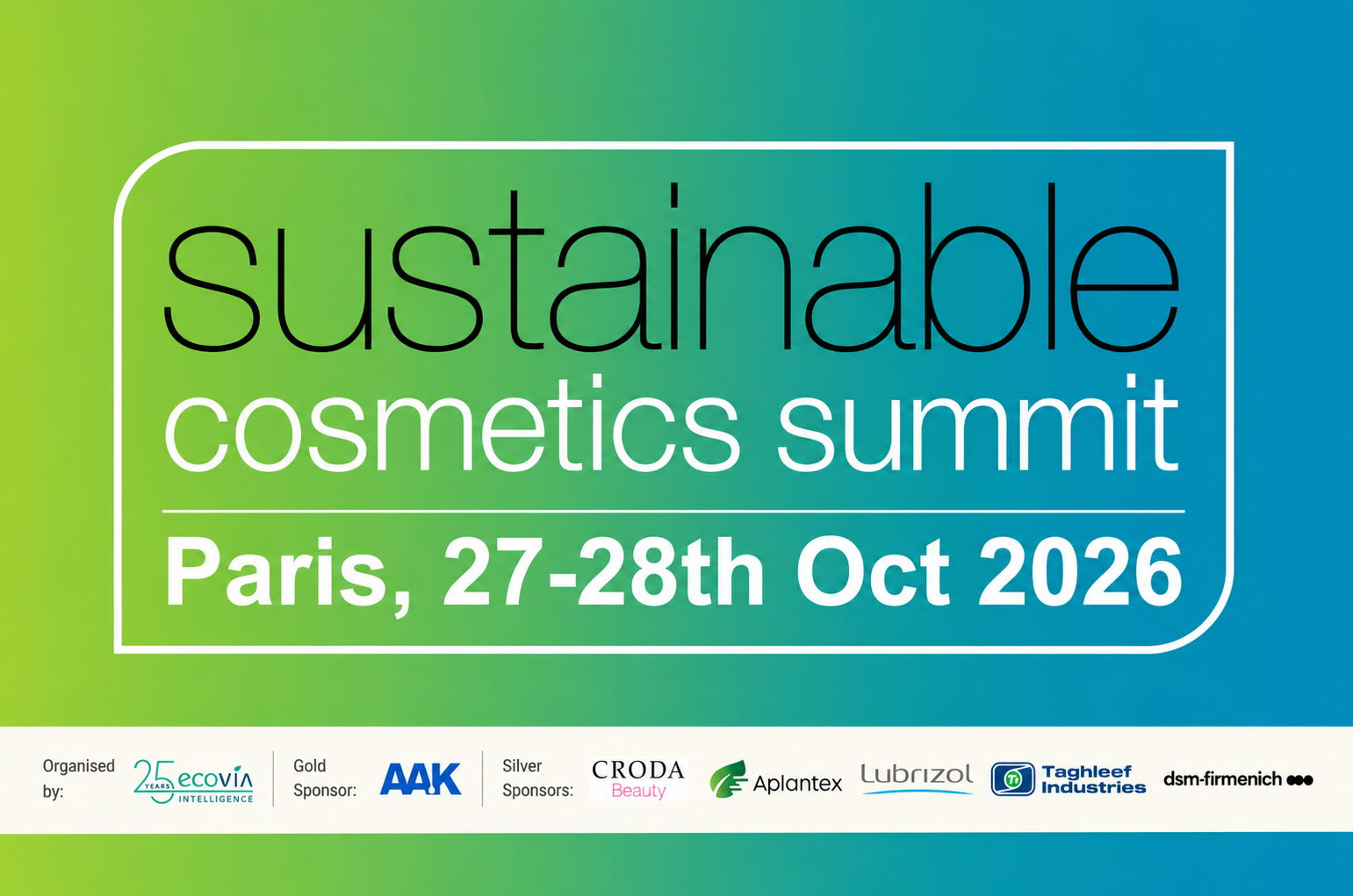
Returning to Paris on 27–28 October, the 18th European edition will bring together cosmetics industry leaders to examine green chemistry, ingredient innovation, supply-chain resilience and the regulatory challenges shaping the future of beauty.
The Sustainable Cosmetics Summit Europe will return to Paris on 27–28 October 2026, bringing together cosmetics manufacturers, ingredient suppliers, sustainability specialists and industry organisations to address the environmental and commercial challenges reshaping the global beauty sector. Organised by Ecovia Intelligence, the 18th European edition will take place at the Crowne Plaza Paris–République, with a programme examining the implications of climate change, geopolitical uncertainty and evolving environmental regulations for cosmetics production, sourcing and consumption.
As beauty companies face increasing scrutiny over their environmental claims and the impact of their operations, sustainability has become closely connected to questions of supply-chain resilience, product development and long-term competitiveness. This year’s summit will explore how businesses can translate environmental commitments into practical changes across ingredient sourcing, manufacturing, packaging and consumer engagement, while responding to regulatory pressures and changing market expectations.
Green Chemistry and the Next Generation of Cosmetic Ingredients
Ingredient innovation will be a central focus of the programme, reflecting the growing importance of alternative raw materials and more resource-efficient production methods within the cosmetics industry. Discussions will examine developments in green chemistry, regenerative agriculture, biotechnology and upcycled ingredients, alongside the potential of precision fermentation to provide alternatives to certain conventional agricultural and petrochemical inputs.
These approaches are gaining attention as manufacturers seek to reduce the environmental footprint of cosmetic formulations without compromising product performance, safety or commercial viability. The programme will also consider how ingredient sourcing and agricultural practices intersect with biodiversity protection, particularly as climate-related disruptions place additional pressure on the availability and production of natural raw materials.
For the beauty industry, the transition towards more responsible formulations presents both technical and commercial challenges. Scaling emerging technologies, establishing reliable sourcing networks and evaluating environmental performance require investment and collaboration between brands, ingredient developers and suppliers. The summit will provide a platform for examining how these developments can move beyond research and pilot projects towards wider industry adoption.
Supply-Chain Resilience and Environmental Accountability
The relationship between environmental responsibility and supply-chain resilience will form another major part of the conference agenda. Cosmetics manufacturers depend on complex international networks for botanical extracts, natural oils, fragrances, packaging materials and other essential ingredients, making the sector vulnerable to disruptions associated with climate change, geopolitical instability and changing trade conditions.
The programme will examine traceability, ethical sourcing and bio-based alternatives, alongside the challenges companies face in reducing indirect greenhouse gas emissions across their value chains. Particular attention will be given to the role of supplier engagement and greater transparency in identifying environmental risks and improving procurement practices.
Circular packaging and resource management will also feature in discussions about reducing waste and improving material efficiency. Although refillable systems, recycled packaging and alternative materials are becoming more visible across the beauty market, their environmental benefits depend on factors including product design, collection infrastructure, consumer participation and the resources required for production and distribution.
These considerations reflect a broader shift in how sustainability is being assessed within the sector. Rather than evaluating individual products or packaging innovations in isolation, companies are increasingly expected to consider environmental impacts across the full product lifecycle, from raw-material extraction and formulation to manufacturing, distribution and disposal.
Global Beauty Companies Join the Discussion
The summit will feature representatives from international beauty brands, ingredient manufacturers and sustainability organisations, including GUERLAIN, Lush, Beiersdorf, Colgate-Palmolive and Ecocert. Their participation reflects the range of environmental challenges facing the sector, from responsible ingredient procurement and product development to corporate sustainability strategies and supply-chain management.
Among the announced speakers are Claire Coletti, Global Sustainability Director at GUERLAIN; Gabbi Loedolff, Director of Buying at Lush; Caroline Brucker, CSR Director at Colgate-Palmolive; and Ana Betancur-Henao, R&D Engineer at Beiersdorf. The programme will also bring together specialists in certification, environmental assessment and ingredient innovation, offering perspectives from different stages of the cosmetics value chain.
Consumer expectations and the credibility of environmental communication will form another important area of discussion. As regulators increase their scrutiny of environmental marketing claims, beauty companies face growing pressure to substantiate statements concerning sustainability, natural ingredients, recyclability and product impact with reliable evidence.
The conference will explore how these developments are influencing consumer behaviour and brand communication, particularly as businesses seek to maintain customer trust while navigating increasingly complex requirements for environmental transparency. For companies operating internationally, differences between regulatory frameworks and consumer expectations present additional challenges in developing consistent sustainability strategies.
Sustainable Beauty Awards to Recognise Industry Progress
Alongside the conference, the Sustainable Beauty Awards ceremony will take place on 27 October, recognising organisations and initiatives contributing to environmental and social progress within the cosmetics industry. The awards provide a platform for highlighting developments in sustainable ingredients, packaging, business practices and industry leadership, complementing the summit’s wider focus on practical solutions.
The inclusion of the awards reflects the growing visibility of sustainability initiatives across the beauty sector, although the broader challenge remains establishing how individual innovations contribute to measurable improvements in environmental performance. As companies introduce new materials, technologies and business models, independent assessment and transparent reporting are becoming increasingly important in distinguishing substantive progress from marketing claims.
A Changing Agenda for the Global Beauty Industry
The 2026 edition comes at a time when environmental considerations are becoming increasingly connected to the operational and financial realities of cosmetics manufacturing. Ingredient availability, regulatory compliance, energy consumption and supply-chain transparency are influencing how companies develop products, select suppliers and manage long-term business risks, while the demand for credible environmental information continues to reshape relationships between brands and consumers.
Although advances in biotechnology, formulation science and packaging offer opportunities to reduce environmental impacts, the transition towards more responsible production will depend on the industry’s ability to implement these solutions at scale. Investment, supplier collaboration and consistent methods of measuring progress will remain essential to determining whether sustainability initiatives can deliver meaningful results beyond individual products or corporate commitments.
By bringing together stakeholders from across the cosmetics value chain, the Sustainable Cosmetics Summit Europe aims to encourage the exchange of practical approaches to these challenges and strengthen cooperation between businesses, researchers and industry organisations. Its 18th European edition will provide an opportunity to assess how the sector is responding to mounting environmental pressures and where further innovation and collective action are needed.
The Sustainable Cosmetics Summit Europe 2026 will take place on 27–28 October at the Crowne Plaza Paris–République in Paris, France. Further information, the conference programme and registration details are available through the official Sustainable Cosmetics Summit website. The event is organised by Ecovia Intelligence.