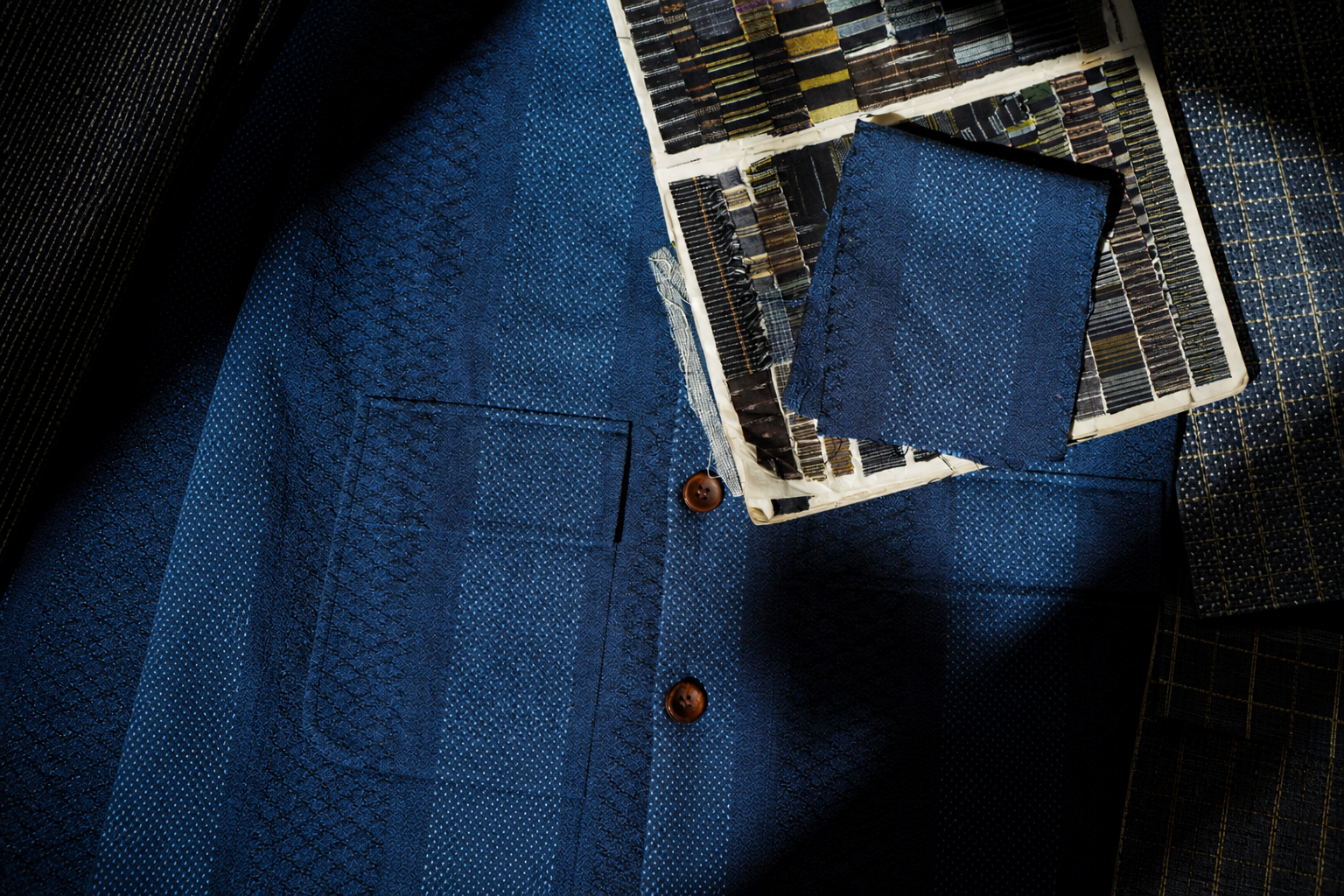
The Los Angeles fashion brand places traditionally woven Japanese textiles at the centre of a collection shaped by material character, cultural continuity and lasting design.
Human Assembly has introduced a new collection developed around traditionally woven Japanese textiles, continuing the brand’s exploration of craftsmanship through a distinctly contemporary wardrobe.
Operating between Los Angeles and Paris, Human Assembly combines the functions of a fashion label and textile gallery. This dual identity informs an approach in which fabric is treated not simply as a production material, but as the starting point for design. Rather than imposing a predetermined silhouette on the cloth, the brand allows weight, texture, movement and construction to determine how each garment takes shape.
The result is a collection that examines how Japanese weaving traditions can remain relevant within modern fashion without being reduced to surface decoration or cultural reference.
Japanese Textiles Lead the Design Process
Human Assembly begins its creative development with the textile rather than the sketch. In the new collection, traditionally woven Japanese fabrics establish the structure, proportions and visual language of each piece.
The selected materials are characterised by fluid movement, tactile surfaces and subtle irregularities that reveal how they were made. Variations in weave density, dye saturation and hand feel give the garments depth without requiring excessive embellishment. These qualities become particularly visible through restrained construction, where clean lines and carefully balanced volumes leave space for the cloth to perform.
By allowing these characteristics to remain visible, Human Assembly positions the textile as an active creative force rather than a neutral backdrop for design.
This material-first process creates a quieter form of expression. Instead of relying on immediate visual impact, the collection rewards closer attention to the relationship between fibre, weave and silhouette. Texture changes under light, fabric responds to movement and individual variations become part of each garment’s identity.
Contemporary Clothing Built Around Longevity
The collection also reflects a growing reconsideration of how clothing should exist beyond the traditional fashion calendar. Human Assembly focuses on garments intended for regular use, with adaptable proportions and finishing details designed to remain relevant over time.
Longevity is approached through both physical durability and aesthetic restraint. A garment must be able to withstand repeated wear, but it must also retain enough clarity to avoid becoming tied to a short-lived trend. This balance is evident in silhouettes that feel current without depending on novelty.
Traditionally woven textiles often develop greater character through use. Surfaces soften, folds become personal and colour may acquire additional nuance. Human Assembly incorporates this evolution into the intended life of the garment, treating wear as part of the design rather than evidence that the product has lost value.
Such an approach offers a more credible expression of slow fashion. Responsibility is embedded in the relationship between material quality, construction and continued use, rather than presented as an isolated marketing claim.
Preserving Craft Through Contemporary Use
Human Assembly’s engagement with Japanese weaving traditions also raises a wider question about craft preservation. Heritage textile practices cannot remain culturally active through admiration alone. Their continuity depends on skilled production, meaningful commissions and integration into products that belong to contemporary life.
The collection does not attempt to reproduce historical dress or present traditional weaving as a nostalgic artefact. Instead, it places these textiles within a modern design framework, demonstrating how established knowledge can support new forms of clothing.
This distinction is important. When heritage techniques are treated merely as seasonal inspiration, their value can become detached from the people, processes and regional knowledge that sustain them. Material-led design offers a more considered alternative by recognising the textile itself as a source of technical and cultural intelligence.
Heritage textile practices cannot remain culturally active through admiration alone. Their continuity depends on skilled production, meaningful commissions and integration into contemporary life.
For Human Assembly, Japanese weaving is therefore not an aesthetic theme applied after the fact. It is the foundation from which the collection’s construction, movement and longevity emerge. Through this new release, the Los Angeles brand presents craftsmanship as a living design resource. The garments connect textile heritage with everyday wear, showing that contemporary fashion can move forward without severing its relationship to material history.
Human Assembly’s latest collection is available through humanassembly.com, with additional updates shared through the brand’s Instagram account, @humanassemblygallery.