
In Piracicaba, a community fashion initiative combines textile upcycling, vocational training and practical support for women seeking financial independence, with a public fair scheduled for 24 October.
In Piracicaba, in Brazil’s São Paulo state, a sustainable fashion initiative is bringing together 40 women to explore how textile waste can become a source of creativity, professional skills and potential income. The programme, Sustentabilidade na Moda: Moda Viva e Circular, combines free sewing workshops with equipment and financial support, culminating in a public fair on 24 October 2026.
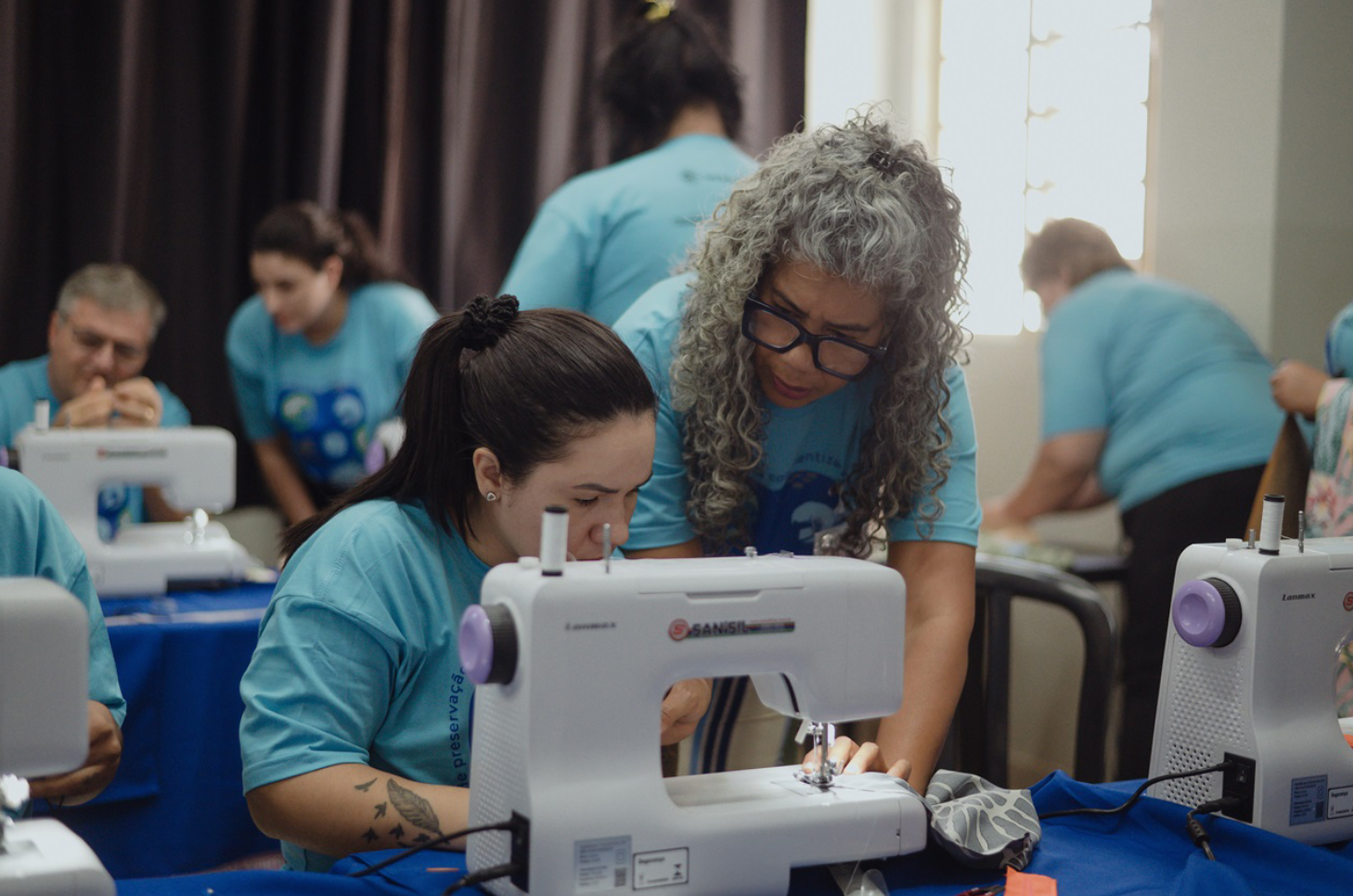
The initiative attracted more than 450 applications for just 40 places, reflecting strong local interest in accessible vocational training. Participants have been learning cutting, garment construction, creative sewing and upcycling, with an emphasis on transforming discarded fabrics and unused textiles into products that can be sold.
Unlike short-term training programmes that end with the final workshop, Moda Viva e Circular is designed to provide participants with tools for continuing their work. Each woman is entitled to a new sewing machine, a complete sewing kit and a R$400 allowance, alongside certification and an opportunity to present her creations to potential customers.
Turning Textile Reuse Into Professional Skills
The workshops began on 19 October and were scheduled to run until 23 October across two community locations: the Jardim Novo Horizonte Residents’ Association and the G5 Comunidades Social Rights Association in Água Branca. Participants were divided into afternoon and evening groups of 20, with priority given to women outside the labour market and beneficiaries of social assistance programmes.
Training is led by Brazilian artist and educator Flávia Souza, who has worked in textile waste management and vocational education since 2007. Her teaching focuses on the practical possibilities of reusing materials that might otherwise be discarded, including garment customisation and the development of new products through creative sewing.
The programme’s approach to upcycling is particularly relevant to small-scale fashion production. Rather than relying on newly manufactured fabrics for every creation, participants learn to work with existing materials, reconsidering their original purpose and exploring how design and craftsmanship can extend their useful life.
For women seeking to establish independent businesses, however, learning to sew is only one part of the challenge. Access to equipment, materials and customers can determine whether a newly acquired skill develops into a viable source of income. By including sewing machines and starter kits, the project aims to reduce some of the initial costs associated with working independently.
The opportunity has particular significance for participants whose circumstances make conventional employment difficult. In comments published by Brazilian news outlet Sampi, Keise Fernanda Messias Silva, 38, explained that caring for her son had required her to leave employment. She sees sewing as a potential way to earn an income from home while continuing her family responsibilities.
Another participant, Pamela de Fátima Araújo, 37, already works as a manicurist and hopes to add products made through sewing to the services she offers existing customers. Their experiences highlight different routes into entrepreneurship: for some, the training represents an opportunity to return to paid work; for others, it could help diversify an established source of income.
Neither outcome is guaranteed by a week of training. Building a sustainable business requires consistent demand, appropriate pricing, access to materials and opportunities to reach customers. Nevertheless, providing practical tools alongside instruction gives participants a foundation on which to develop those possibilities.
From Community Workshops to a Public Fashion Fair
The programme’s concluding event is scheduled for Saturday, 24 October, at Estação da Paulista in Piracicaba. The free public fair will allow participants to exhibit and sell products developed during the workshops, introducing their work to local consumers and offering an initial opportunity to assess commercial interest.
The fair is expected to take place between approximately 11am and 1pm, with organiser Mirante specifying an 11.20am start. It will be held at Avenida Dr. Paulo de Moraes, 1580, in the Paulista neighbourhood.
The public presentation adds an important commercial dimension to the training. Participants will have the opportunity to move beyond making products in a classroom environment and begin considering how their work is displayed, priced and communicated to customers. For emerging entrepreneurs, these experiences can be as relevant as the technical skills involved in production.
The initiative also demonstrates how circular fashion can operate beyond established brands and industrial recycling systems. At community level, recovering textiles can create opportunities for local production, skills development and small businesses, particularly when supported by accessible training and appropriate equipment.
Moda Viva e Circular is delivered through Brazil’s Federal Cultural Incentive Law, under the Ministry of Culture’s PRONAC 2513089 programme. It is sponsored by Instituto Aegea and Mirante, with general coordination by Amora Produções Culturais and artistic coordination by Aloxique. The Municipality of Piracicaba, G5 Comunidades and the Jardim Novo Horizonte Residents’ Association provide local support.
The use of neighbourhood-based facilities is central to the initiative’s accessibility. Rather than concentrating activities in a single specialist institution, the organisers have brought training into community spaces, connecting cultural investment with practical opportunities for local residents.
The considerable number of applications suggests that demand for this type of programme extends well beyond the 40 available places. Its longer-term value will depend on whether participants can use their equipment, new skills and commercial contacts to develop work after the fair.
For Piracicaba’s emerging makers, 24 October represents an opportunity to introduce their creations to the public. More broadly, the initiative illustrates how textile reuse can be connected to vocational education and economic participation, placing people and practical opportunities at the centre of the circular fashion conversation.
Municipality of Piracicaba — Official Programme Announcement