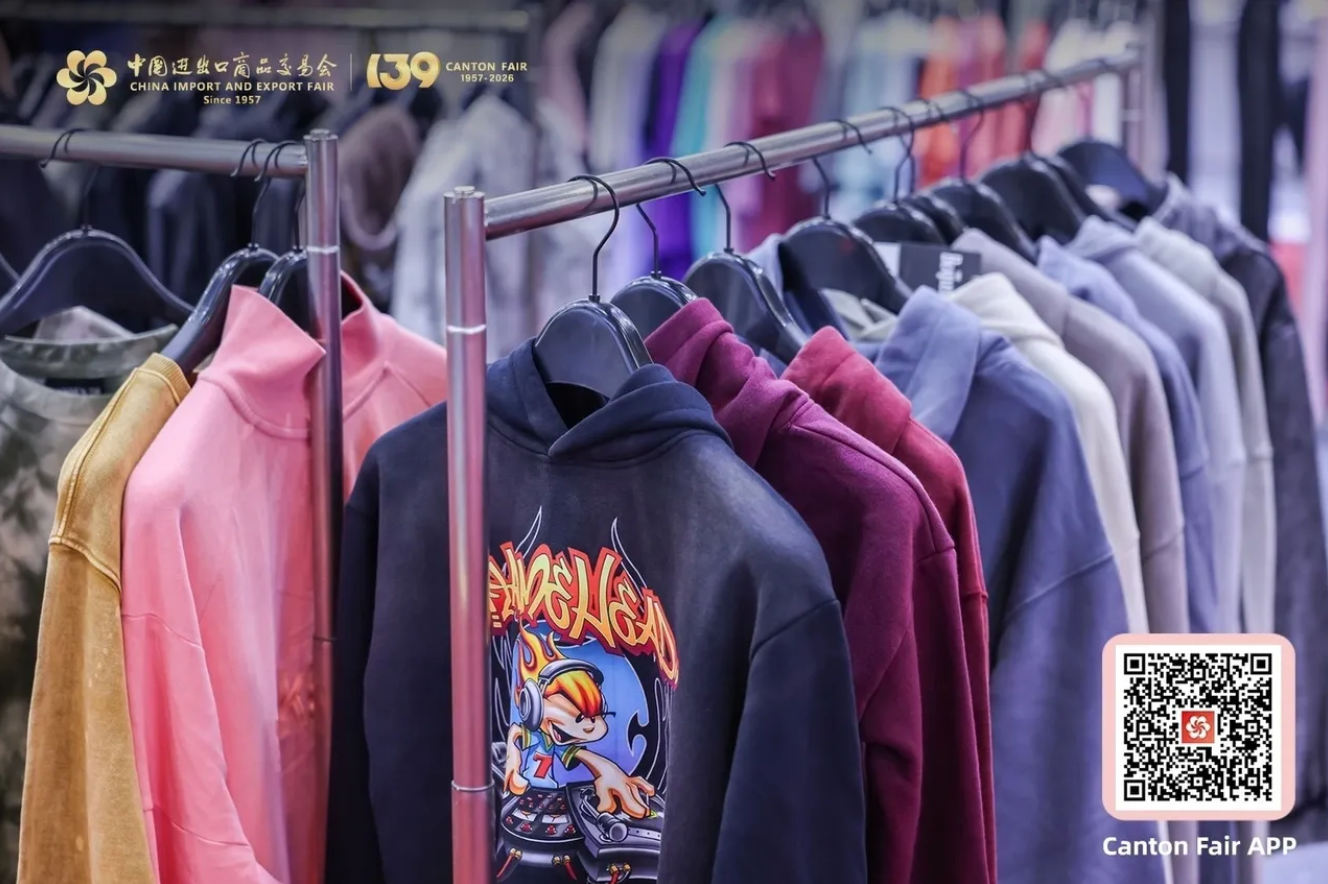
Material experimentation, adaptable garments and a sharper focus on design suggest a changing role for China’s fashion suppliers – one extending beyond production capacity.
For decades, China’s position in global fashion has rested on manufacturing scale and efficiency. The developments presented at the 139th Canton Fair suggest a broader ambition, as suppliers bring material research, technical performance and design expertise into their international offering.
BE THE CHANGE YOU WANT TO SEE IN THE WORLD
The shift is visible in the products themselves. A Guangdong-based manufacturer presented performance garments incorporating carbon-capture technology, positioning them within the emerging market for lower-carbon textiles. Reported demand from the United States suggests commercial interest, although claims of carbon-negative apparel require scrutiny of the full production lifecycle.
Bio-based materials are also entering outerwear, offering potential alternatives to conventional petroleum-based inputs. Their significance depends on more than novelty: composition, durability, sourcing and production methods all influence whether a new material delivers a meaningful environmental improvement.
Together, these developments point to closer collaboration between research teams, textile engineers and manufacturers. For buyers, the opportunity lies in suppliers that can explain how a material performs, how it is made and what evidence supports its claims.
Materials Meet Everyday Performance
In knitwear, material experimentation is taking a more tactile form. Infant garments coloured with plant-derived dyes, including madder and gardenia, reflect interest in alternative dyeing processes. Natural origins alone do not make a textile chemical-free or establish its safety; processing methods, finishing treatments and testing remain essential, particularly in childrenswear.
Blends incorporating collagen fibres and Modal raise another set of questions about material performance and end-of-life possibilities. Biodegradability depends on the complete fabric composition, its treatments and the conditions in which it breaks down. These products make the relationship between textile development and disposal increasingly relevant to purchasing decisions.
Sportswear and outdoor clothing offer a parallel view of manufacturing innovation. Cycling jackets combine wind protection, water resistance and breathability, while sun-protection garments incorporate moisture management and adaptable construction. Such features place greater demands on weaving, finishing and garment engineering.
Modular pieces – including packable garments that convert into crossbody bags – extend that technical thinking into everyday use. Their appeal is practical: a product can serve more than one purpose as its wearer moves between commuting, travel and outdoor activity. Whether that versatility translates into longer use ultimately depends on durability and how well the design works beyond a demonstration.
A More Active Role in Design
The changes extend beyond fabrics and construction. Manufacturers are developing products for different regional preferences, adapting their design proposals for European markets while expanding original offerings for buyers elsewhere.
This requires a more involved relationship with customers. Understanding a brand’s audience, price point and aesthetic becomes part of the manufacturing service, alongside sourcing, sampling and delivery. Suppliers able to contribute to product development can take a more active role in shaping what reaches the market.
The fair offers a view of that ambition, though individual exhibits should not be taken as evidence that an entire industry has transformed. The stronger test comes after the presentation: whether suppliers can maintain quality, substantiate environmental claims and deliver new ideas at commercially viable volumes.
For TFI, the story is the growing value of that combined expertise. Manufacturing agility includes the ability to work with unfamiliar materials, refine construction and respond thoughtfully to a buyer’s needs. Speed remains relevant, but it sits alongside technical knowledge and design judgement.
China’s fashion suppliers are making a case for a larger role in the industry’s next phase. Their influence will depend on how convincingly they translate the innovations shown at the Canton Fair into products that perform—and claims that withstand examination.
Buyer registration and information: Canton Fair