Craftsmanship and commercial viability set the agenda on the opening day of Lagos Fashion Week, with industry discussions on artisan partnerships and financing, and collection presentations from Emmy Kasbit, Sisiano and Orange Culture.
Lagos Fashion Week opened its 16th edition on 28 October with a question that linked its business programme to the collections: what does it take to sustain the people and enterprises behind African fashion? Under the theme CRAFTED: Heritage. Innovation. Circular Futures., the opening day examined the relationships between designers and artisans, the financial structures supporting independent labels and the funding needed to develop their businesses.
The discussions gave commercial context to a season centred on craftsmanship. Preserving textile knowledge requires continued demand for the work, dependable relationships with makers and businesses capable of managing production over time. Presentations by Emmy Kasbit in collaboration with ALÁRA, Sisiano and Orange Culture brought the creative expression of that knowledge into view through woven textiles, hand-printing and surface embellishment.
Craft Depends on the Business Around It
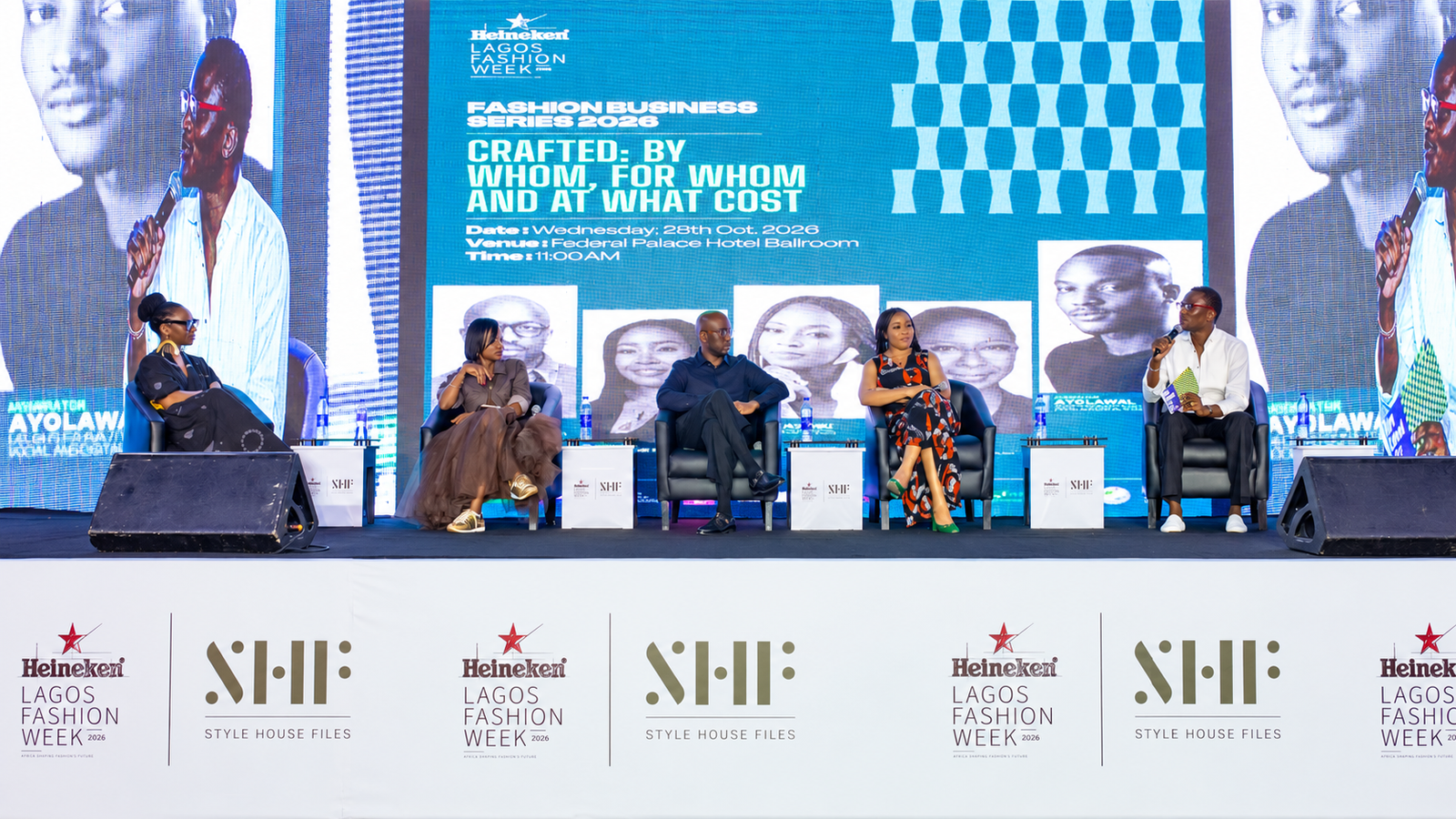
The opening Fashion Business Series session, “Crafted: By Whom, For Whom and at What Cost?”, addressed how the industry recognises and supports the artisans whose work underpins its collections. Moderated by media personality and digital strategist Ayo Lawal, the discussion featured Kenyan cultural producer and creative director Sunny Dolat; Ifebuche Madu, founder of Afrikstabel; Aisha Ayensu, founder and creative director of Ghanaian label Christie Brown; and Dr Christine Checinska, senior curator of Africa and diaspora textiles and fashion at the V&A.
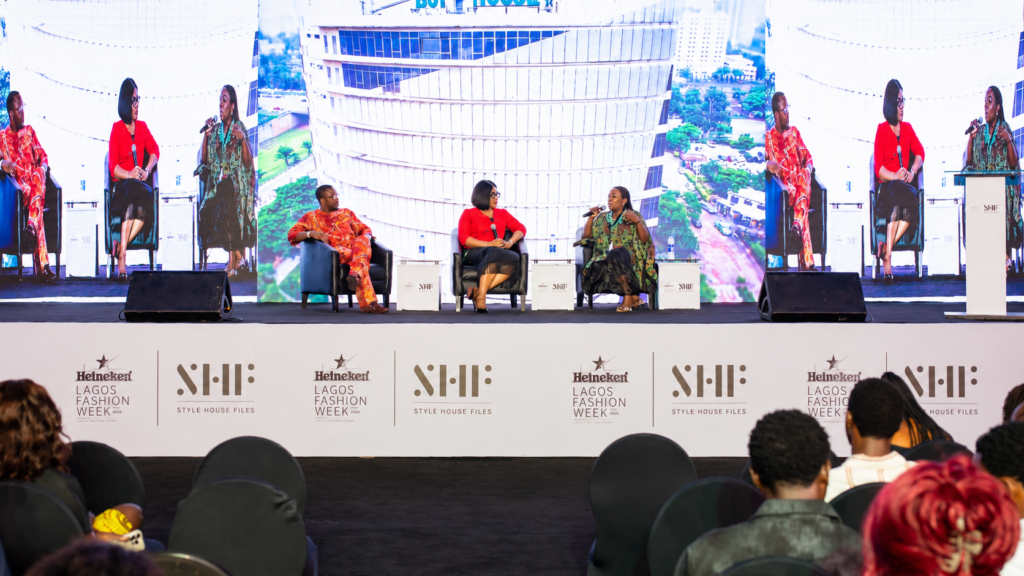
The panel examined artisan visibility and the need for more equitable, long-term working relationships. Its focus placed the continuity of craft within the responsibilities of the brands that depend on it, raising questions about how specialist knowledge is valued as collections move from development to market.
It is necessary to build a sustainable relationship with African artisans, because the success of any African fashion brand relies on the craft people.
— Aisha Ayensu, Founder and Creative Director, Christie Brown
Her observation established a connection that ran through the day’s programme: the strength of a fashion label rests partly on the durability of the production relationships behind it.
Business structure was the focus of the Deloitte-sponsored session on fashion business modelling and franchising, moderated by Temitope Olugbile, manager of strategy and business design. The discussion considered the models and organisational foundations entrepreneurs need to develop their operations, bringing the practical demands of growth into a programme otherwise concerned with creative knowledge and cultural value.
Akindele Phillips, founder and managing partner at We Practice Africa, pursued the financial implications in “Beyond the Runway: Are You Making Money or Just Making Sales?” The session distinguished revenue generation from commercial sustainability, emphasising standard processes, documentation and the preparation required for growth and potential investment.
Build a business that not only looks successful online, but is also successful in real life. Keep every single record.
— Akindele Phillips, Founder and Managing Partner, We Practice Africa
“Build a business that not only looks successful online, but is also successful in real life. Keep every single record,” Phillips advised. His emphasis on record-keeping addressed a fundamental management requirement: founders need a reliable account of business performance to assess whether sales are supporting a viable operation.
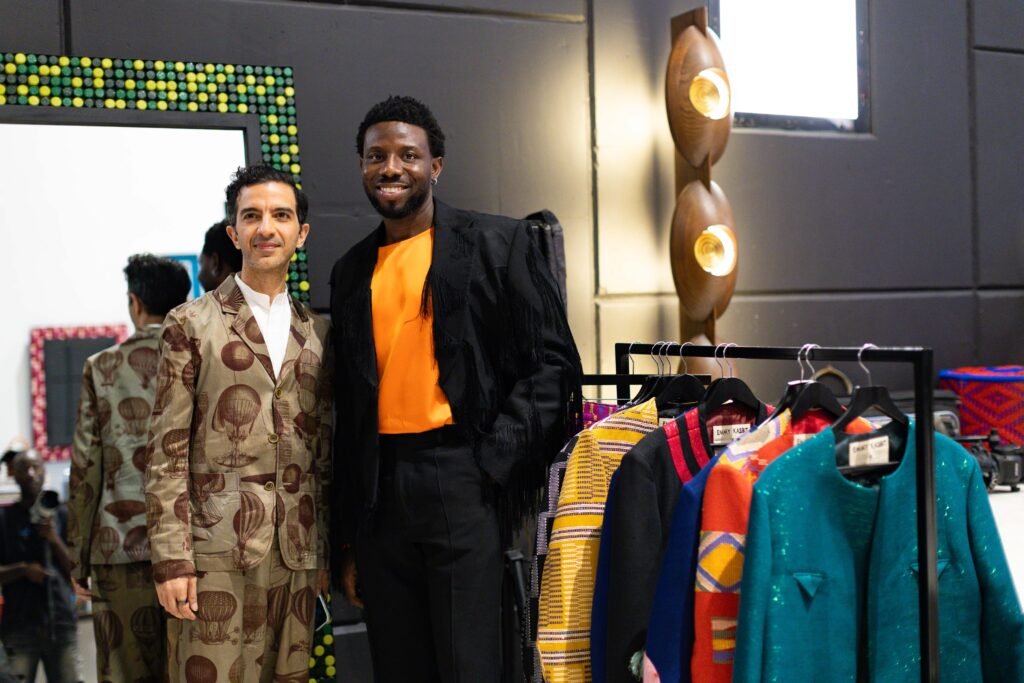
The financing discussion, “Capital That Fits: Unlocking Tailored Financing for Nigeria’s Fashion Industry”, extended that argument. Moderated by marketing communications and brand strategy professional Kemi Ogunleye, it brought together Gbolade Okeowo, director and fund manager at Kuramo Capital Management, and Dolapo Adedapo, a creative specialist at the Bank of Industry.
The panel explored funding pathways for fashion businesses and the considerations informing investment decisions. Financial accountability, proper documentation and an understanding of business performance emerged as essential preparation for labels seeking capital. Together, the sessions connected the ambition to grow with the operational discipline required to support that growth.
Textile Knowledge in Contemporary Collections
The opening-day presentations offered three interpretations of craft through material, silhouette and finish. Their differences gave breadth to the season’s theme, moving between the reinterpretation of a traditional textile and more experimental treatments of proportion and surface.
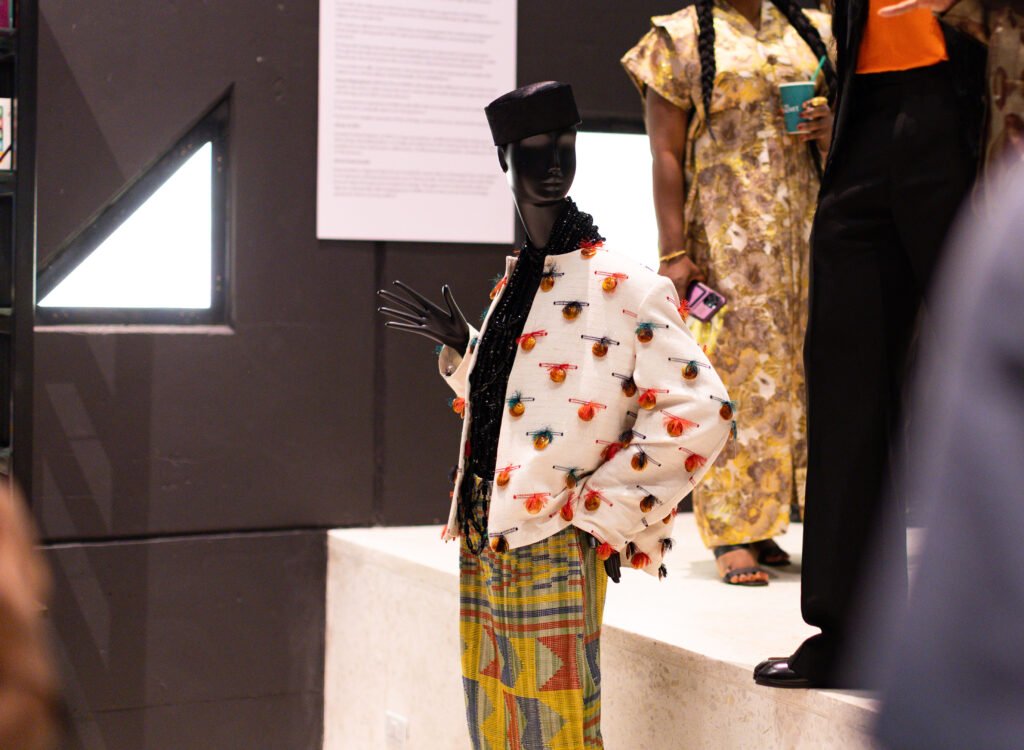
Emmy Kasbit and ALÁRA presented Akwete Reimagined, a capsule collaboration built around the handwoven textile. Statement pieces explored its application within a contemporary wardrobe, placing textile tradition in a retail context. The collaboration brought the day’s discussion of craft and commerce into a product proposition: how an established making technique can inform design intended for today’s customer.
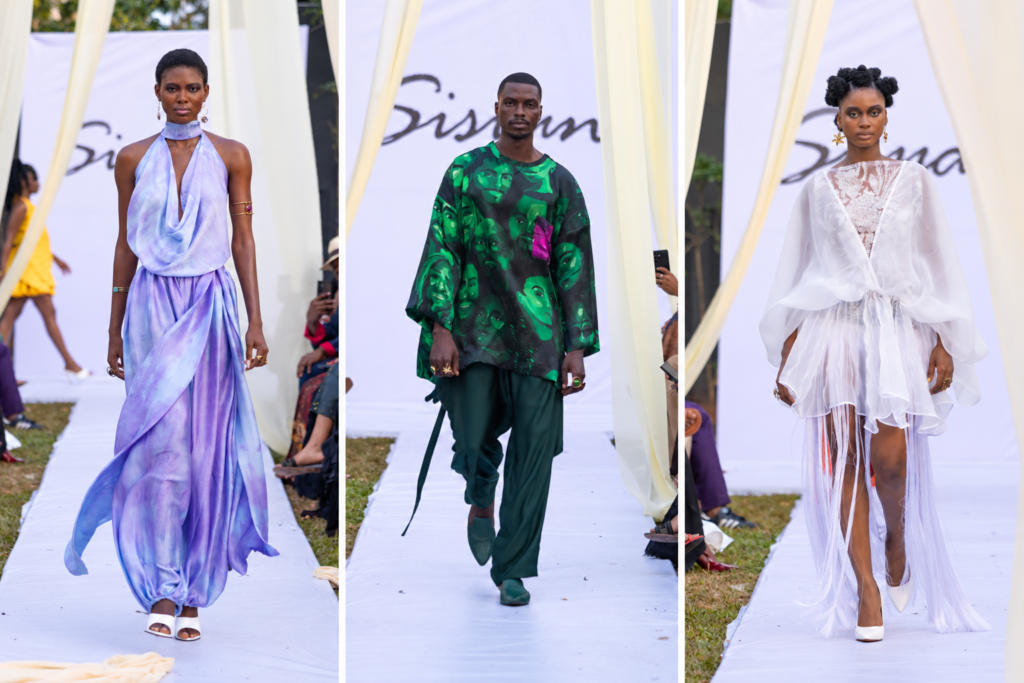
Sisiano’s Spring/Summer 2027 collection, Some Birds Fly South, approached material through movement. Sheer pieces and fringe detailing were accompanied by relaxed menswear silhouettes and hand-printed fabrics, with the treatment of cloth contributing to the collection’s fluidity. The presentation emphasised the expressive possibilities of fabric and finish within an easy silhouette.
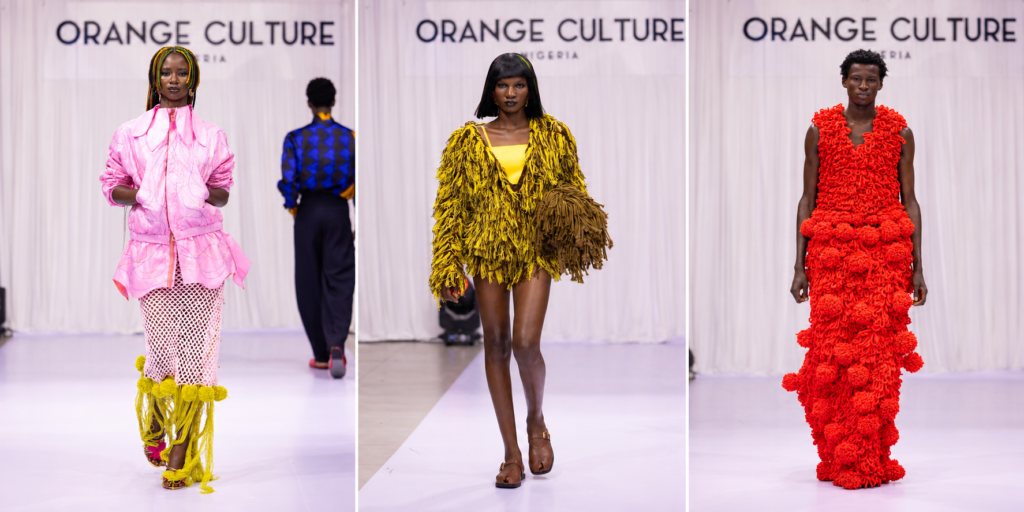
Orange Culture’s Spring/Summer 2027 collection, The In-Between, worked with familiar garment forms while altering their proportions and layering. Sheer fabrics, hand-stitched embellishments and looped-yarn surfaces introduced variation in transparency and texture across a broad colour palette. The collection’s construction details provided a different reading of the CRAFTED theme, drawing attention to how a surface is developed and how a garment sits on the body.
The day closed with the Heineken Lagos Fashion Week welcome party, hosted by Moët & Chandon, bringing designers, industry figures, media and invited guests together ahead of the main runway programme. The opening discussions had established a clear editorial context for the shows to follow: African fashion’s creative development is closely tied to the working relationships, financial management and production capacity that allow its businesses to endure.
For further information, visit Lagos Fashion Week and follow @lagosfashionweekofficial.