Discussions with Imran Amed, Omoyemi Akerele and industry leaders examined the foundations of lasting fashion businesses, while designers explored textile heritage, garment reconstruction and contemporary African identity.
Lagos Fashion Week’s second day brought questions of ownership, production and business continuity to the foreground. On 29 October, the Fashion Business Series examined the conditions designers need to protect their work and develop commercially viable companies. The runway programme gave those discussions a material context, with collections spanning indigenous textiles, reconstructed sportswear, embroidery and experimental tailoring.
Presented under the season’s theme, CRAFTED: Heritage. Innovation. Circular Futures., the programme considered craftsmanship alongside the infrastructure required to sustain it. Intellectual property, manufacturing capacity, consumption and succession emerged as interconnected concerns for an industry seeking to retain greater value from its creative output.
Ownership and the Foundations of a Fashion Business
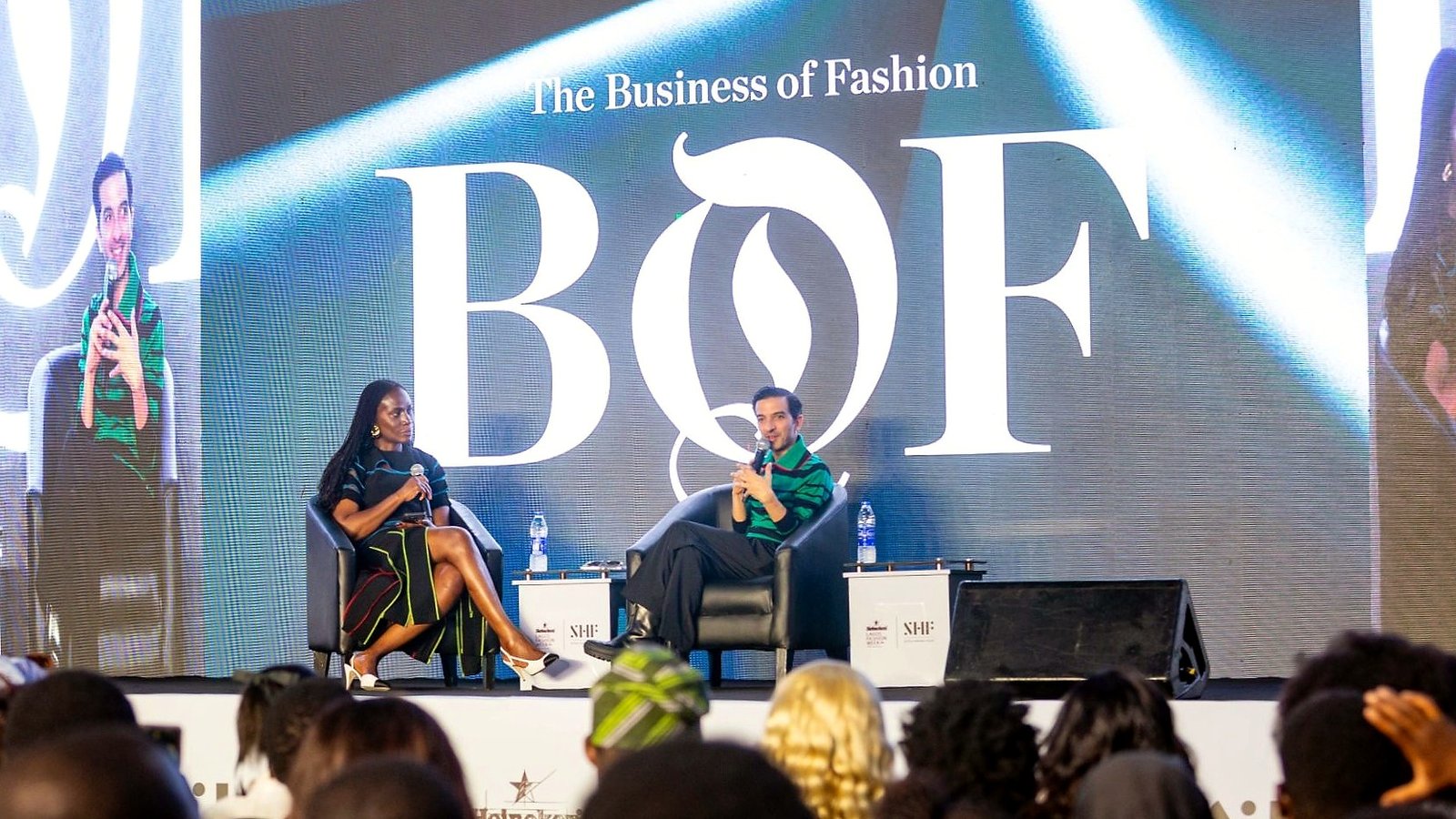
The day opened with a conversation between Omoyemi Akerele, founder of Lagos Fashion Week and Style House Files, and Imran Amed, founder and CEO of The Business of Fashion. Reflecting on his transition from management consulting to fashion publishing, Amed discussed how curiosity and openness to unfamiliar perspectives informed his career and the development of BoF. His account offered a perspective on navigating change through observation, questioning and a willingness to reconsider established assumptions.
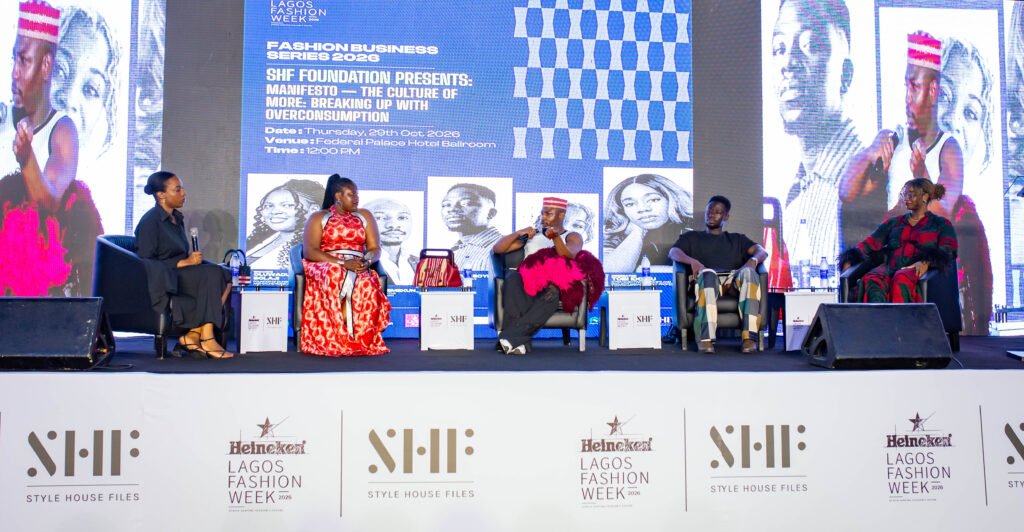
The relationship between consumption and value came into sharper focus during the Manifesto session, “The Culture of More: Breaking Up with Overconsumption”. Moderated by Tobi Idowu, the panel featured Oluwadunsin Bolaji of Dunsin Crafts and SachetBank Africa; Tunde Shoremekun of E.S.O by Liman; David Kusi Boye-Doe of BoyeDoe; and Abimbola Ogundairo, senior consultant at Africa Practice.
Speakers questioned the framing of overconsumption as primarily an African problem, placing local purchasing patterns within a global system of overproduction and inexpensive clothing imports. The discussion examined how the pursuit of constant newness affects the perceived worth of clothing, raising a commercial question for craft-based labels: how can the time, knowledge and labour invested in a garment retain their value in a market shaped by low prices and rapid turnover?
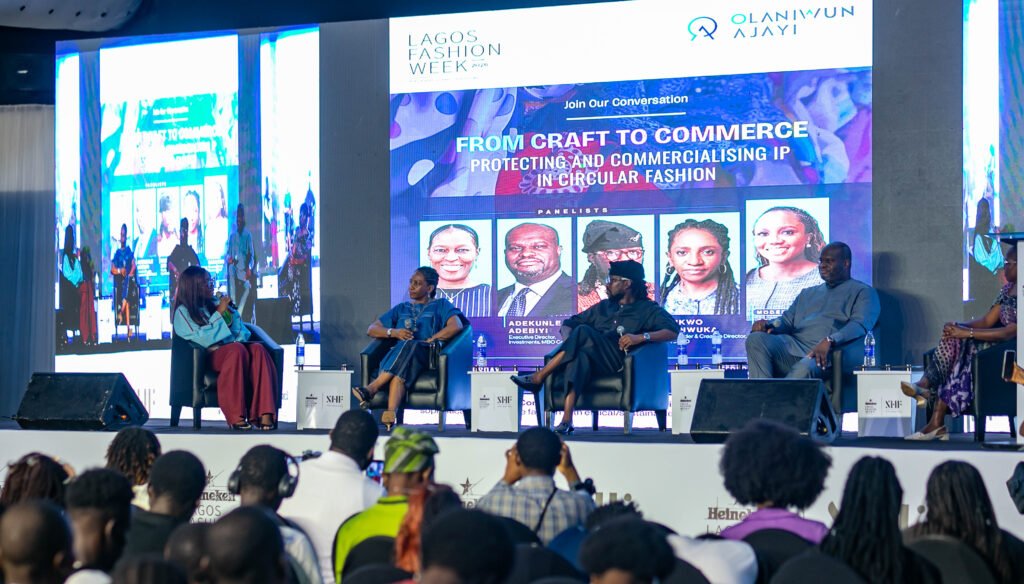
“From Craft to Commerce: Protecting and Commercialising IP in Circular Fashion” addressed another aspect of that value. Moderated by Busola Bakinson, managing counsel at Olaniwun Ajayi LP, the session brought together Toyosi Alabi, a partner at the firm; Adekunle Adeniyi, executive director of investments at MBO Capital; Ugo Monye, founder and creative director of his namesake label; and Nkwo Onwuka, founder and creative director of NKWO.
The conversation connected design ownership with the practical constraints of production. Unreliable power, limited manufacturing capacity and workforce development were discussed alongside intellectual property protection and contractual agreements. These issues placed creative rights within a broader business framework: designers need both the means to establish ownership of their work and the operational capacity to bring it to market.
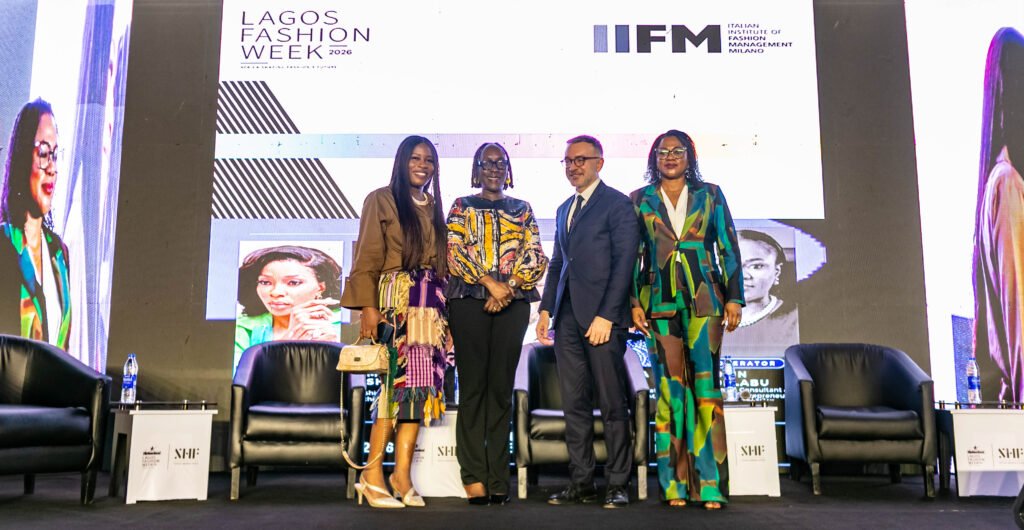
Business continuity was the focus of the Italian Institute of Fashion Management’s session, “From Creativity to Commerce: Building Fashion Businesses That Last”. Doyin Adelabu moderated the discussion with Nicola Guerini, director general of IIFM; Dr Belinda Nwosu of Lagos Business School; and Omolade Oshinubi, a fashion systems architect.
The panel considered how labels can build organisations capable of outlasting their founders. Formal management structures, adaptable business models and leadership succession were central to the discussion, alongside the need to distinguish creative direction from daily operations. For founder-led companies, the challenge is to preserve a distinctive identity while developing the systems and leadership required for continuity.
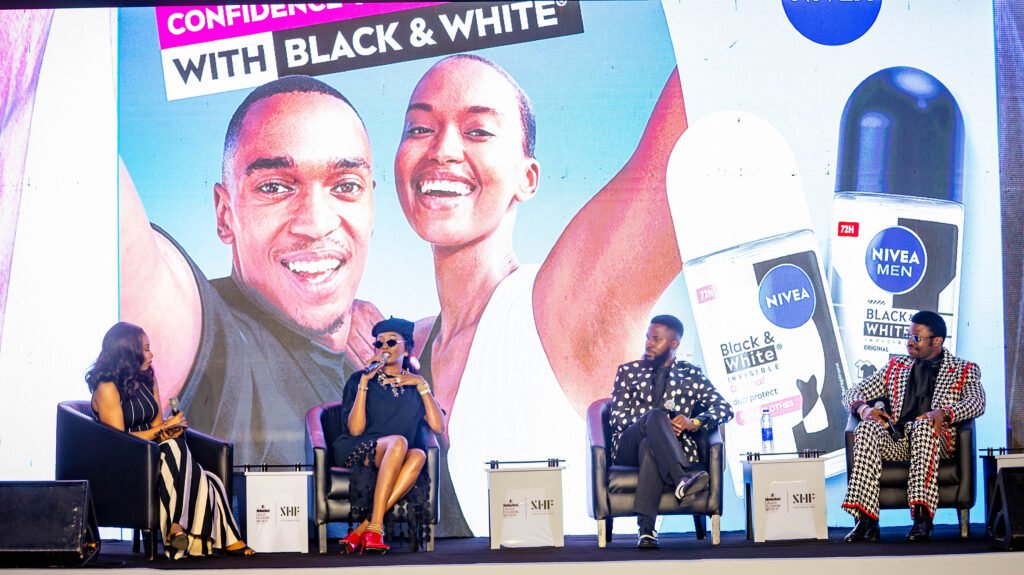
The NIVEA-sponsored session, “Wearable Confidence: The Intersection of Skincare, Body Care and Personal Style”, approached the industry through the relationship between personal care and self-expression. Moderated by Nnenna Onoh, brand manager at Beiersdorf, it featured Kie Kie, Akin Faminu and Stan Nze. Speakers examined how grooming and everyday care influence confidence, challenging the assumption that skincare is an exclusively feminine concern.
Textile Heritage and Material Reuse on the Runway
The presentations explored craft through both established design signatures and the transformation of existing materials. Kilentar’s off-site show revisited familiar pieces through plaid dresses and swimwear, with fringing introducing movement. At the tents, Hertunba extended the vocabulary of its previous presentation, Akaoru, through drop-waist silhouettes, beaded embellishments and statement fringe in blue, brown and black.
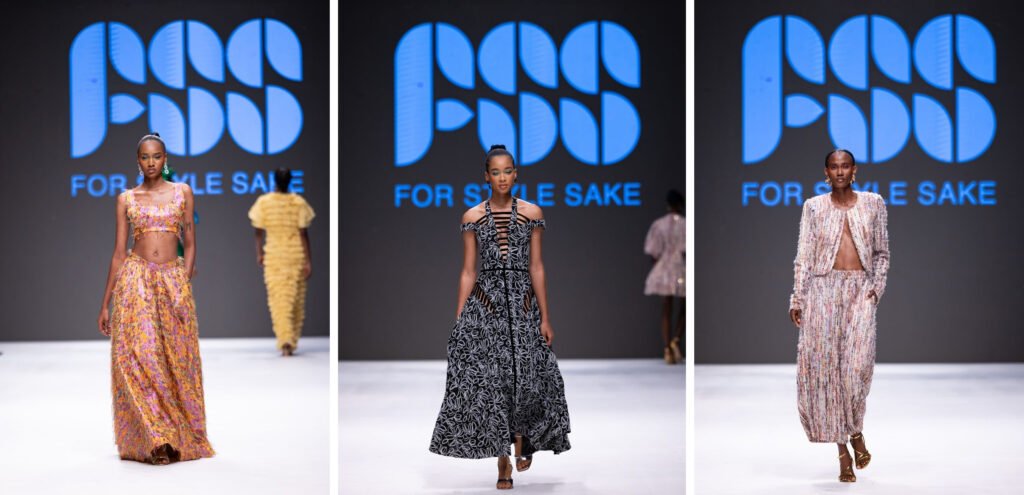
For Style Sake’s Áríyá collection moved between textured tweeds, multicoloured polka dots, structured aso oke, organza and sheer dresses. Bakusoraya, based in the Republic of Benin, placed indigenous textiles within a more restrained palette, using embroidery and fringing to articulate the surface of the clothes. The two presentations demonstrated different approaches to making textiles central to a collection’s identity.
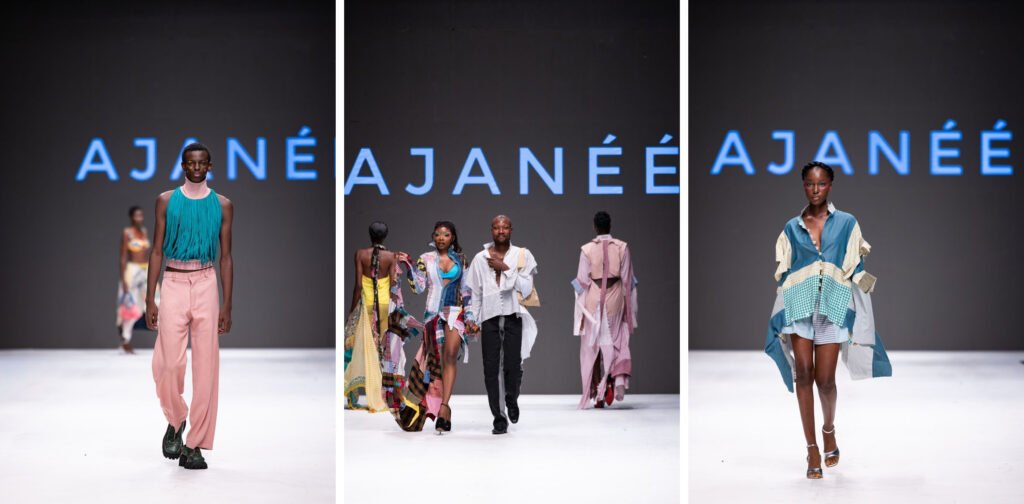
Ajanéé gave material reuse a direct expression in its Spring/Summer 2027 collection, Masquerading (Cloth as Spirit). Existing garments were deconstructed and reassembled, with old jerseys transformed into dresses and paired with sheer fabrics. Reconstruction served as the collection’s design method, making the previous life of a garment part of its new form.
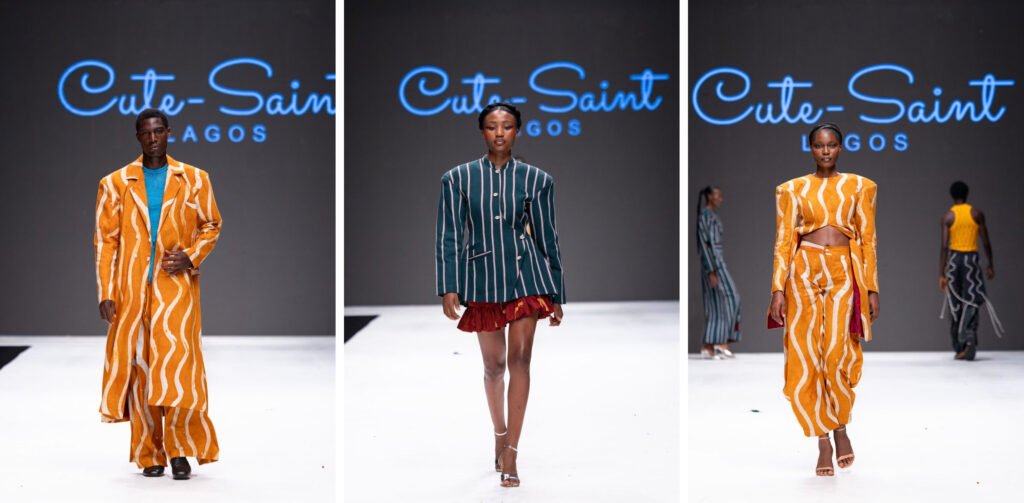
Traditional references also informed Cute-Saint’s presentation, which featured adire, cowrie embellishments and a closing masquerade performance. Street Souk presented work from four designers, bringing together bomber jackets, metallic finishes, experimental headwear, detachable hoodies and leather interpretations of the agbada. Its treatment of the traditional garment placed a familiar silhouette within a contemporary streetwear vocabulary.
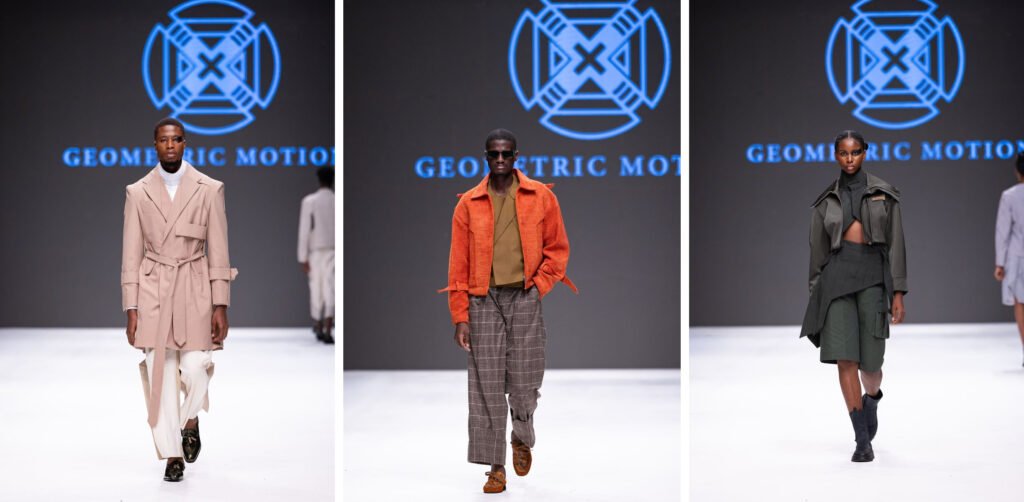
Geometric Motion Design Lab combined geometric cuts with streetwear and suiting, while Dust of the Earth explored nostalgia and identity through graphic prints, textured fabrics and fabric manipulation. DWL worked with structured tailoring, rich colour, fringe and draping; ChicNiCity favoured fluid silhouettes, sculptural details and vibrant colour combinations.
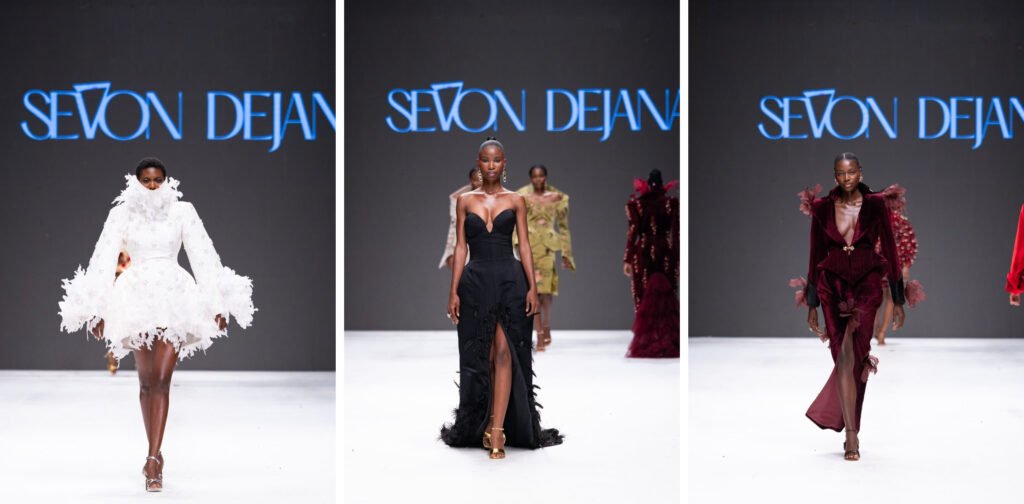
Embroidery and embellishment defined Sevon Dejana’s collection, where floral details accompanied structured silhouettes. Maliko offered a quieter proposition through loose shapes and understated tones, while Garbe emphasised vivid prints and expressive colour. Imprint South Africa paired graphic textiles with volume, and Oshobor introduced a theatrical quality through textured surfaces and a palette of yellow, red and purple.
Iremitide’s occasionwear incorporated shimmering gold and bright colours, while Christie Brown combined neutral tones, printed chiffon and metallic finishes with sharp tailoring. Across these presentations, surface treatments and fabric choices provided distinct points of departure, ranging from decorative detail to the construction of the silhouette itself.
Cynthia Abila and NKWO closed the day. Abila’s The Common Ground, dedicated to her father, brought a personal reference to the programme’s exploration of heritage. NKWO continued its engagement with sustainable design through relaxed, carefully considered silhouettes, following Onwuka’s earlier contribution to the discussion on intellectual property and commercial development.
The day’s strongest connection between the conference programme and the runway concerned how creative value is established and retained. Garment reconstruction and indigenous textiles offered tangible subjects for that debate, while the business sessions examined the rights, production capacity and organisational structures needed to support them. Together, they placed the future of African craft within the decisions that determine how fashion is made, owned and sold.
For further information, visit Lagos Fashion Week’s official website and follow @lagosfashionweekofficial on Instagram.