
For more than 15 years, Milan-based audiology professional Luca Sacchi has worked with people experiencing hearing loss. Beyond the clinical environment, he has developed a photographic practice shaped by solitude, patience and an unconventional understanding of artistic success. In conversation with The Fashion Issue, he reflects on the experiences that formed him, the discipline behind his landscapes and why some moments are more valuable when left unphotographed.
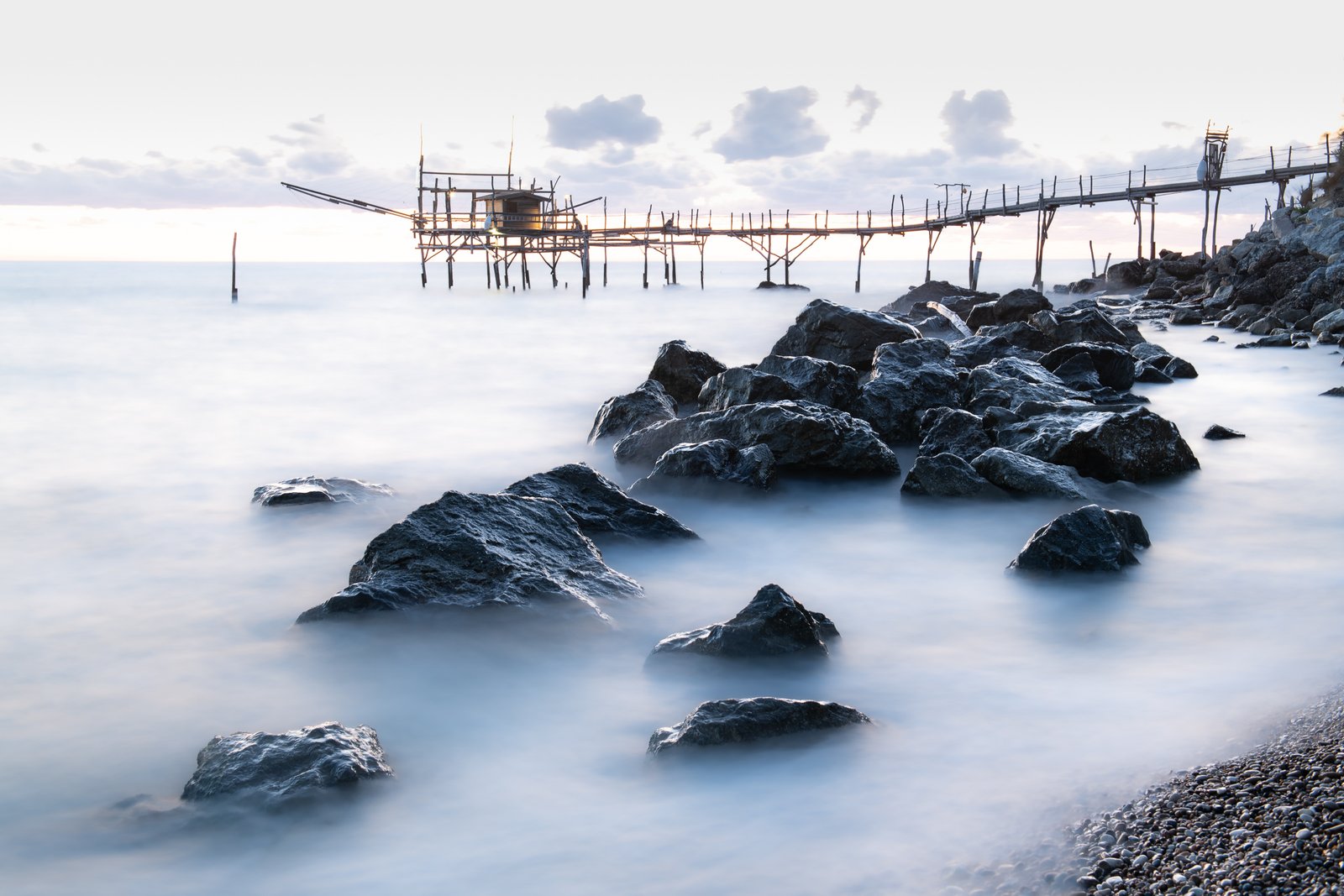
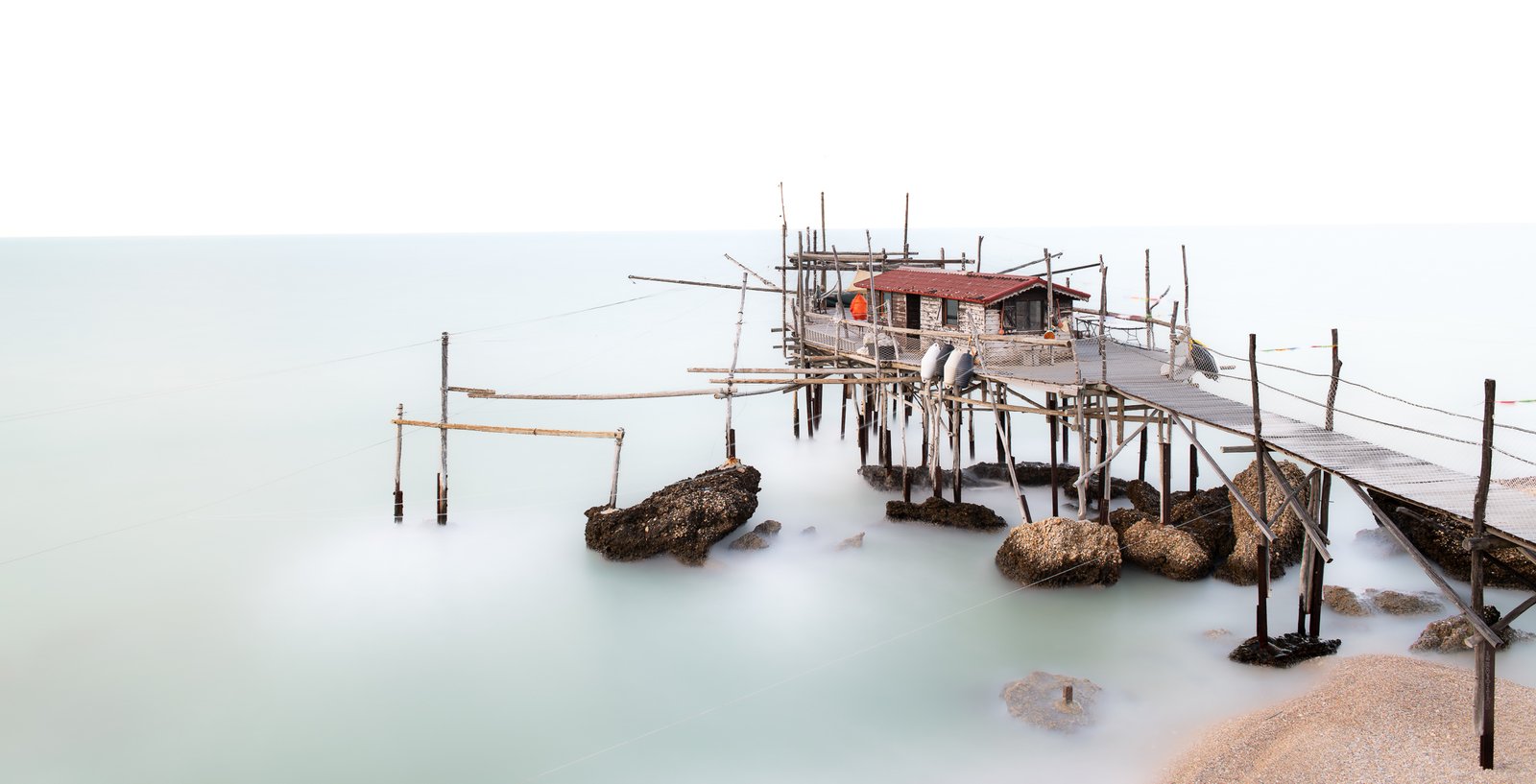
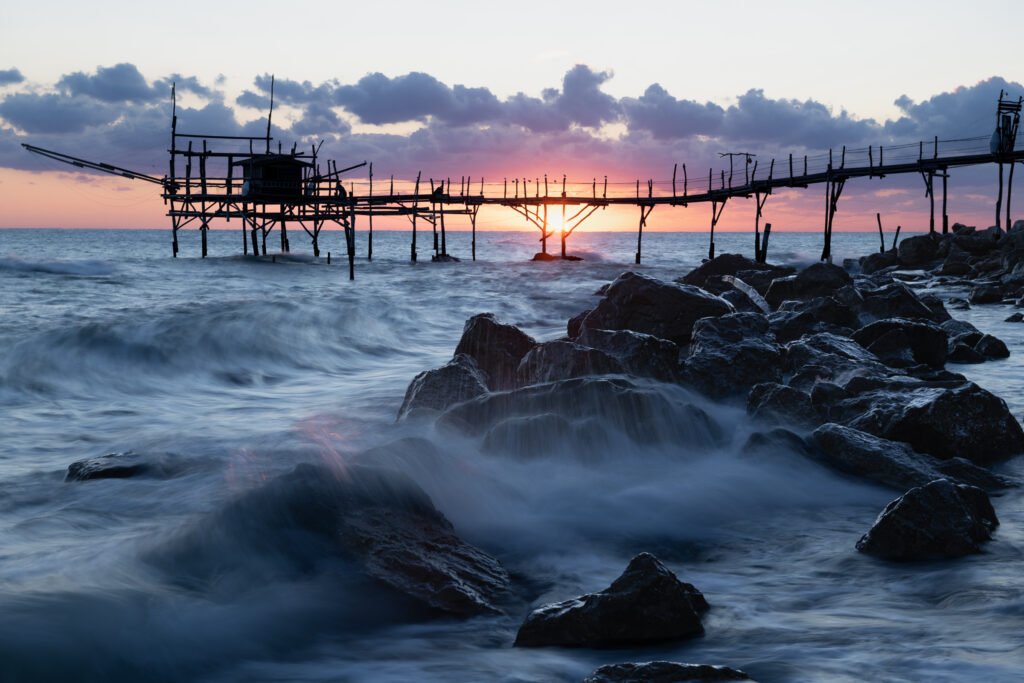
Luca Sacchi spends his professional life helping people reconnect with sound. Away from his work in audiology, he pursues an altogether different experience: the stillness of landscapes where human presence becomes almost imperceptible. The Genoa-born, Milan-based photographer travels through mountains, forests and remote coastal environments, sometimes departing before dawn and waiting for hours to capture a particular quality of light. His photographs are characterised by muted colours, minimal compositions and long exposures that transform movement into something approaching stillness.
The apparent tranquillity of these images conceals a demanding creative process. For a photographic series in Abruzzo, Sacchi travelled seven hours from Milan, slept very little and spent extended periods in the mountains, working around unpredictable weather conditions. Such journeys are meticulously planned, yet the outcome remains uncertain. It is not unusual for him to return without the image he had imagined.
“Perhaps the value of a work lies not only in what its creator intended to communicate, but above all in what others continue to discover within it.”
— Luca Sacchi
His attraction to solitude has roots in a childhood that was not always easy. Growing up in Genoa, Sacchi struggled to find his place among his peers. Bullying and difficult school experiences encouraged introspection, while literature, music and imagined adventures offered alternative ways of engaging with the world. As he grew older, he became increasingly drawn to quiet, sparsely populated places, searching for an environment that felt more beautiful than the one he encountered in everyday life.
At home, however, creativity was woven into family life. His father, a seafarer, introduced him to the idea of travel through stories of distant places, while his mother represented stability and a connection to home. Both were passionate about music, particularly Italian singer-songwriters, and despite limited space, the family always made room for books and records. Sacchi remembers his mother singing Fabrizio De André and describes creativity as an almost inevitable consequence of growing up surrounded by stories, music and curiosity.
His eventual professional path emerged unexpectedly. Audiology was not a childhood ambition but an alternative career choice that gradually became an important part of his identity. Over more than 15 years, he has worked with people experiencing hearing loss, developing a profession that combines technical knowledge with sustained human interaction. The emotional demands of this work are considerable, particularly when patients’ experiences extend beyond clinical treatment into questions of relationships, ageing and mortality.
The Fashion Issue: Has there been a patient or professional encounter that fundamentally changed how you understand human connection?
Luca Sacchi: There was a terminally ill patient whose wish, during the final months of his life, was to be able to hear his wife, who was also seriously ill.
I visited him at home, and over time, those appointments became long conversations about life and death. He had lived an extraordinary life. He was a highly accomplished lawyer, a man of encyclopaedic knowledge and remarkable clarity of mind.
“Even today, some of those encounters remain more vivid in my memory than others.”
— Luca Sacchi
The experience illustrates the extent to which Sacchi’s profession is concerned not simply with hearing, but with the relationships and memories that sound makes accessible. Photography, by contrast, allows him to direct his attention away from the needs of others and towards his own experience of time and place.
The turning point came during a trip to Norway, shortly after he purchased his first Nikon camera. Standing in a freezing forest while waiting for the Northern Lights, Sacchi realised that photography could offer something beyond the preservation of memories. It became a way of finding relief from the pace of urban life and reconnecting with himself. He has continued to photograph primarily for personal reasons, acknowledging that his wife often has greater confidence in his creative work than he does.
Although medicine and photography might appear to occupy opposing worlds, Sacchi sees a strong connection between them. Both demand observation, precision and a willingness to work methodically. Landscape photography, he argues, requires knowledge of tides, the movement of the sun, technical equipment and the behaviour of light. Far from being an entirely intuitive pursuit, it involves anticipating an image long before pressing the shutter.
TFI: Your medical career requires constant engagement with people, while photography takes you into places where you are often alone. What do you find in those moments away from your professional responsibilities?
Luca Sacchi: I enjoy waking up at five in the morning, making my way to a location I have carefully planned, setting up my equipment and simply waiting.
I like exchanging a quiet nod with another photographer I happen to meet and sharing the moment without speaking. There is often a mutual understanding and respect between us. You can look at another photographer and recognise something of yourself in them.
The Discipline Behind Stillness
Sacchi’s photographic journeys have taken him through Abruzzo, the Dolomites, Iceland and Spain. His destinations are chosen through extensive research rather than spontaneous exploration. With limited free time outside his medical career, he studies locations carefully, examining geography, weather and light to minimise the risk of an unproductive trip. Unexpected discoveries remain possible, but preparation provides the foundation for his work.
That discipline does not protect him from disappointment. Sacchi acknowledges that he returns from photographic journeys without achieving the result he had imagined more often than he returns satisfied. Exposure to the work of other photographers through social media has only heightened those expectations, creating a constant temptation to measure his own images against increasingly spectacular examples.
TFI: Your photographs often convey profound tranquillity, yet their creation can involve considerable physical effort and uncertainty. Is there an image whose story might surprise someone who has only seen the finished result?
Luca Sacchi: I have a photograph taken from above Tromsø, in Norway. The story behind it involves a rather reckless hike that went badly wrong. I lost my way during the ascent, with snow almost reaching my knees and the short winter daylight already gone by noon.
Technically, the photograph is not even particularly good. There is probably too much noise in the darker areas, and I suspect there is some slight camera shake as well. But whenever I look at it, I see the snow and the lights of the city below, resembling a little Christmas nativity scene. And I still smile.
The memory reveals an important distinction in Sacchi’s relationship with photography: technical accomplishment and personal significance do not always coincide. Although he is meticulous in his preparation, the value of an image may ultimately depend on the experience associated with its creation rather than its formal perfection.
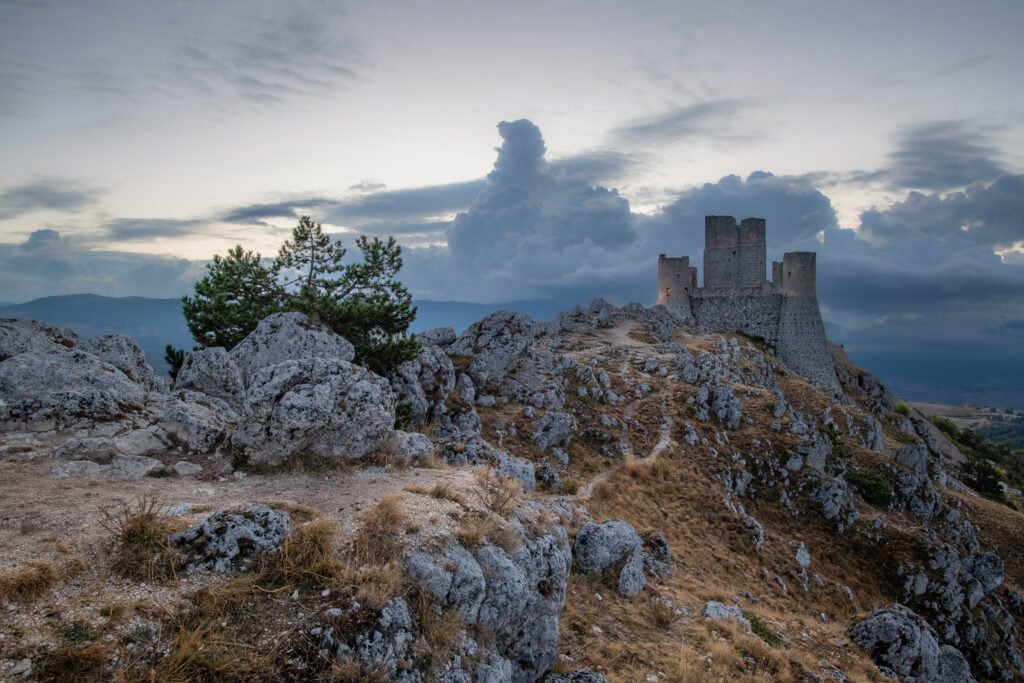
His visual language reflects a similar resistance to conventional expectations. While contemporary landscape photography frequently celebrates dramatic scenery and heightened colour, Sacchi gravitates towards minimalism, negative space and subdued tones. Many of his locations have been photographed extensively, but he is less interested in presenting them as extraordinary destinations than in creating images that reflect his own emotional response.
TFI: Your photographs rarely pursue the monumental or spectacular qualities often associated with landscape photography. What draws you towards this more restrained visual language?
Luca Sacchi: I simply do not have a visual language that gravitates towards grandeur. Sometimes I envy those who do. But my introverted nature leads me towards restraint and solitude. Where others make their images shout through colour, I desaturate mine and try to infuse them with my own melancholy. Because, ultimately, I photograph for myself.
“I often like to isolate a subject, giving it space and emptiness around it. I favour minimalism.”
— Luca Sacchi
Long exposure is another defining element of his practice. By allowing water, clouds and light to move through the duration of an image, Sacchi creates compositions that appear almost suspended in time. The technique also changes his experience of photographing, requiring him to observe gradual transformations rather than pursue an instantaneous result. For someone whose working life is structured around appointments and responsibilities, it offers an opportunity to experience time at a different pace.
His preference for landscapes without visible human activity is equally deliberate. Sacchi is drawn to abandoned places and environments where nature appears to be erasing traces of human intervention. He is willing to arrive at a location as early as three in the morning to photograph it without visitors, reflecting an interest in landscapes that suggest how temporary humanity’s claim over the natural world may be.
Among his journeys, Iceland occupies a particularly significant place. Travelling through its remote landscapes, he experienced days without encountering another person, an experience that changed both his understanding of solitude and his approach to photography.
TFI: You have described Iceland as a turning point. What changed for you during that journey?
Luca Sacchi: There was a very clear before and after. I had never felt so full and so empty at the same time. I could go for days without encountering another person on the road.
“I learned how to be alone with myself, and that experience gave me the space to reflect on my own photographic language.”
— Luca Sacchi
For someone whose early experiences of isolation were shaped partly by difficult circumstances, the ability to choose solitude has acquired a different meaning in adulthood. What was once an unwanted condition has become a space for observation and creative independence.
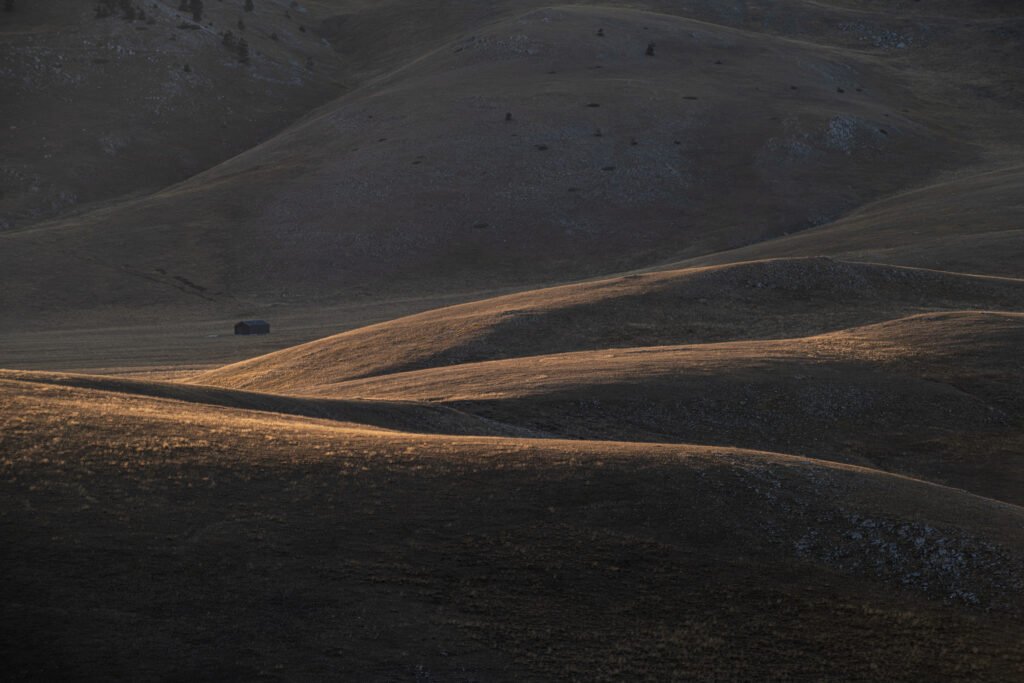
Beyond the Beautiful Image
Sacchi’s relationship with artistic recognition is notably cautious. Although his work reflects a considered visual approach, he is reluctant to describe himself as an artist, questioning the tendency within contemporary visual culture to assign exceptional value to almost any aesthetically successful image. He is particularly critical of the ease with which words such as art and masterpiece are used, suggesting that their overuse risks diminishing their significance.
TFI: What, in your view, distinguishes a beautiful photograph from a work of art? And how do you recognise artistic value in your own work?
Luca Sacchi: I have always struggled to recognise artistic value in my own work. I am too familiar with the compromises and imperfections behind my photographs to look at them with the necessary distance.
We live in an age when everything seems to have to be extraordinary, when every successful image becomes a work of art and every creator an artist. By constantly assigning exceptional value to almost everything, we risk losing the ability to recognise what is genuinely exceptional.
“I do not believe beauty alone is enough to make a photograph a work of art.”
— Luca Sacchi
A beautiful image may satisfy the eye, but I believe a work of art should survive beyond that first glance, leaving something that continues to exist within the person who has seen it. In that sense, I think time is one of the harshest judges. Not necessarily the fairest, because history is full of forgotten artists and rediscovered works, but certainly one of the most significant.
An image that continues to be viewed, interpreted and passed down through different generations demonstrates that it possesses something beyond the tastes and fashions of its time.
Perhaps the value of a work lies not only in what its creator intended to communicate, but above all in what others continue to discover within it, even when the person who created it is no longer there to explain it.
For that reason, I do not believe it is my place to define what I do as art. All I can do is try to remain sincere in my visual language, hoping that someone looking at one of my photographs might find something worth holding on to.
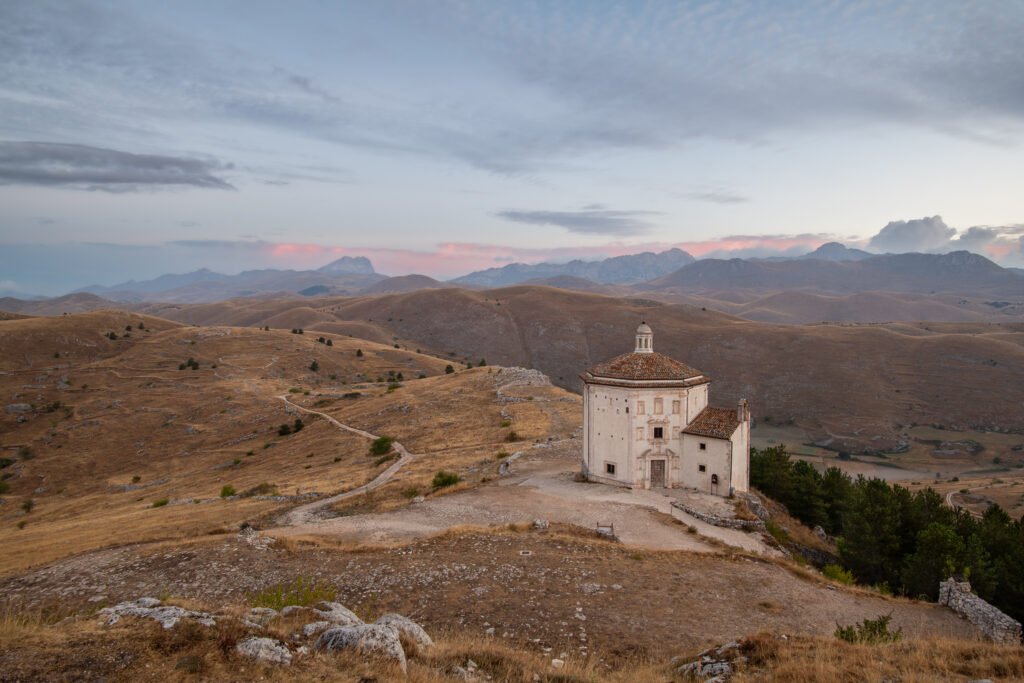
His scepticism extends to the contemporary culture of image production. Social media, he argues, has created a visual environment in which unattainable standards coexist with endless imitation. For photographers seeking recognition, the pressure to produce new work can become inseparable from the creative process itself.
Sacchi occupies a different position. His medical career allows him to pursue photography without depending on it financially, and he considers that independence a privilege. He maintains his Instagram account intermittently, enters competitions largely at his wife’s encouragement and resists the expectation that every opportunity should result in a photograph.
“I remain faithful to my own rhythm because I have the privilege of photographing because I want to, not because I have to.”
— Luca Sacchi
TFI: In an environment increasingly driven by visibility and constant content production, what does creative freedom mean to you?
Luca Sacchi: Social media has created standards that are unattainable on one hand and banal on the other, producing copies of copies of copies of the same image. I appreciate the luxury of choosing not to take a photograph, even when the opportunity is right in front of me, because I know that what I have seen will remain in my memory.
The Freedom to Remain Unchanged
As Sacchi begins introducing his photography to a wider audience, he appears uninterested in redefining himself through professional recognition. Asked whether he identifies primarily as a medical professional with a passion for photography or as an artist who also practises medicine, he resists the distinction. His ambitions remain grounded in the routines that have come to define his creative life: walking before sunrise, travelling in search of particular landscapes and spending evenings beneath star-filled skies.
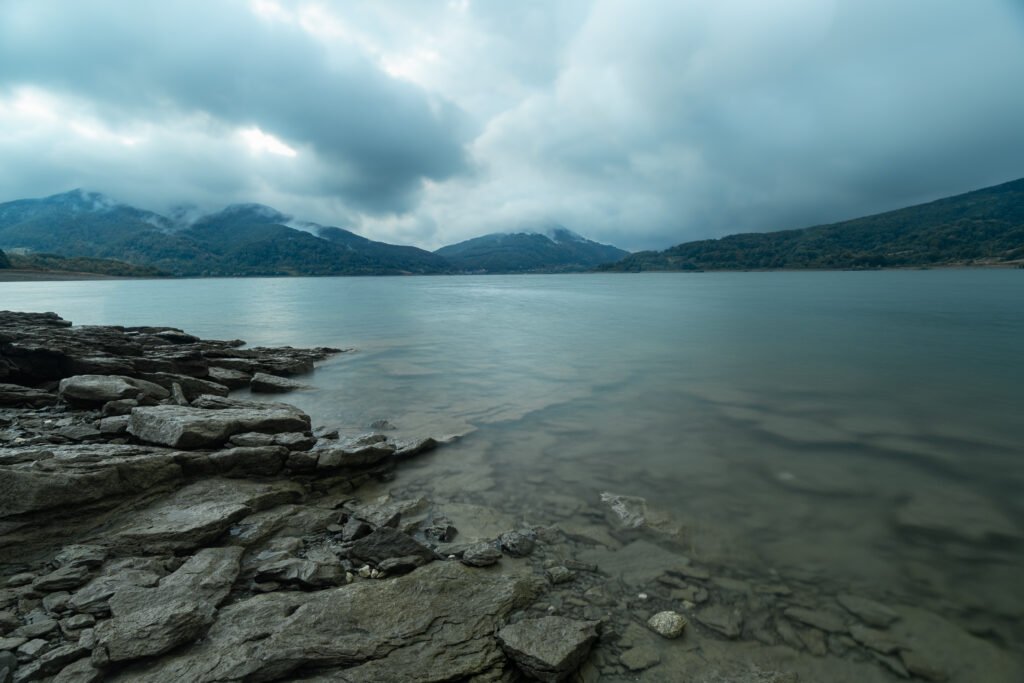
TFI: As your work reaches a wider audience, how do you imagine the next chapter of your creative journey?
Luca Sacchi: My creative journey is the same today as it was yesterday and as it will be tomorrow. I still see myself walking for miles before dawn and heading out again in the evening in search of star-filled skies.
“I hope that anyone who looks at one of my photographs might experience that same sense of freedom.”
— Luca Sacchi
I feel just as free as I did the day before. And I hope that anyone who looks at one of my photographs might experience that same sense of freedom, even if only for the brief moment they spend looking at something I have created.
TFI: If you were to return to these photographs many years from now, what would you most like to remember about the person you are today?
Luca Sacchi: The carefree feeling of those moments when I was alone, carrying a camera that was already old, with very little money in my pocket, and when I would have smiled at anyone.
It is an answer that brings Sacchi’s story back to its beginnings, but with a different understanding of solitude. Photography has not necessarily transformed him into someone else; rather, it has offered a means of experiencing the world with greater independence, allowing him to pursue beauty without the obligation to explain, justify or preserve every encounter.
In a visual culture increasingly concerned with what can be captured and shared, Sacchi’s work offers a quieter proposition: that some of the most meaningful experiences may be those we allow ourselves simply to inhabit.
Photography: Luca Sacchi | Instagram: @lucasacchi.slowphoto
*This interview has been edited and condensed for clarity.