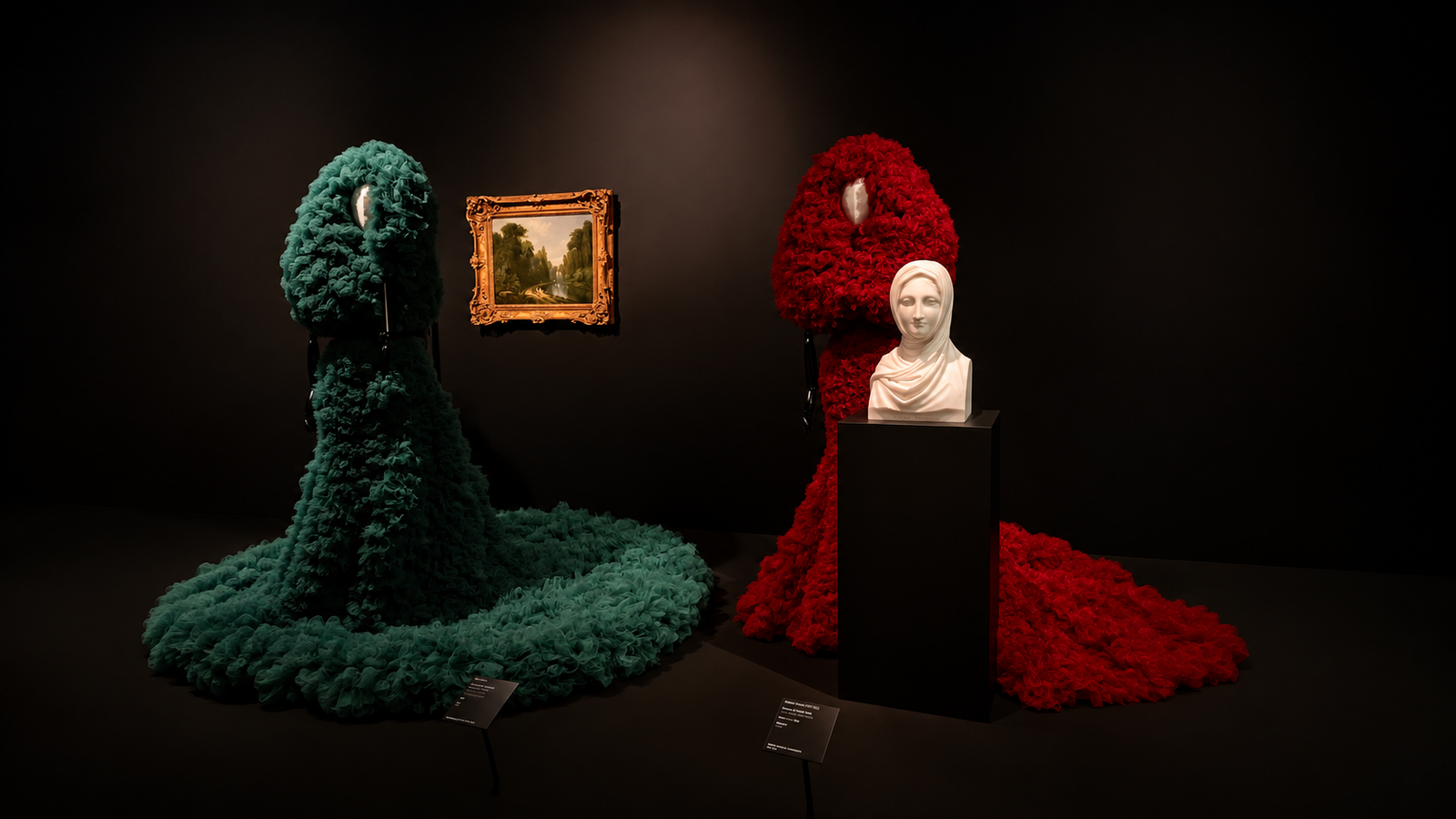
From Lisbon’s design collections to the textile archives of Terrassa, these institutions offer a deeper understanding of fashion through clothing, craftsmanship and cultural memory.
Fashion rewards attention to what comes next. Museums invite a different kind of looking: at the construction of a sleeve, the history of a woven surface or the relationship between clothing and the society that produced it.
Across Portugal and Spain, five institutions offer complementary ways into that conversation. Their collections connect design with daily life, technical knowledge and personal identity. For anyone interested in fashion’s future, they provide an opportunity to examine the ideas and skills already held within its past.
Lisbon: Design, Dress and Everyday Life
In central Lisbon, MUDE – Museu do Design places fashion within a wider exploration of how objects are conceived, produced and consumed. Its long-term exhibition, What Are Things For?, brings together design from 1900 to 2020, encouraging visitors to consider the decisions and social circumstances behind familiar forms.
Fashion is an active part of that enquiry. The museum rotates garments to support their preservation and introduce different pieces from its collection. In March 2026, it brought 51 new fashion ensembles into the exhibition, representing Portuguese and international designers. Even the exhibition’s construction contributes to its argument: materials recovered from the building works were reused in the displays. Explore MUDE.
Fashion’s future will require new ideas. It will also require the ability to recognise, interpret and carry forward what already exists.
Elsewhere in Lisbon, Museu Nacional do Traje offers a more concentrated encounter with dress history. Set within the Monteiro-Mor estate, it preserves clothing and accessories that reveal changing ways of dressing across generations. The collection includes adult and children’s clothing, allowing fashion to be considered through both public appearance and intimate, everyday experience. Explore Museu Nacional do Traje.
Together, the museums encourage a more attentive understanding of clothing. A garment can be a designed object, a marker of status, a record of labour and a personal possession. Its survival makes those different histories available for examination.
That longevity also offers a useful perspective on sustainability, although a preserved garment is not automatically evidence of responsible production. What museums make visible is the knowledge required to understand materials, care for objects and recognise value beyond a single season.
Spain: From Couture to the Textile Archive
In Madrid, Museo del Traje places historical, traditional and contemporary clothing within a broad account of dress. Its collections offer a way to follow changes in silhouette, technique and social convention over time. The contemporary holdings include work by Mariano Fortuny, whose experiments provide one point of entry into the relationship between fabric, movement and the body. Explore Museo del Traje.
The value of such a collection lies partly in the connections it permits. Clothing carries inherited techniques even as it responds to new ways of living. Looking across periods can reveal how much apparent novelty depends on the adaptation of existing ideas.
On the Basque coast, Cristóbal Balenciaga Museoa brings that attention to the work of a single designer. Located in his hometown of Getaria, the museum’s collection explores Balenciaga’s professional career and personal history, providing a setting in which to consider his contribution to twentieth-century couture. Explore the Balenciaga collection.
Here, construction becomes central to the experience of fashion. Volume, proportion and the relationship between fabric and the body reward close observation. The museum offers an opportunity to approach the designer through the work itself and the knowledge it embodies.
In Terrassa, near Barcelona, Museu Tèxtil widens the focus again. Its holdings encompass textiles from different cultures and historical periods, alongside clothing and fashion accessories. The collection extends from early Egyptian fabrics to contemporary dress, bringing material history into conversation with the finished garment. Explore Museu Tèxtil’s collections.
That breadth matters. Before clothing becomes an image or a silhouette, it begins with fibres, structures, dyes and processes. Textile collections preserve evidence of those decisions, offering resources for understanding how fashion has been made and how that knowledge might inform future practice.
These museums deserve time rather than a hurried visit between other destinations. Each offers a different scale of attention: the social life of design, the history of dress, an individual couturier’s practice or the material foundations of clothing.