
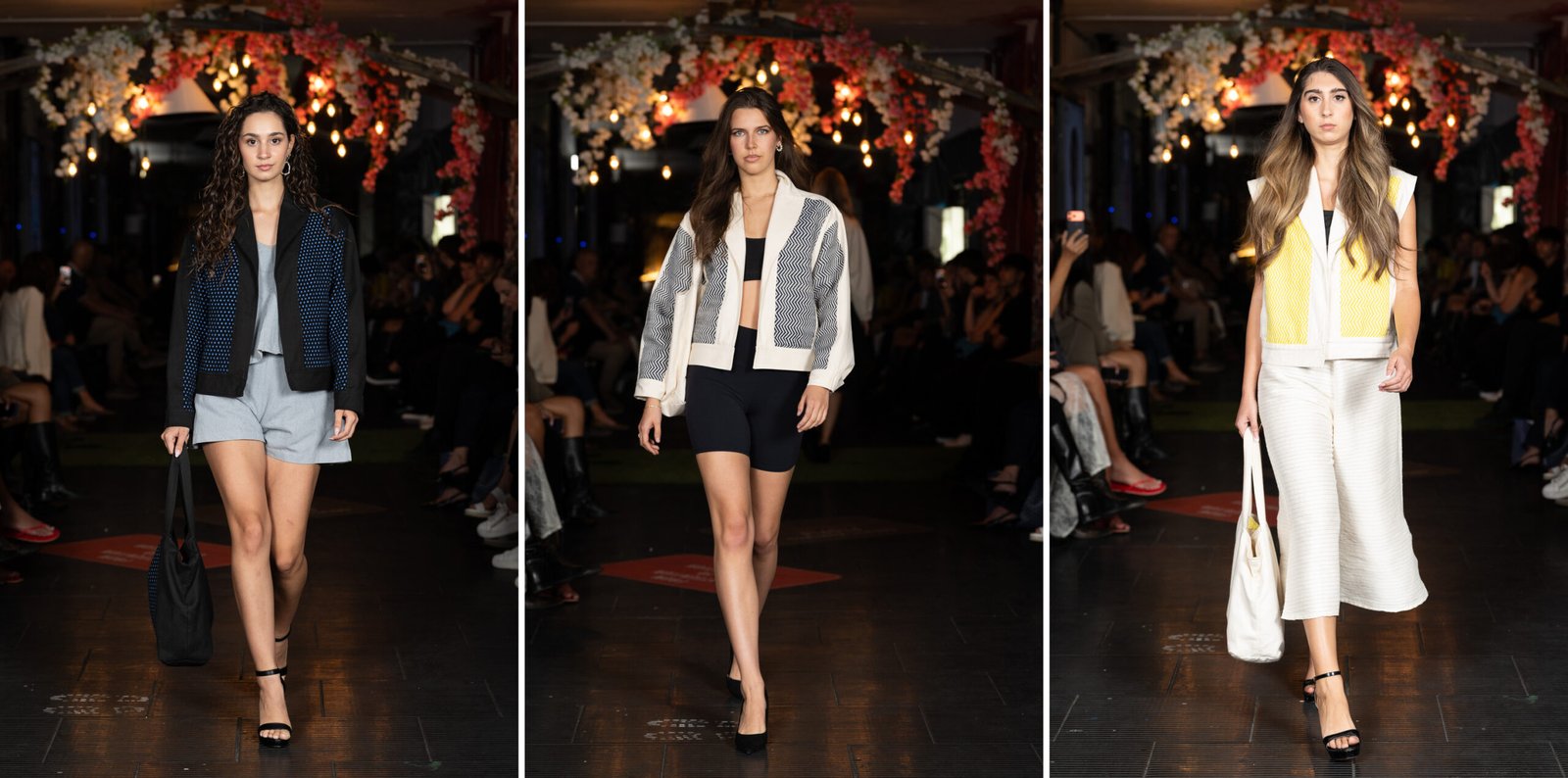
Following Green Fashion Week Milan, the Swedish designer discusses how Guatemalan handwoven textiles reshaped her approach to clothing, the creative partnership behind VÄV and the expressive possibilities of sustainable fashion.
For Emma Bogren, presenting VÄV at Green Fashion Week Milan offered an opportunity to challenge a persistent visual stereotype. Sustainable clothing, she argues, is still too readily associated with subdued basics in beige, brown and grey. Her collection makes a different proposition: responsible design can accommodate strong colour, distinctive texture and attitude.
That ambition reflects a change in her own aesthetic instincts. Bogren had experimented with vivid colours before, only to return to what she describes as the Scandinavian colour uniform of white, navy, grey and black. Visiting Guatemala and Mexico encouraged her to reconsider that restraint. She discovered how much she enjoyed stronger colours, particularly against a black or white base.
The collection’s construction developed from an equally consequential encounter with the material. The backstrap-woven textiles she works with through Cojolya, a Maya weavers’ association in Guatemala, presented a width unfamiliar from her experience with conventional fabrics. Bogren explains that the textiles measure a maximum of half a metre across, compared with the approximately one-and-a-half-metre width she was accustomed to using.
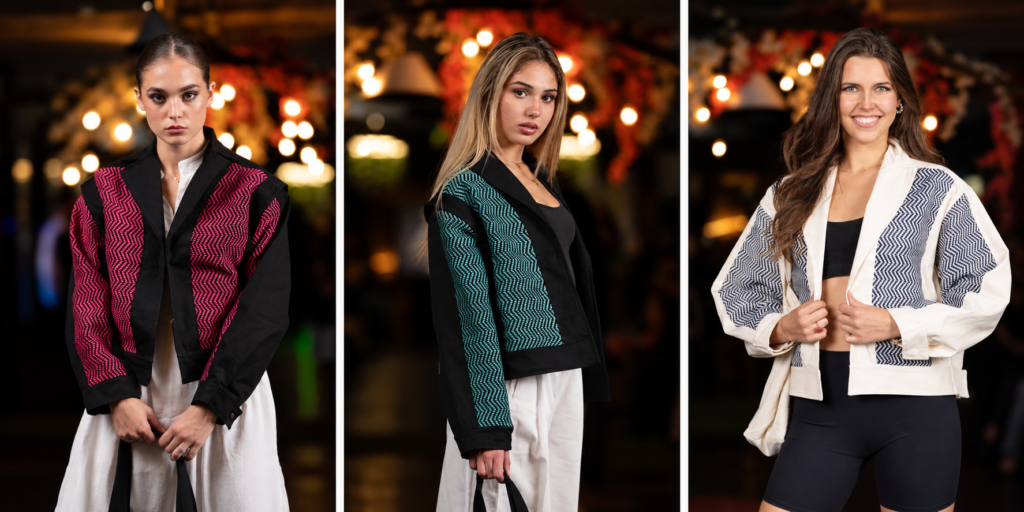
The difference led her to design in panels. She began imagining the jackets through the architecture of a typical Swedish house: a clean, functional structure, with windows opening onto another culture. Black and white fabrics establish the framework; the woven sections introduce the artistry, colour and texture of the brocades.
“For me, it represented the marriage of both cultures.”
Emma Bogren
The result connects Scandinavian functionality with textiles whose patterns originate in the weavers’ observations and creative practice. Convertible jackets with detachable sleeves bring that exchange into clothing intended for regular wear.
As part of The Fashion Issue’s Green Fashion Week Milan interview series, Bogren reflects on how these relationships inform her work, the care that handwoven cloth demands and her understanding of lasting luxury.
The Fashion Issue: Your earlier collection, Beautiful Chaos, drew on environmental disasters. How has the emotional character of your work evolved since then?
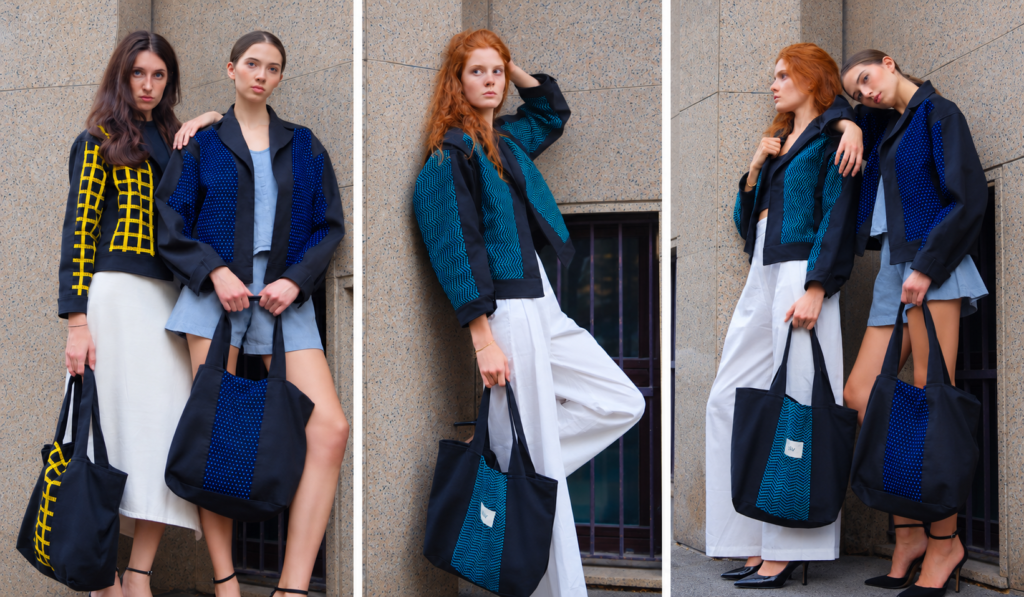
Emma Bogren: Beautiful Chaos was based on finding small pieces of beauty in the disasters happening around us. When designing the current VÄV collection, I wanted the jackets to connect with all our senses: feeling the textures of the brocades, made from natural materials that allow the skin to breathe and the body to move freely; hearing the crisp sound the cotton makes as it moves; and seeing the colours and textures created by human hands.
You can almost imagine smelling the fresh air around Lake Atitlán as the artisans weave, with the volcanoes surrounding the lake. I also imagine wearing the jacket while enjoying lunch with friends, knowing you are wearing something distinctive that stands out and makes you feel beautiful and stylish.
Bogren’s imagined wearer is similarly expressive. The jackets are inspired by women she describes as strong and fearless, comfortable standing apart from a group when doing so means remaining true to themselves. She believes that a garment’s colours, story and relationship to personal identity help explain why someone returns to it regularly.
The collection is intended to accommodate different settings, from a morning at the office to an afternoon trip to the gym or an evening with friends. Its visual presence is accompanied by a practical ambition: to become part of the wearer’s everyday wardrobe.
Bogren broadly imagines a customer with a creative sensibility who values the brand’s social and sustainable approach. She might work in media, music or styling, but attitude matters more than age or profession. A 20-year-old singer, a 40-year-old art director and a 60-year-old keynote speaker at a climate conference could each find something in VÄV.
The brocades offer different degrees of expression. Some colour combinations are deliberately striking; others emphasise subtle texture and softer tones. Bogren also leaves room for her audience to develop in unexpected directions.
“Who knows, moving forward with the brand, we might end up having more lawyers wearing VÄV than artists.”
Emma Bogren
How has your partnership with Cojolya influenced the collection’s creative identity?
I was very inspired by the brocades the artisans had developed, and I fell in love with the handwoven textiles when I received the first samples. I thought they would be perfect for jackets because they are thick, textured and distinctive.
For this collection, we worked with four brocades created by the weavers. One features an oval shape with a small dot inside, inspired by a flower the women have seen in the natural surroundings of the village. Many of the brocades draw inspiration from the environment around Lake Atitlán. In such beautiful surroundings, I can imagine how readily the artisans find inspiration.
The brocades bring an existing creative language into the collection. Bogren’s process involves determining how that language will inhabit a garment: the placement of woven panels, their relationship to the silhouette and the materials that sit alongside them.
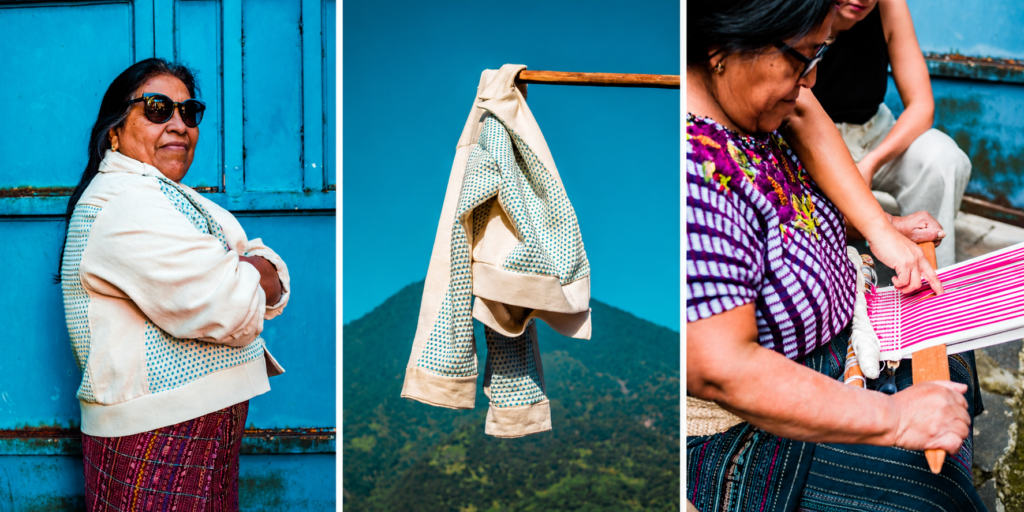
Initially, she made samples entirely from handwoven textiles. Although she liked the results, she preferred the unexpected combination achieved by introducing a contrasting fabric. Surplus materials from French fashion houses offered another provenance to bring into the garment, but quality remained the deciding consideration. She sought fabrics that could complement the durability she associated with the brocades.
In conversations in Guatemala, Bogren recalls repeatedly hearing that the handwoven textiles last a lifetime. That understanding informs her definition of luxury: something beautiful, durable and exclusive, with a story behind it and a character that cannot be mass-produced.
Respect for the cloth also changes her working process. She regards it as a piece of art and prefers to make an additional toile, a trial version of the garment before cutting the woven material. The preparation becomes more deliberate and takes longer, which she considers integral to conscious design.
Her intention to use the fabric fully extends to the remnants. VÄV has begun developing passport holders and coin purses from the scraps, finding further uses for material whose production requires considerable time and skill.
Preserving a craft also means allowing its practitioners to develop it. How do you make space for the weavers’ creative ambitions while establishing a recognisable identity for VÄV?
I think the best way to work directly with artisans is through co-creation. By listening, learning and trying new things together, you can find a good balance. Creative input from the artisans is always valuable because they are the textile artists and weaving experts. You then find the balance between the brand’s identity and how you work with that input.
Through your conversations with the weavers, what have you learned about the significance of their work within the community? Which opportunities do you see in the collaboration?
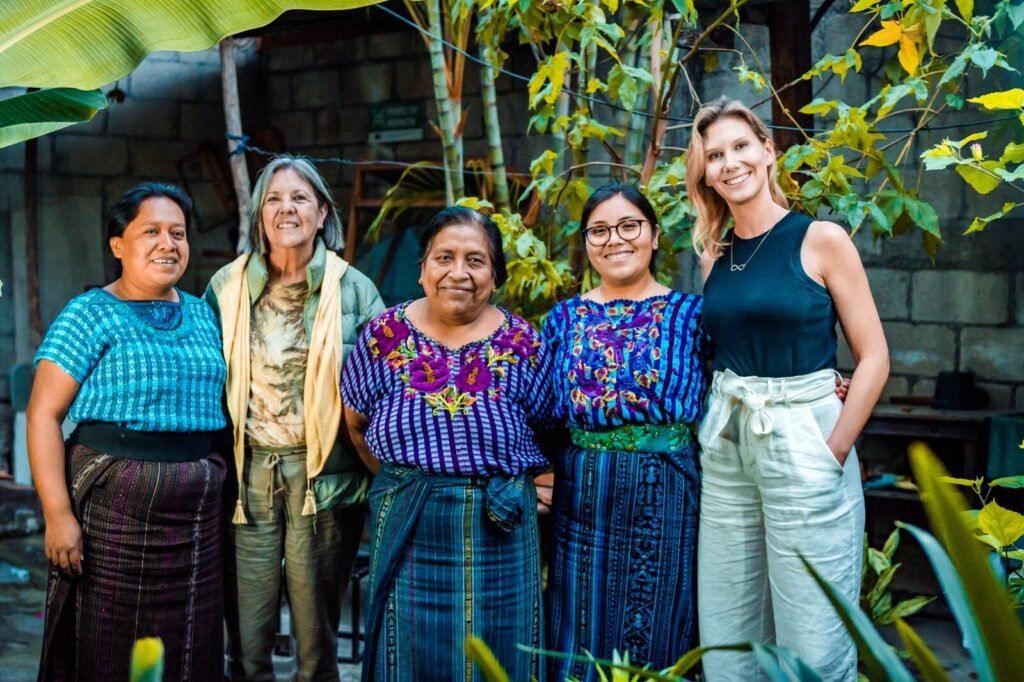
From what I have heard, artisans working with associations such as Cojolya, a well-organised Fair Trade association that has been around for more than forty years, value being able to provide for their families by weaving these textiles, while also preserving the traditional backstrap-loom techniques.
Some younger people in smaller communities are moving away from weaving because they feel they need to seek work in larger cities. Guatemalan textiles are not extensively exported to Europe, and I think the collaboration with VÄV can create an opportunity to showcase them more widely within the European fashion market.
For the wearer, adaptability provides another reason to keep a garment in use. The jackets’ detachable sleeves allow them to become vests, changing how they work with different outfits and needs. Bogren sees that flexibility as a feature she would value in her own wardrobe.
Her criteria connect appearance with function: a design must look good and be useful. A changing silhouette also gives the wearer room to experiment beyond the designer’s original styling. Describing customers as the “true muses” of a brand, she values the ideas and interpretations they bring to the clothes.
Reaching those customers requires an understanding of what first attracts their attention. Bogren recognises that someone may respond to a jacket’s appearance before becoming interested in its origins. For others, the values behind the brand carry greater weight.
What have you learned about introducing VÄV to people who do not already seek out sustainable fashion?
I think we usually see the design first and then become interested enough to learn the story behind it. The visual identity will often be more immediately appealing than the process, although it depends on the individual. Some people connect more strongly with a brand’s values and story than with the product itself.
“I have also learned that there are people who do not respond to words such as ‘ethical’, ‘artisan’ or ‘sustainable’, but may simply love the jacket because of its style or because the fabric is distinctive.”
Emma Bogren
Do you intend to continue working with Cojolya across future collections?
I really enjoy working with Cojolya and would love to continue. Their quality and style are exceptional, and the association’s Fair Trade certification is important to me because of the assurance it provides that the weavers are paid fairly for their work.
When I visited Guatemala and Cojolya some years ago, I noticed how easily we could explore new ideas and modify designs directly with the weavers. That is a beautiful part of working with people and human hands: you can try new ideas without having to change all the settings of a machine.
Milan has given Bogren fresh inspiration to pursue, with artisan textiles remaining central to her plans. Alongside developing those ideas, she is considering how to communicate the work more fully—a task that requires her to redirect some of the creative attention she instinctively gives to research and design.
As VÄV develops, which creative ambition feels most urgent to you?
Creative research and the design process are among the most beautiful parts of a brand for me, and they are where my energy tends to go. But the brand also has many stories to tell. I believe storytelling is one of the most important aspects of today’s digital society. It is something I am less accustomed to working with, so I am gradually adapting my mindset and bringing more creative energy to that aspect as well.
Website: vav-collective.com
Instagram: @vav_collective
*Interview has been edited for length and clarity.