
The beauty technology company has unveiled a specialised AI architecture connecting skin analysis, cosmetic ingredients, product formulations and consumer behaviour, as the industry explores new applications for artificial intelligence.
Artificial intelligence is becoming an increasingly important part of the beauty industry’s digital infrastructure, extending beyond virtual consultations and product recommendations into more sophisticated systems capable of interpreting consumer needs, ingredient information and purchasing behaviour. Beauty technology company Revieve is advancing this shift with the introduction of its Beauty LLM Suite, a specialised AI architecture designed for beauty, personal care and wellness applications.
Announced on October 13, the suite brings together six interconnected areas of intelligence covering skin, ingredients, products, routines, lifestyle and brand knowledge. Developed from Revieve’s decade of experience in beauty technology, the system is intended to help brands, retailers and technology providers integrate specialised beauty expertise into digital services without developing comparable capabilities independently.
The launch reflects growing interest in industry-specific artificial intelligence, as companies seek systems capable of interpreting complex product information and consumer preferences beyond the capabilities of conventional recommendation tools.
From Skin Analysis to Specialised Beauty Intelligence
Digital beauty technology has traditionally concentrated on individual applications, including virtual skin consultations, product matching and personalised skincare recommendations. Revieve’s new architecture seeks to connect these functions through a shared intelligence framework, allowing information about skin characteristics, cosmetic ingredients, formulations and individual routines to be considered together.
The Beauty LLM Suite comprises six specialised domains: Skin Intelligence, Ingredient Intelligence, Product Intelligence, Routine Intelligence, Beauty Lifestyle Intelligence and Brand Intelligence. Each can operate independently or in combination, depending on the requirements of a particular application.
For a decade, we have been building intelligence around beauty—not simply how to analyze skin or recommend a product, but how the many dimensions of beauty connect.
Skin Intelligence interprets skin characteristics and concerns, while Ingredient Intelligence examines cosmetic ingredients, their functions and compatibility. Product Intelligence connects formulation data and product attributes with consumer requirements, while Routine Intelligence supports the development and adaptation of personalised skincare routines. The remaining domains incorporate lifestyle considerations and brand-specific expertise, enabling companies to tailor digital experiences to their product portfolios and customer relationships.
Unlike general-purpose AI systems adapted to answer beauty-related questions, Revieve says its technology draws on proprietary intelligence developed through computer-vision applications, product databases and collaborations with beauty brands and retailers.
Commercial Opportunities and the Limits of Personalisation
For beauty brands and retailers, specialised AI systems offer opportunities to improve product discovery, develop more responsive digital consultations and integrate consumer insights into commercial decision-making. Revieve’s architecture is designed for use across retail platforms, AI assistants, connected devices and wellness services, potentially extending personalised recommendations beyond conventional e-commerce environments.
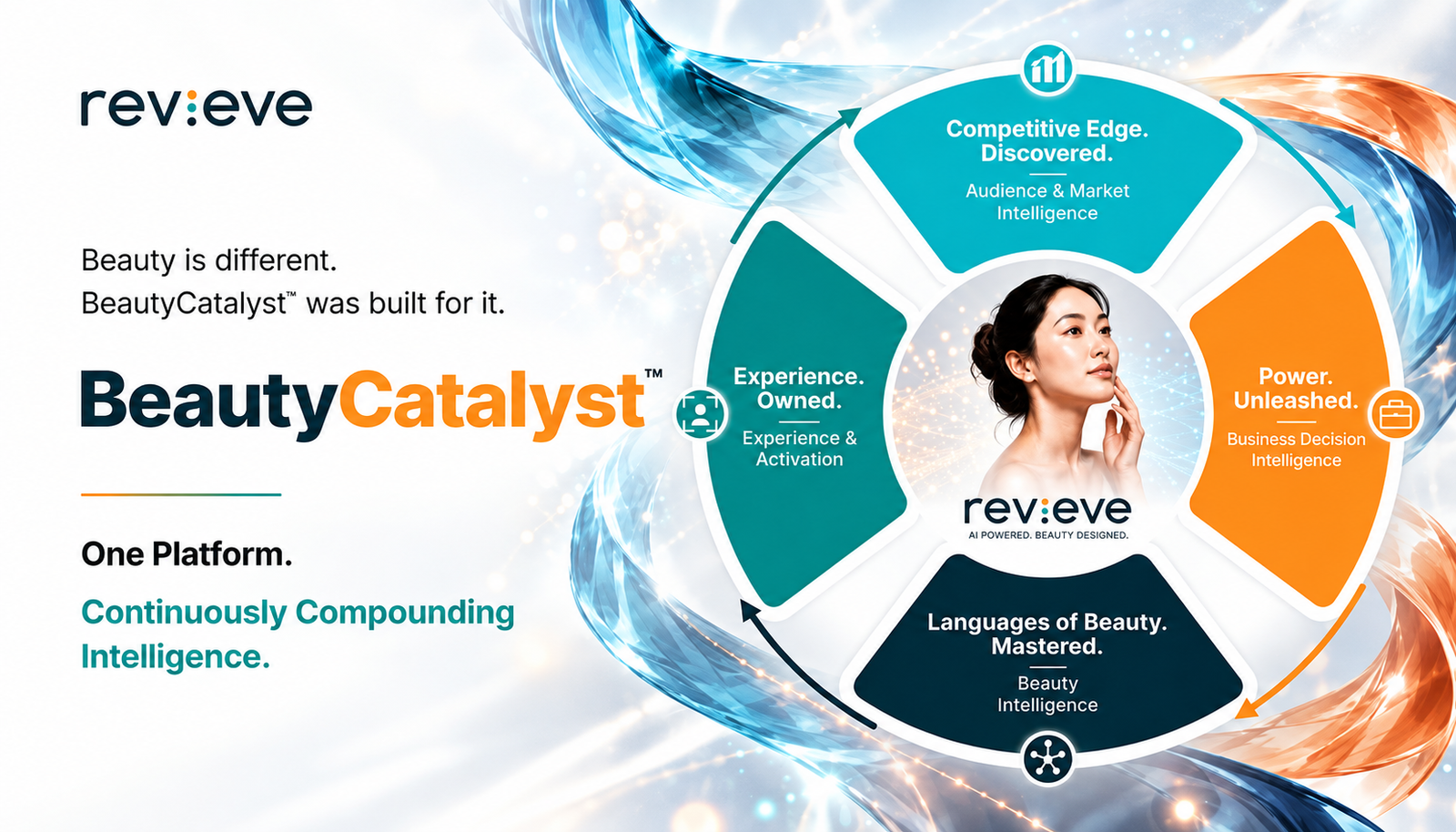
The suite also underpins the beauty intelligence capabilities of Revieve’s existing BeautyCatalyst platform, which combines consumer engagement, audience analysis and business decision-making tools. By connecting product knowledge with consumer interactions, the company aims to help businesses develop more relevant customer experiences while identifying opportunities across their product portfolios.
However, the effectiveness of AI-driven personalisation depends on the quality of the underlying information and the reliability of the recommendations generated. Greater technological sophistication does not automatically translate into better consumer outcomes, particularly when product suggestions are shaped by commercial objectives or incomplete information about individual needs.
For the beauty industry, this raises questions about how AI-generated advice is evaluated, how recommendations are distinguished from promotional content and whether increasingly personalised experiences genuinely improve purchasing decisions.
The Convergence of Beauty and Wellness
Revieve is also exploring how specialised beauty intelligence could connect with broader wellness technologies, including wearable devices and digital services that collect information about sleep, activity, environmental conditions and daily habits.
With appropriate consumer consent and technical integrations, these data sources could potentially inform skincare and personal-care recommendations that respond to changes in individual lifestyles. Such applications would extend beauty technology beyond product selection towards more adaptive digital experiences.
The prospect also introduces additional considerations surrounding data privacy, transparency and the interpretation of personal information. As beauty platforms begin incorporating signals from multiple connected services, companies will need to establish clear boundaries around data collection, consumer consent and the reliability of AI-generated guidance.
Revieve’s announcement outlines these integrations as potential future applications rather than confirming their widespread commercial deployment. Their development will depend on technical compatibility, partnerships and the ability to demonstrate meaningful benefits for consumers.
The Beauty LLM Suite illustrates a wider shift towards specialised AI infrastructure within the cosmetics industry, where the value of technology increasingly lies in connecting technical expertise with commercial applications. For brands and retailers, the opportunity extends beyond more sophisticated product recommendations to the development of digital services informed by detailed ingredient, formulation and consumer information.
Whether these systems ultimately contribute to more responsible beauty consumption remains an open question. Better access to product information could support more informed choices, but personalised commerce can also encourage additional purchasing.
As artificial intelligence becomes more deeply integrated into beauty retail and consumer services, its long-term significance will depend on the accuracy, transparency and practical value of the intelligence it delivers, rather than the sophistication of the technology alone.
For more information about Revieve’s Beauty LLM Suite and its applications across beauty and wellness, visit Revieve