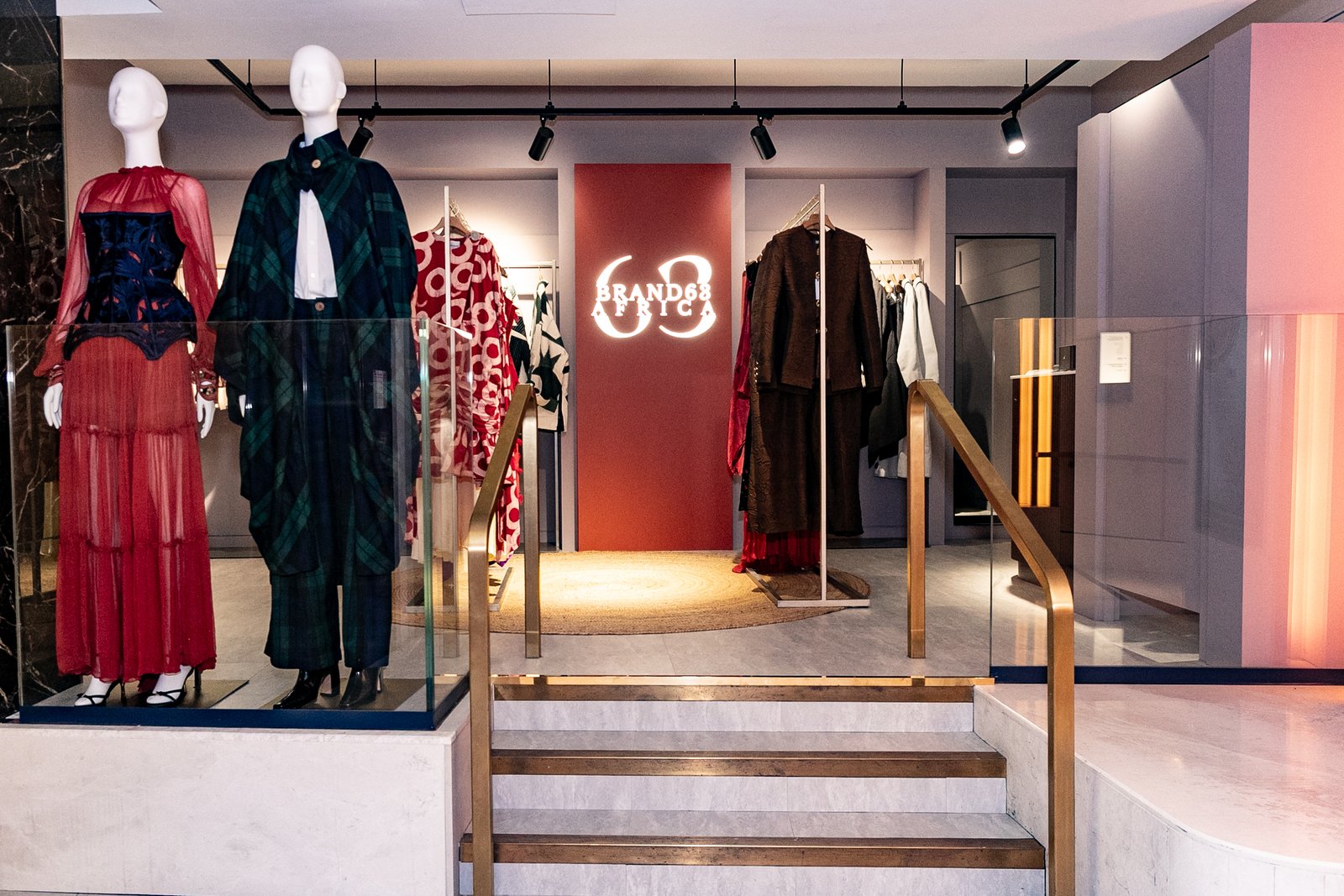
Now underway in Knightsbridge, Brand63Africa’s first retail pop-up brings African and diasporic craftsmanship into focus – and raises questions about how a temporary showcase can support lasting creative businesses.
Since opening at Harrods on 7 September, Brand63Africa’s inaugural pop-up has brought together five labels whose work spans Ghana, Nigeria, Senegal, Kenya, and Trinidad and Tobago. Continuing until 27 October, the presentation places distinct approaches to craftsmanship, cultural memory and contemporary design within the department store’s fifth-floor retail space.
THE CONNECTION IS CRAFT. THE EXPRESSION IS PERSONAL
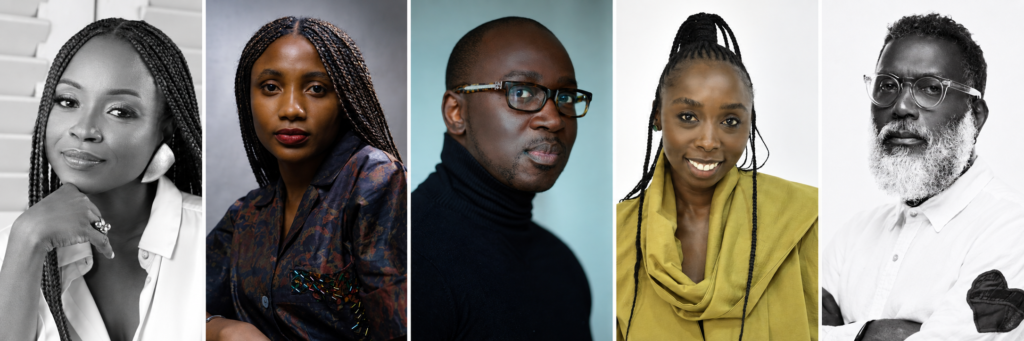
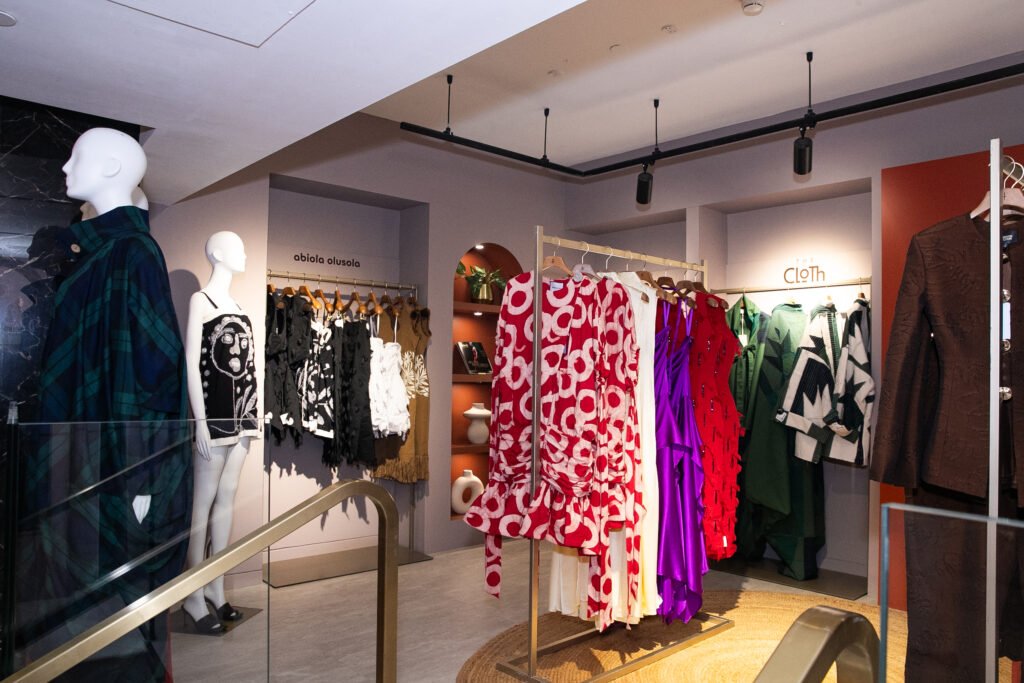
The participating houses: Christie Brown, Abiola Olusola, Sukeina, Studio Namnyak and The Cloth – arrive with their own histories and creative identities. Their collections offer different ways of understanding how heritage lives within clothing: through materials and techniques, through proportion and construction, and through the experiences of the people who make it.
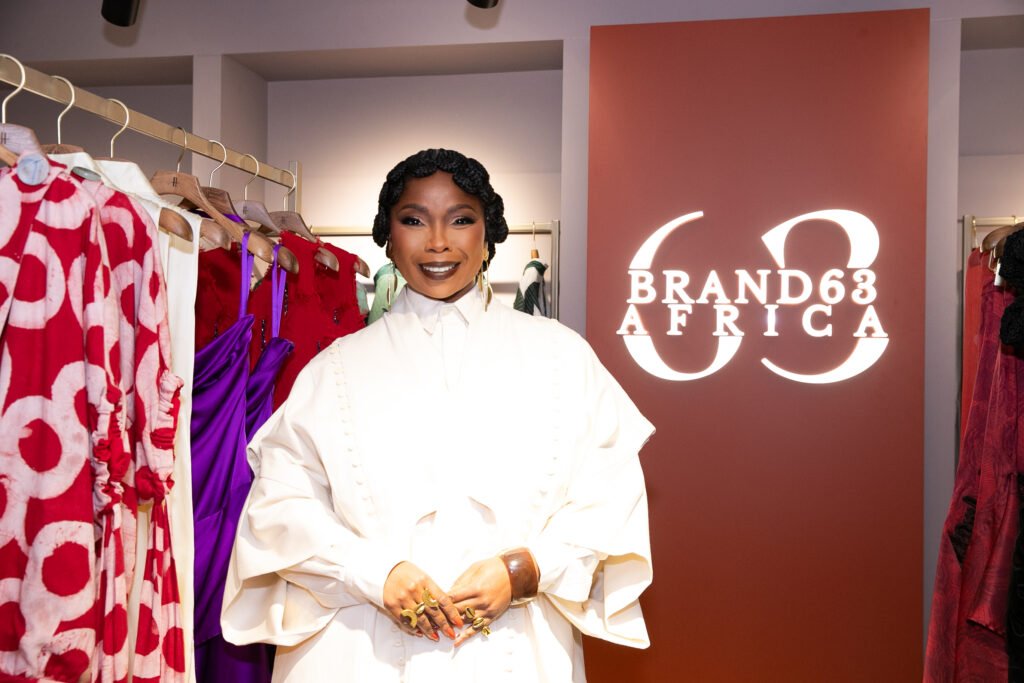
For Brand63Africa, founded by cultural strategist Eva Omaghomi CVO, the opening marked the transition from its London Fashion Week introduction earlier this year to its first retail activation. With the pop-up now underway, the platform’s ambition to connect designers of African heritage with international luxury markets has entered a practical phase: putting their work within reach of customers.
“Brand63Africa has always been about creating meaningful opportunity, not simply visibility, and this pop-up brings that ambition to life.”
Eva Omaghomi, founder of Brand63Africa, in the opening announcement
That ambition gives the project significance beyond its Knightsbridge address. The opportunity involves sales, customer relationships and the experience of operating within a major luxury retailer. Its lasting value will depend on how those relationships develop after the presentation closes.
In Accra, Aisha Ayensu’s Christie Brown has been building its design language since 2008. Rooted in Ghanaian craftsmanship, the house combines traditional skills with contemporary womenswear, tailoring and luxury fabrication. According to Brand63Africa’s background materials, its operation encompasses design, manufacture and retail, supported by an in-house team of more than 90 artisans alongside international manufacturing partners. Its presence brings attention to the organisation of skills and labour that supports a fashion house’s creative identity.
Lagos-based Abiola Olusola approaches artisanal practice through modern minimalism. Sculptural womenswear, intricate detailing and considered construction give the label a distinct position within the cohort. Its work demonstrates how cultural references can inform the structure and sensibility of a garment as much as its visible decoration.
Sukeina, founded by Omar Salam, brings architectural silhouettes and refined construction to an exploration of identity, emotion and the human condition. Salam’s experience at Sonia Rykiel and Christian Lacroix forms part of that perspective. His practice reflects the movement of creative knowledge across countries and fashion houses, with heritage informing an individual and evolving body of work.
Studio Namnyak connects traditional craftsmanship with digital design. Founded by Namnyak Odupoy, the Kenyan label develops small capsule collections that the platform describes as made entirely in Kenya. Its approach places technology within the development of craft, suggesting how contemporary tools can become part of a locally rooted design practice.
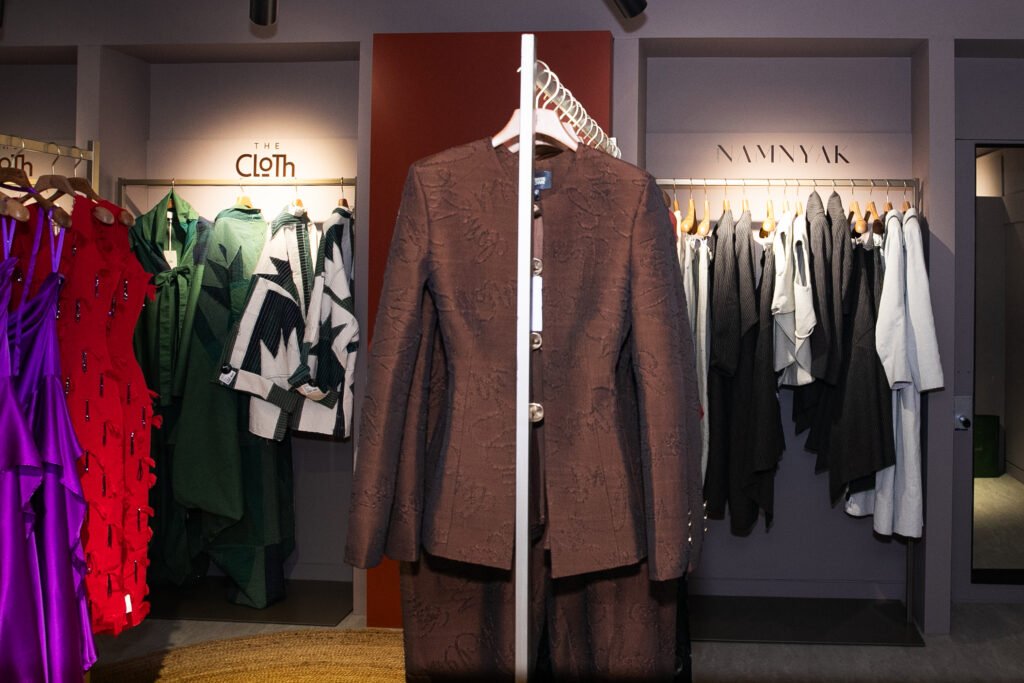
The Cloth brings a longer Caribbean history into the presentation. Founded in 1986 and led by Trinidadian designer Robert Young and British anthropologist Sophie Bufton, the label draws on Caribbean cultural memory and contemporary life. The press materials highlight its use of West Indian Sea Island cotton and commitment to preserving heritage craft practices. Its inclusion gives the diaspora a specific presence through material, place and four decades of creative work.
The differences between these houses are central to the presentation. African and diasporic fashion encompasses many histories, aesthetics and ways of making. Each designer’s work deserves to be understood through its particular references and decisions, with space for both shared experience and individual authorship.
That requires cultural storytelling to move beyond broad descriptions of heritage. A garment can open a conversation about a specific textile, a technique passed between makers or a designer’s interpretation of place. Understanding those details makes the relationship between the finished object and the knowledge behind it more tangible.
For Harrods, the partnership offers an opportunity to bring those perspectives to its customers. In the opening announcement, Clemmie Harris, Head of Buying for Contemporary, Sport and Essentials, described the pop-up as a chance to engage with the designers’ stories and cultural influences alongside discovering and shopping their collections.
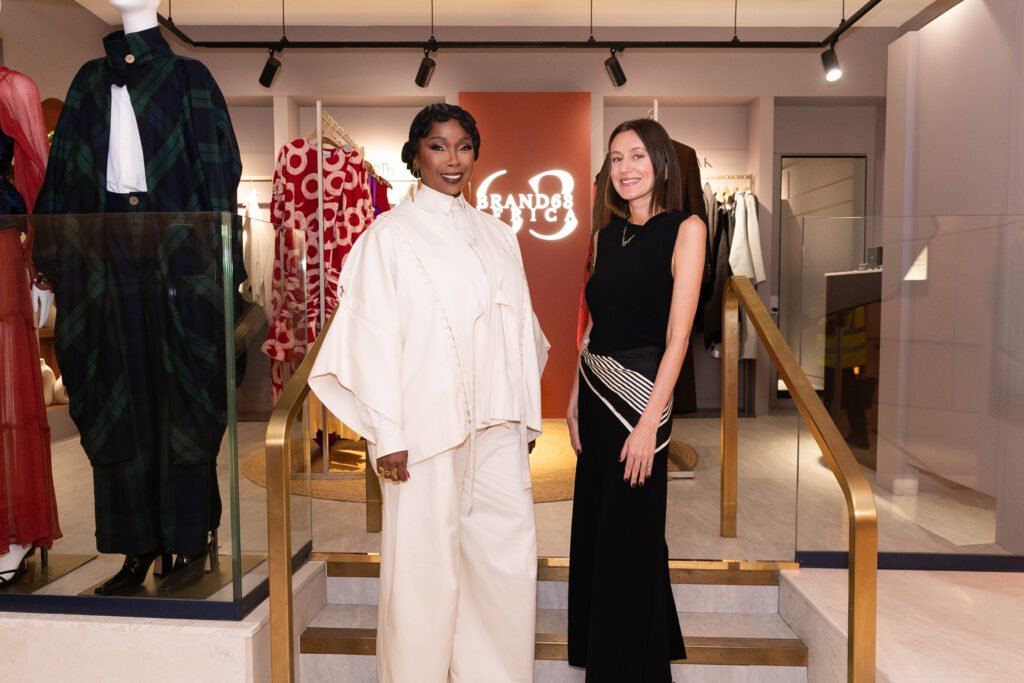
Brand63Africa’s support is intended to extend beyond that retail encounter. The platform describes a programme covering collection development, market positioning, investment readiness, quality control and responsible production. A creative committee chaired by Vanessa Kingori contributes experience across fashion, retail, manufacturing and culture.
The Nigerian-British house Torlowei serves as a mentor to the cohort. Founded by Patience Torlowei and Mojisola Adegbile, and already stocked at Harrods, it brings experience of developing an international business rooted in African craftsmanship. Such guidance addresses the practical demands that accompany retail access: preparing collections, maintaining quality and meeting commercial expectations.
These conditions are also relevant to sustainability. The continuity of a craft depends partly on whether people can earn a living practising it, develop their expertise and pass it on. As businesses grow, decisions about sourcing, production and the distribution of value become increasingly consequential.
Brand63Africa identifies responsible production and community empowerment among its priorities. At this early stage of the Harrods partnership, the supplied materials establish those intentions rather than measurable results. Continuing orders, stable relationships with makers and sustained opportunities for the designers will provide a fuller basis for assessing its impact.
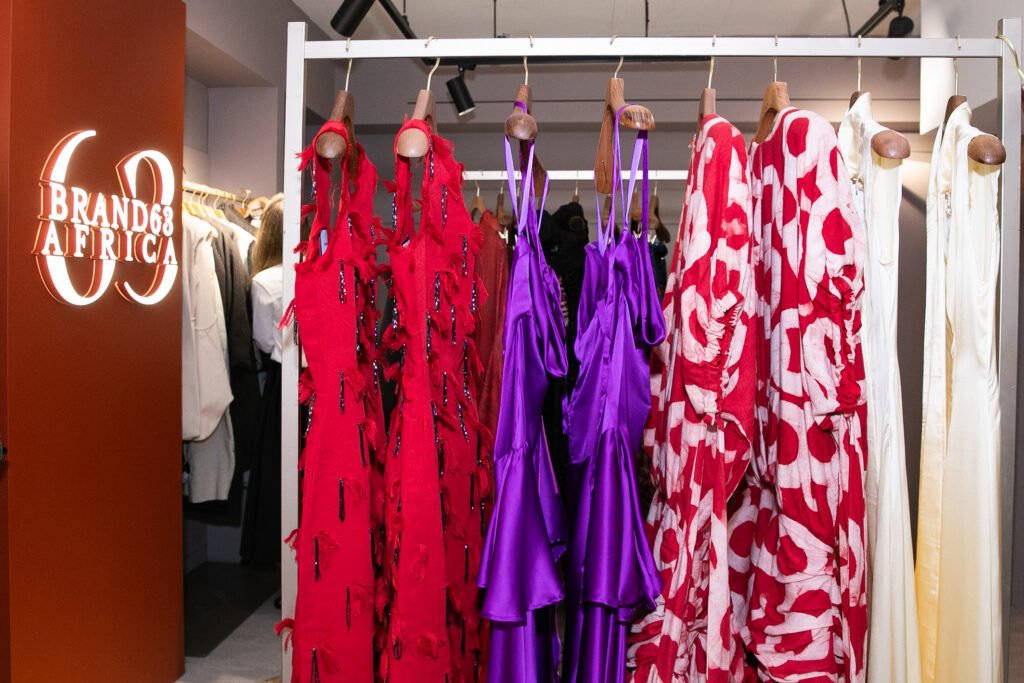
For now, the pop-up gives customers an opportunity to encounter the five houses through their clothes. Omaghomi’s stated hope is that visitors discover an unfamiliar designer and respond to the quality, individuality and desirability of the work. It is a useful starting point: appreciation grounded in what each designer has made.
The presentation continues until 27 October. Beyond its closing date, the story to follow will be how this period of access translates into continuing business, and what that business enables the designers and their creative communities to sustain.
The Brand63Africa pop-up is open on the Fifth Floor at Harrods, Knightsbridge, London, until 27 October 2026.
Discover more about Brand63Africa and explore the participating labels on Harrods’ website.