
The founder of Tennessee-based label Prophetik speaks to The Fashion Issue about inherited knowledge, creative authorship and the personal experience behind his documentary, Let Them Be Naked.
A woman who served Jeff Garner coffee near his Tennessee studio once asked whether she could buy one of his gowns to wear to work. He welcomed the idea. The exchange captures something essential about the designer’s relationship with clothing: however elaborate the garment, its significance ultimately rests with the person wearing it.
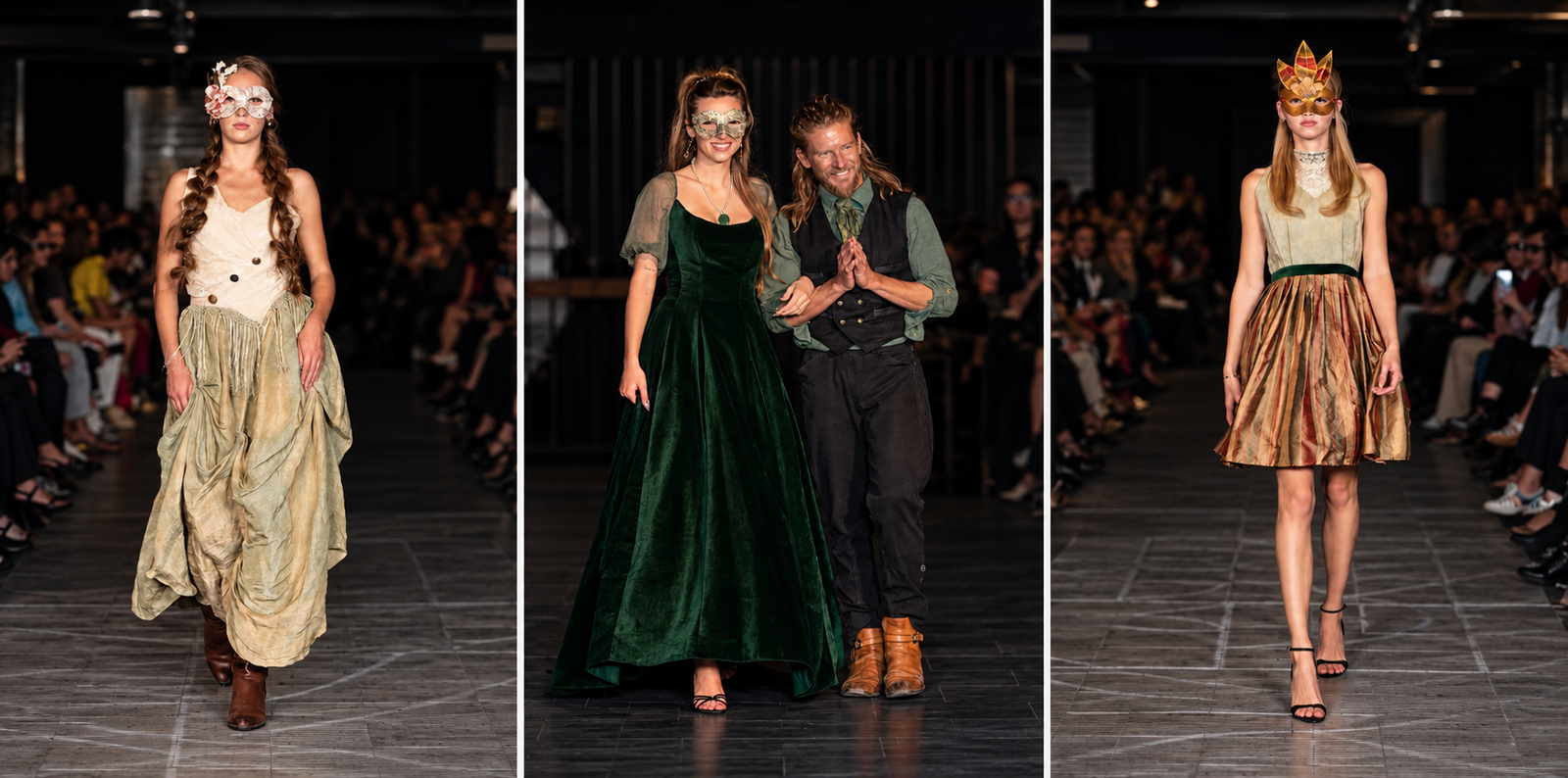
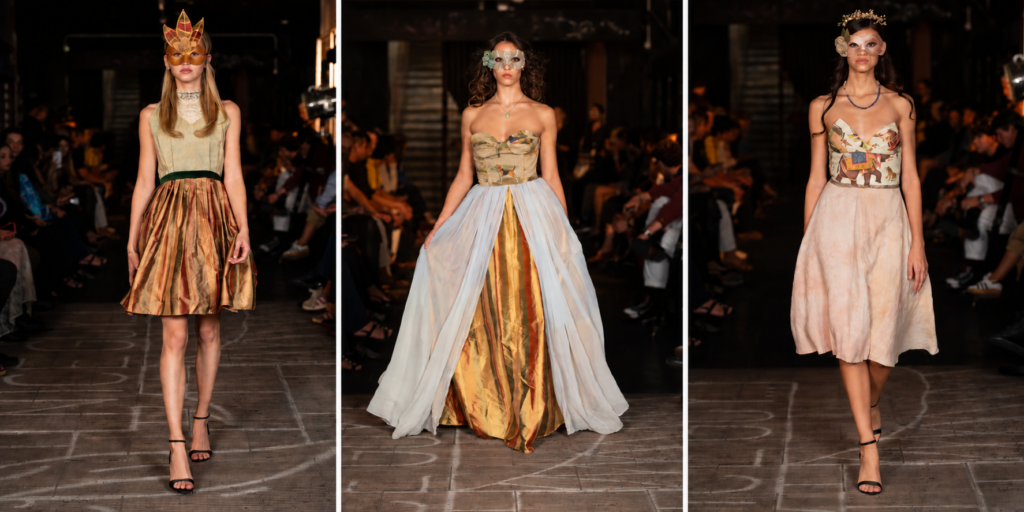
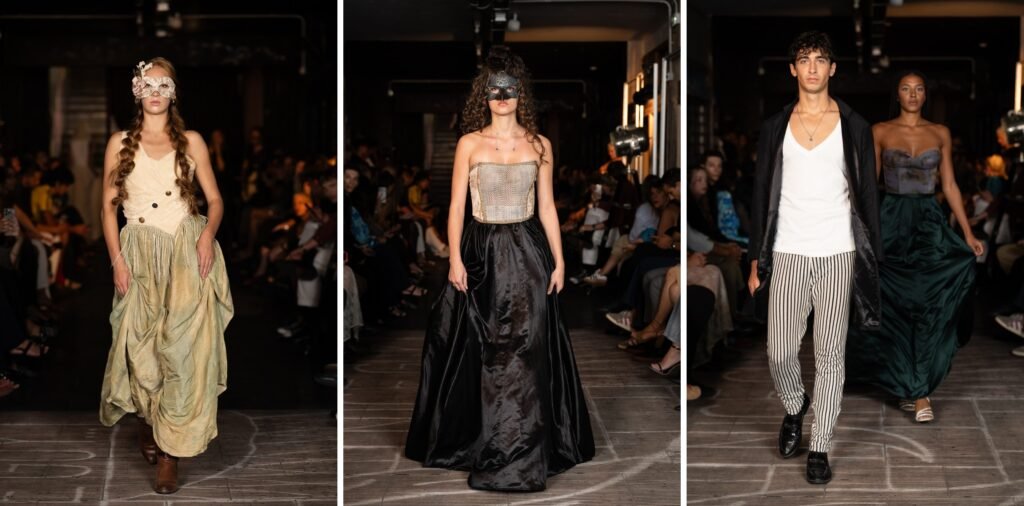
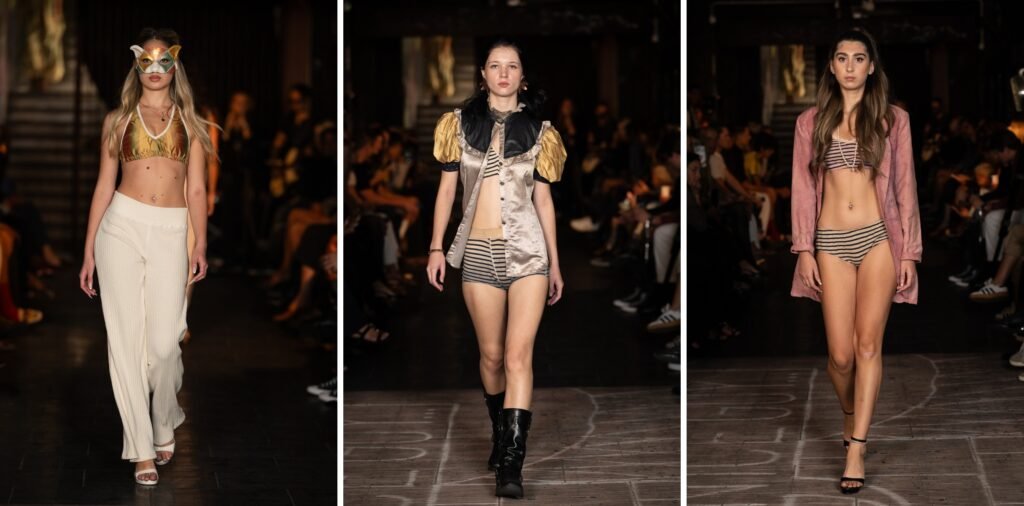
For more than two decades, Garner has developed Prophetik through romantic silhouettes, historical references and a commitment to natural textiles and plant dyes. His Spring/Summer 2027 collection, Hungry Eyes, presented at Green Fashion Week Milan, brings that approach into everyday categories, drawing inspiration from Dirty Dancing, Renaissance dress and the rituals of shared leisure.
Alongside the collection, his documentary, Let Them Be Naked, examines the material questions underlying his practice. Together, the projects reveal different dimensions of the same ambition: to make clothing that engages people emotionally while encouraging closer consideration of how it is produced.
An Inherited Understanding of Value
Established in Tennessee in 2002, Prophetik reflects influences that precede Garner’s professional life. He grew up on a horse farm near Franklin, where cultivation, sewing and resourcefulness were familiar practices. His grandmother Lola remains a central figure in his accounts of making, particularly through textiles that carried the memory and labour of family life.
California introduced another perspective. After studying at Pepperdine University, Garner worked in entertainment, developing stage clothing and tour merchandise. Dressing performers required an understanding of character, spectacle and visual presence – qualities that remain evident in his designs.
His assessment of innovation, however, increasingly returns to knowledge inherited from an earlier generation.
The Fashion Issue: After more than two decades of Prophetik, which belief about fashion have you reconsidered, and what prompted that change?
Jeff Garner: I realised that true innovation means going backwards — returning to natural materials, traditional craftsmanship, plant dyes and processes that respect the earth rather than fighting against it.
There is a disconnect between what we put on our bodies and what happens to the people, animals and environment involved in making those clothes. For me, the future of fashion isn’t about making more. It’s about making better, making consciously and creating pieces that have a reason to exist and can live beyond us.
Recasting the Past
Historical dress supplies Garner with a vocabulary of proportion, volume and atmosphere. His references are intuitive, often originating in dreams, rather than governed by fidelity to a particular period.
Your work frequently draws on historical dress. How do you decide which ideas from the past remain relevant, and which conventions to leave behind?
I draw inspiration from dreams set in a past life and from romantic silhouettes that speak to the energy of the collection. Hungry Eyes draws on Dirty Dancing and American culture in 1963: the shift from post-war conformity towards social rebellion expressed through dress and music. I mixed that with Renaissance design and an interest in a raw, authentic expression of self, particularly at a time when AI raises questions about conformity and authenticity.
The collection’s textiles include hemp, hemp silk, organic cotton and hand-loomed peace silk. Its palette draws on Garner’s dye practice in Tennessee and Malibu, with logwood, indigo, eucalyptus leaves and bark among the ingredients identified in the collection notes. Within that material framework, the film reference prompted him to consider a different range of uses for the clothes.
What made the story of Dirty Dancing relevant to you now, and how did it push you beyond familiar territory?
The film depicts a time when there was little technology interfering with family holidays. Entertainment centred on crafts, dancing and simple leisure activities shared with others. Those activities had dress codes.
I introduced a more wearable collection, including underwear, T-shirts, crop tops, yoga pants, tennis outfits and swimwear. They are traditional in style but made with hemp, silk and other fabrics dyed with plants.
It pushed me to develop these everyday silhouettes using the same fabrics, dyes and ethos as my couture collection. An existing textile introduced a more unpredictable element into the development process.
Which piece from Hungry Eyes changed most during its development? What did you have to reconsider or let go of?
One piece began with a very old fabric I found in Rome while I was a guest at the American Academy of Art. It had beautiful embroidery, and I kept painting onto it with my natural dyes. Eventually, I had to stop before I went too far.
“Sometimes the hardest thing is knowing when to put down your paintbrush.”
— Jeff Garner
The Limits of Authorship
Garner’s use of inherited textiles places his work within a broader craft tradition. His Men’s Quilted Coat entered the Smithsonian American Art Museum’s collection following his participation in the Renwick Gallery’s 40 under 40: Craft Futures exhibition.
When asked about clothing made from his grandmother’s quilt, he offers a more intimate measure of its significance: “The value lies in the one wearing the garment and how it makes them feel, not just look.”
That emphasis on personal experience leaves room for interpretations beyond his own.
Your clothes have a distinctive identity. How do you respond when a wearer interprets a piece in a way that departs entirely from your intention?
I believe all art carries an intention established by its creator, but the wearer should interpret it according to their own intention. Selfishly, I would love my vision to live with the garment, but no one can control how it is interpreted.
What have you learned from seeing your clothes become part of someone’s everyday life?
There was a young woman in Tennessee who served me organic coffee every morning while I was working in my design studio. One day, she asked whether she could buy one of my gowns and wear it to work.
I told her I would want nothing more than to see her in a gown, doing what she loved every morning. I believe the relationship between the designs I make and the soul of the person wearing them creates the beauty. Neither creates it alone.
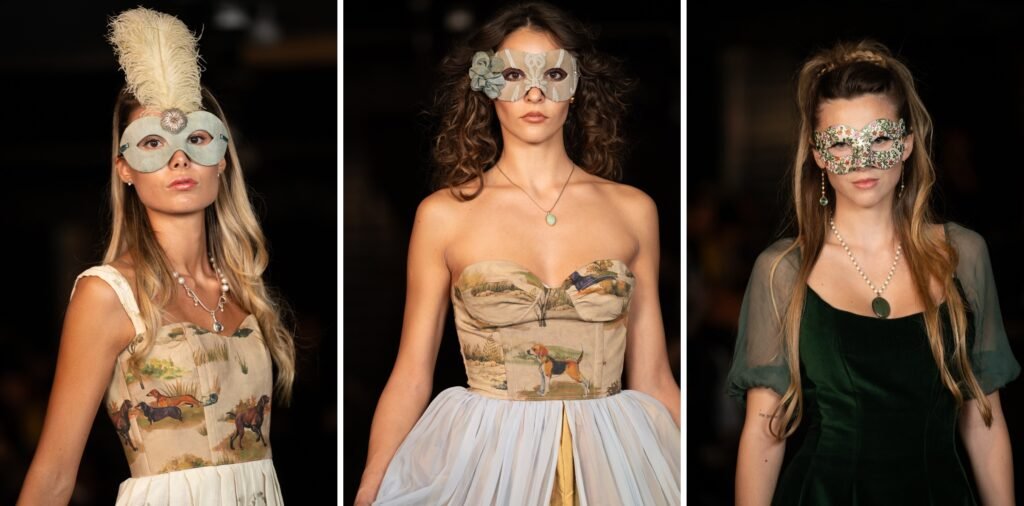
Within the studio, Garner takes a similarly receptive approach to other creatives. The jewellery and masks accompanying Hungry Eyes developed through an exchange with their makers.
How do you establish a shared creative direction with the jewellery and mask designers contributing to a collection?
I give them my vision for the collection, along with fabric swatches to draw colours and textures from. Then I let them respond to the same energy without interfering or guiding them too much. We review the results together and usually agree. Everyone enjoys the synergy when the different elements come together, including the hair and make-up.
From Personal Loss to Public Inquiry
Garner identifies his mother’s death from breast cancer as the catalyst for making Let Them Be Naked. The documentary investigates chemicals used in clothing and brings his concerns into conversation with researchers, environmental advocates and material innovators.
The principles informing the project were already present at Prophetik. Film offered a means of communicating them beyond a fashion audience. As Garner explains in his written answers, his intention was “to bring back the power of choice to the consumer”, adding that “everyone deserves to know what is in their clothing”.
You have spent years communicating through clothes. What could you explore through film that you had struggled to express through a collection?
I could examine the colours and fabrics I had worked with for years under a microscope and in a laboratory, and see them in a new light. I could bring friends and experts from other fields into the conversation, connect their work and show that others care and are trying to make a difference.
True change comes when a community of disruptors comes together behind something like a film and demands change. Sharing this need and this journey has already generated a response, and I am excited to bring it to a wider audience through a streaming platform.
Turning awareness into a purchasing decision introduces a practical consideration: whether the alternatives are within reach of the consumer. Garner approaches affordability through the relationship between price and continued use.
How do you translate the documentary’s concerns into practical choices, particularly for people with limited budgets?
I think we have a misguided understanding of true cost. Fuel, food, coffee and housing have become more expensive, yet we still expect clothing to be extremely cheap. I connect that expectation to inexpensive ingredients and unfair labour conditions.
In my view, a T-shirt made from natural materials and plant dyes should cost around $40–$50 rather than $7. My argument is that it should last longer, allowing someone to buy less and offset the higher initial cost over time.
His argument assesses value across a garment’s useful life. The higher initial expenditure remains a constraint for some customers, making durability and frequency of wear consequential to the proposition.
Independence on His Own Terms
The expansion into everyday clothing raises a related question for Prophetik: how to introduce new designs while advocating more considered consumption. Garner describes the wearable offering as made to order, aligning production with demand and limiting unnecessary stock. His preference for gradual development also determines the opportunities he pursues.
Has an opportunity to reach a wider audience required you to reconsider how Prophetik operates? How do you distinguish changes that strengthen the business from compromises that weaken its identity?
I have never bought advertising or pursued deals for mass production. I operate the business through purposeful growth, strengthening it by keeping it authentic and true to its intention. I want that growth to be gradual so there is no compromise.
“The film will reach a wider audience. That is why we are adding more styles to the wearable collection.”
— Jeff Garner
His insistence on creative control extends to the representation of the clothes. Imagery introducing Hungry Eyes explicitly emphasised real models, garments and photographs – a position that connects the collection’s interest in individuality with contemporary questions about image-making.
Which aspects of fashion’s creative process do you believe must remain human, and where are you open to technology changing the way you work?
I believe in using real models, real people and real talent to create. Technology can be useful for market research or analysing online data, but I believe the creative art of fashion should remain with humans.
“With Hungry Eyes, I am expressing the idea that looking into someone’s eyes is a way of recognising the person behind the image.”
— Jeff Garner
About “Let Them Be Naked”
Directed and produced by Jeff Garner, Let Them Be Naked features contributions from Livia Firth, Arizona Muse, Matteo Ward and Lucy Siegle, alongside researchers and textile innovators. The documentary received fiscal sponsorship from The Redford Center.
Visit letthembenaked.com for the trailer and screening updates.
Discover more about Prophetik at prophetik.com and Instagram at @prophetik
*Interview has been edited for length and clarity.