
The Danish designer discusses the creative discipline of working with discarded textiles, the economics of small-scale production and building a business around clothes customers keep.
For Danish designer Victoria Ladefoged, discarded tablecloths, restaurant aprons and hospital linen are the foundations of a distinctive wardrobe. Through precise tailoring, exaggerated proportions and a sense of humour, she gives familiar textiles a different status, and invites a broader consideration of how clothing acquires value.
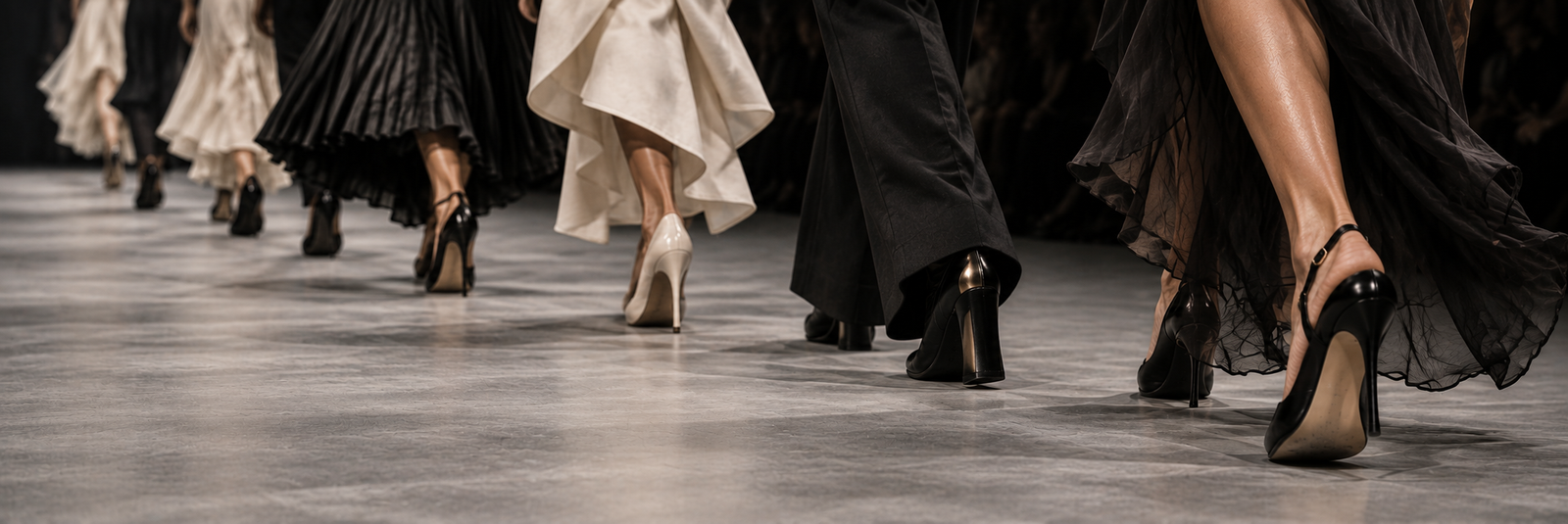
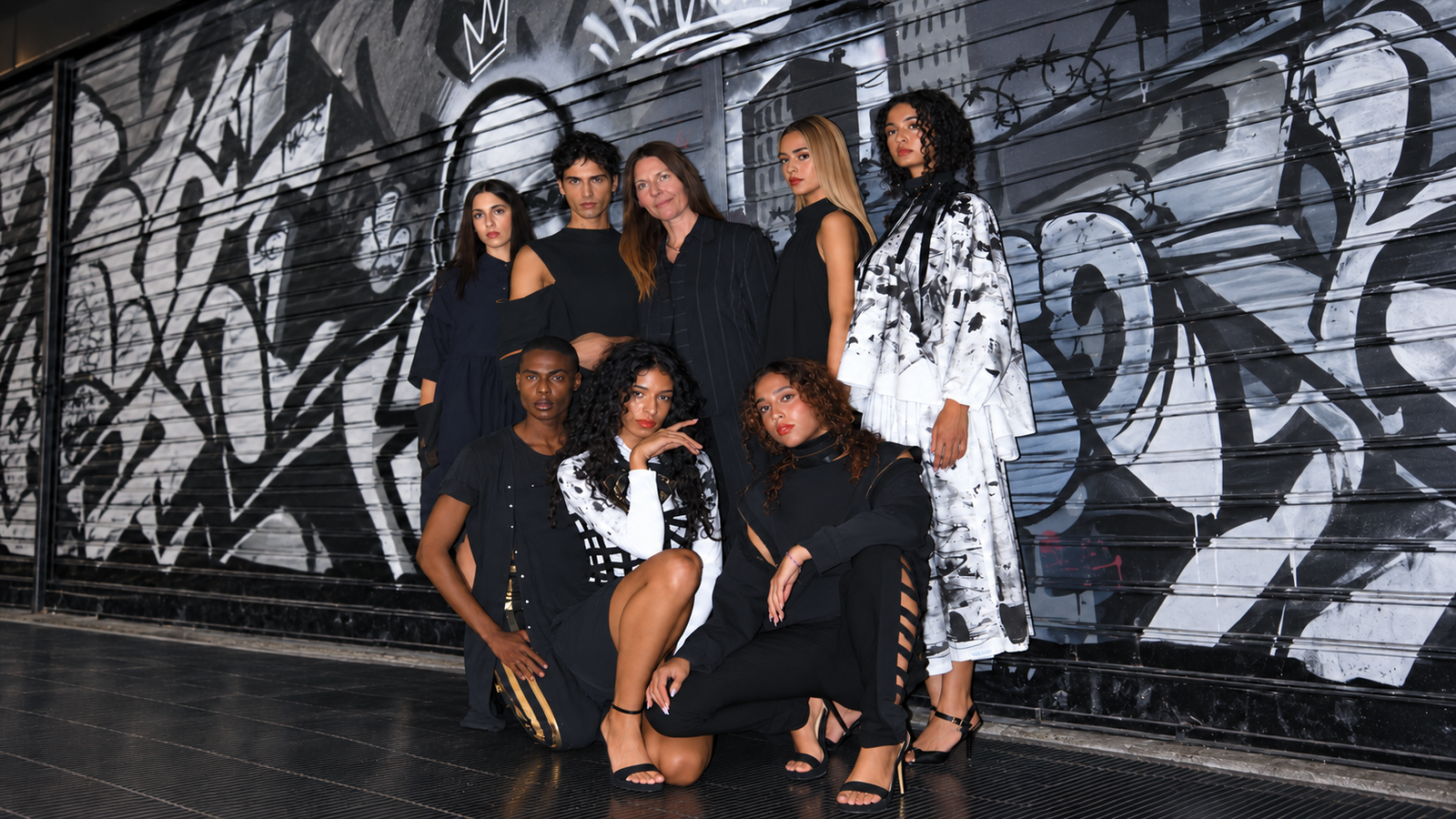
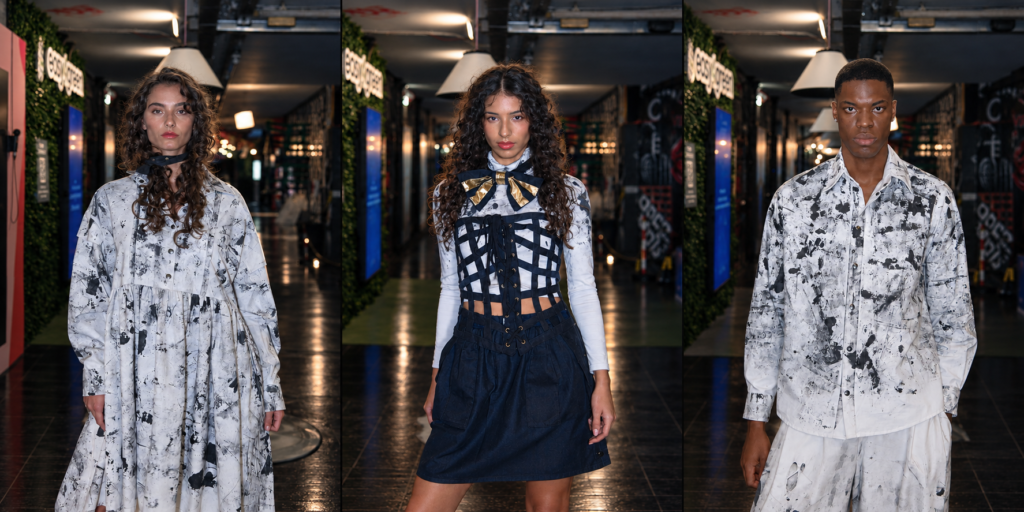
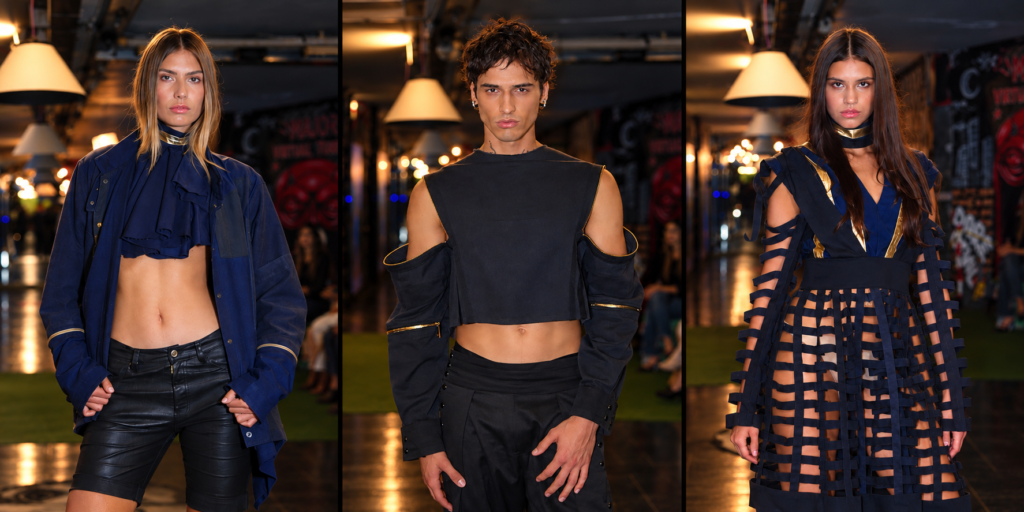
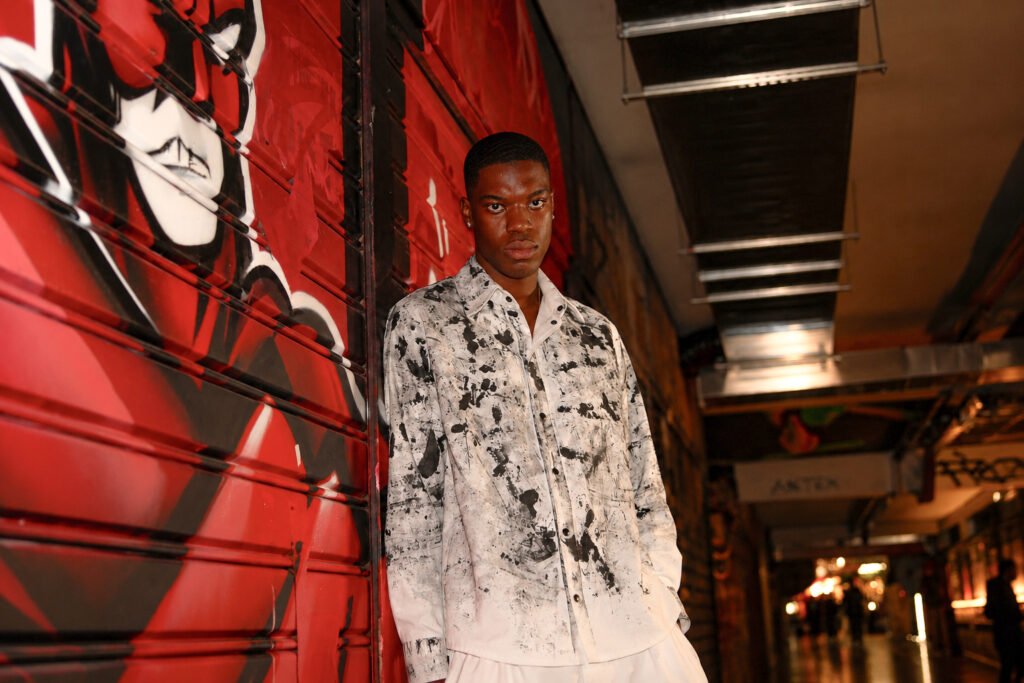
At Green Fashion Week in Milan, we encountered that approach in The Dusty Collection. White, hand-printed pieces with generous volume appeared alongside shades of worn black, punctuated by gold zips. Matte surfaces contrasted with metallic shine; close-fitting shapes balanced romantic silhouettes. The result reflected Ladefoged’s interest in a graphic aesthetic that accommodates both restraint and theatricality.
Working with discarded textiles has been central to her brand since its launch in 2009. Through Sort Slips Hvidt Slips, her Copenhagen shop, she has developed a business that keeps design, production and customer relationships closely connected. Her approach raises practical questions about how to price labour-intensive clothing, sustain an independent business and design for a life beyond the season.
Speaking to The Fashion Issue, Ladefoged discusses the experiences behind her practice, the commercial limits she has chosen to accept and what she would like the wider industry to learn.
The Fashion Issue: What does showing in Milan mean to you, and what conversations did this presentation open?
Victoria Ladefoged: It’s always wonderful to have the opportunity to show my collection internationally. You work for months on a collection, and the fashion show is a celebration of that work. Milan is a fashion capital, and the atmosphere is inspiring. I love telling the story of my collection and sharing my passion for working with recycled textiles. That’s always an important conversation to start.
How would you describe the world you want to create through your clothes?
I love making good clothes that people love to wear. My goal is to sell people their favourite outfit, and that often happens. It’s a combination of the design and the way the clothes are produced. My styles are often based on classic menswear and Japanese silhouettes. I try to put a lot of soul into every item we create, making each piece by hand from carefully selected textiles. Somehow, that makes the clothes feel alive.
You describe humour and provocation as part of your design philosophy. What do you want them to make people feel or question?
I take kitchen tea towels, restaurant aprons, hospital sheets and other textiles that have been used and washed many times and then discarded. I love taking something considered rubbish and treating it as though it were the most beautiful fabric. That turns things upside down. It takes good craft and tailoring skills to do that. There is something fun about taking an apron or a tea towel—something you know so well from another setting—and bringing it into high fashion.
“There is also humour in my exaggerated silhouettes. I like to make things a bit crazy.”
— Victoria Ladefoged
How does your background in men’s tailoring inform your approach to femininity and masculinity?
I’ve always thought men’s suits were among the most beautiful clothes. After five years of design education, I decided to learn men’s tailoring. I learned how to make clothes intended to last ten or twenty years, along with all those wonderful menswear details: pockets, lapels and buttons. We love those details because they have a purpose.
I’ve always loved mixing genders in my work. Many of my styles can be worn by whoever likes them; they’re quite gender-fluid. At the same time, I still love a classic princess dress with lots of volume and a tight waist, and a big men’s shirt. It’s about contrasts.
The Creative Discipline of Reuse
Ladefoged’s introduction to making clothes began at home. Her mother and grandmother sewed, and one garment remains particularly vivid in her memory: a green shirt dress her grandmother made from an old curtain. At around fifteen, Ladefoged followed that example, sewing an outfit from other curtains belonging to her grandmother.
At fashion school, she began working with kitchen textiles. A set of classic blue-and-white tea towels became a pair of shorts, which she remembers as her first successful experiment with those materials. What began as resourcefulness developed into a sustained design practice, informed by an understanding of fabrics whose original purpose lay far outside fashion.
You work with discarded tablecloths, aprons, bed linen and other hospitality and institutional textiles. How does tailoring change our perception of their value?
Tailoring raises the value of everyday textiles. You always have to listen to the fabric to understand what kind of clothes would work well with it. I also use tailoring techniques such as strengthening details with other fabric instead of interfacing. This makes the clothes stronger.
You’ve said that working within a limited range of fabrics has made you a better designer. How have those constraints pushed your creativity?
Because I always work with the same fabrics, I have to find new techniques to make them stand out. For this collection, for example, I made the hand-printed pieces. In the previous collection, I created stripes by sewing bands from the aprons onto the clothes.
How has your understanding of beauty changed since starting the brand?
My preferred aesthetic hasn’t changed very much. But timeless pieces have become even more important to me. Slow fashion. Slow beauty. Ageing is also okay.
Looking back at your earlier Green Fashion Week appearances, how has your creative approach evolved, and what has remained essential?
What remains essential is that the clothes I produce have to last. I used to make more extravagant pieces for my shows. Now, I focus more on wearable pieces that people can enjoy for many years.
“I still like to show some very distinctive pieces that make people say, ‘Wow.’”
— VICTORIA LADEFOGED
A Business Built on Long-Term Wear
Customers have given Ladefoged a measure of her work’s longevity. Some still wear and love shirts or trousers they bought fifteen years ago. She describes those relationships with pride: seeing how garments become established in a wardrobe has strengthened her confidence in their lasting appeal.
Designing for that length of time begins, she says, with classic elements of fit and design. Menswear and shirting provide recurring reference points. Maintaining a garment’s usefulness also requires attention after purchase. Ladefoged encourages customers to return clothes for repairs and explains that alterations can help extend their life. An occasional repair is, in her view, an ordinary part of keeping something for many years.
Most sales still take place in her Copenhagen shop. Her website and Instagram introduce the brand through a short explanation of its approach and photographs of the process. The physical business, however, remains central to the customer relationship and to communicating the labour behind the finished product.
What financial pressures come with your approach to sustainability, and how do you communicate the value behind your prices?
So much fashion is mass-produced and sold cheaply. The clothes I produce are very time-consuming to make, so earning money is difficult.
Working with reused textiles also makes the business hard to scale. Every piece has to be made individually and treated with care, so I can’t produce large quantities of the same garment. Instead, I’ve chosen to stay small and celebrate the fact that my customers are buying something unique. My production space is next to my shop, so customers can see the clothes being made. That starts a conversation about the work involved and why handmade clothing costs more.
How has the industry’s response to your work changed, and what would you like it to learn from your approach?
Uniqueness and the handmade aesthetic are now in fashion. It’s interesting to see big brands making mass-produced pieces look as though they have been made from recycled fabric.
I would like them to produce fewer items and make more use of the clothes they have already made. They should be held accountable for the clothing they waste, the pieces that cannot be sold and those that do not last. That’s the kind of accountability my customers expect from me.
Ladefoged’s next steps involve developing both her creative practice and the ways it reaches customers. She wants to explore textile printing more extensively, a longstanding interest that offers new possibilities for her existing fabrics. She also intends to devote more attention to online sales of unique pieces, building on a channel that currently plays a smaller role than her shop.
Teaching is another ambition. By sharing her methods with designers and technicians, she hopes to pass on the practical knowledge she has acquired through transforming discarded textiles into fashion.
Her definition of success brings those plans back to the wearer: helping customers discover the pleasure of unique clothing and choose good-quality pieces that suit them. Continuing to work with recycled textiles is equally important. Having chosen to keep production small, Ladefoged’s ambitions centre on deepening her practice, sharing its methods and sustaining a business whose value becomes apparent over years of wear.
Explore Victoria Ladefoged’s work at Sort Slips Hvidt Slips and follow her on Instagram at @victoria.ladefoged
* This interview has been edited for clarity and length.