
The Chinese beauty group is strengthening its international R&D network with a new facility near Paris, focusing on biotechnology, skin longevity and sustainable cosmetic ingredients.
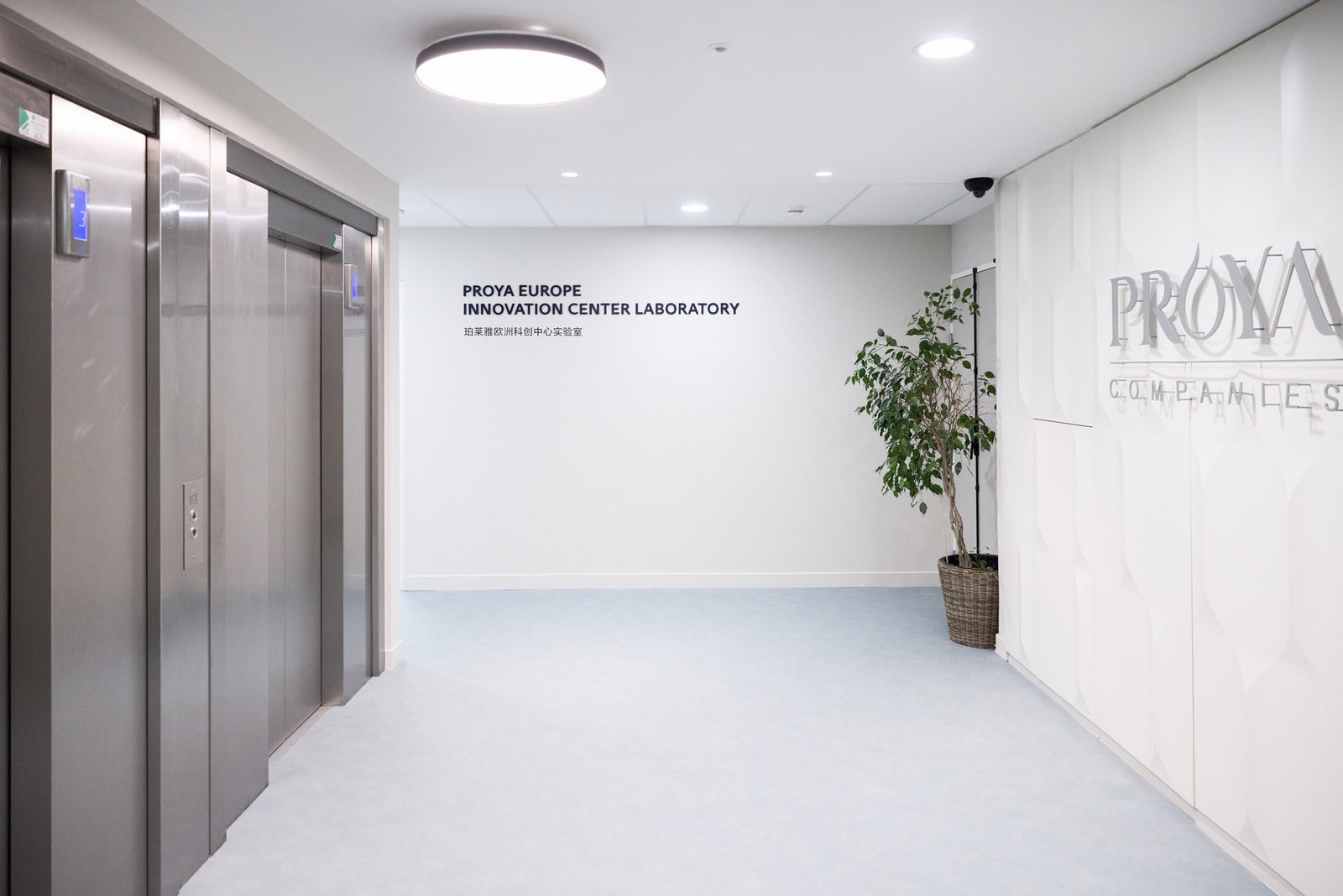
Chinese beauty group Proya Cosmetics has opened a new research laboratory in Suresnes, France, expanding its European operations as the company seeks to strengthen its scientific capabilities and international presence. The facility will focus on biotechnology, skin biology, longevity research and sustainable ingredients, reflecting the growing importance of advanced research and cross-border collaboration in the global cosmetics industry.
Inaugurated on October 13, the Europe Innovation Center Laboratory builds on Proya’s establishment of its European innovation centre in the Paris business district of La Défense in 2024. The expansion forms part of the company’s wider strategy to connect Chinese research and manufacturing capabilities with European scientific expertise, particularly in areas shaping the next generation of skincare and personal-care products.
The investment comes as Chinese beauty companies increasingly look beyond their domestic market to develop international research partnerships, strengthen product innovation and compete with established global cosmetics groups.
Connecting European Research With China’s Beauty Industry
The new laboratory occupies 450 square metres and houses 76 pieces of research equipment, supported by a dedicated team of seven researchers. Although relatively modest in scale, the facility is intended to complement Proya’s existing research operations in China and provide a base for scientific and industrial collaboration across Europe.
Its research priorities include skin biology, biotechnology, longevity and sustainable cosmetic technologies, areas attracting increasing attention as beauty companies explore new approaches to product efficacy, ingredient development and environmental performance.
This Europe Innovation Center Laboratory connects the European and Chinese ecosystems to draw on combined strengths and create new innovation capabilities through the interaction of scientific, cultural and consumer perspectives.
The European facility will work alongside Proya’s research centre in Hangzhou Longwu, which focuses on formulation development, ingredient science, product safety and efficacy, as well as fundamental and applied research. Its Shanghai research centre specialises in hair care and the scalp microbiome, an emerging area of scientific interest within the personal-care industry.
By connecting these facilities, Proya aims to combine different research specialisations and accelerate the translation of scientific findings into commercial applications. The approach also reflects the increasing internationalisation of cosmetic research, where access to specialised knowledge, scientific partnerships and technological infrastructure can influence a company’s ability to develop competitive products.
Biotechnology and Sustainable Ingredient Development
The laboratory’s focus on biotechnology and sustainable ingredients places it within two areas of growing strategic importance for cosmetics manufacturers. Advances in biotechnology are creating opportunities to develop ingredients through alternative production processes, while research into skin biology is contributing to more specialised approaches to formulation and product development.
Sustainability is also becoming a more significant consideration in cosmetic research, particularly as companies examine the environmental implications of ingredient sourcing, manufacturing processes and resource consumption. Technologies capable of improving production efficiency or reducing dependence on certain raw materials could offer opportunities to address these challenges, although their benefits require assessment at the level of individual processes and products.
Proya has identified sustainable ingredients and technologies as priorities for its European research programme, but has not disclosed specific environmental performance targets or results associated with the new facility.
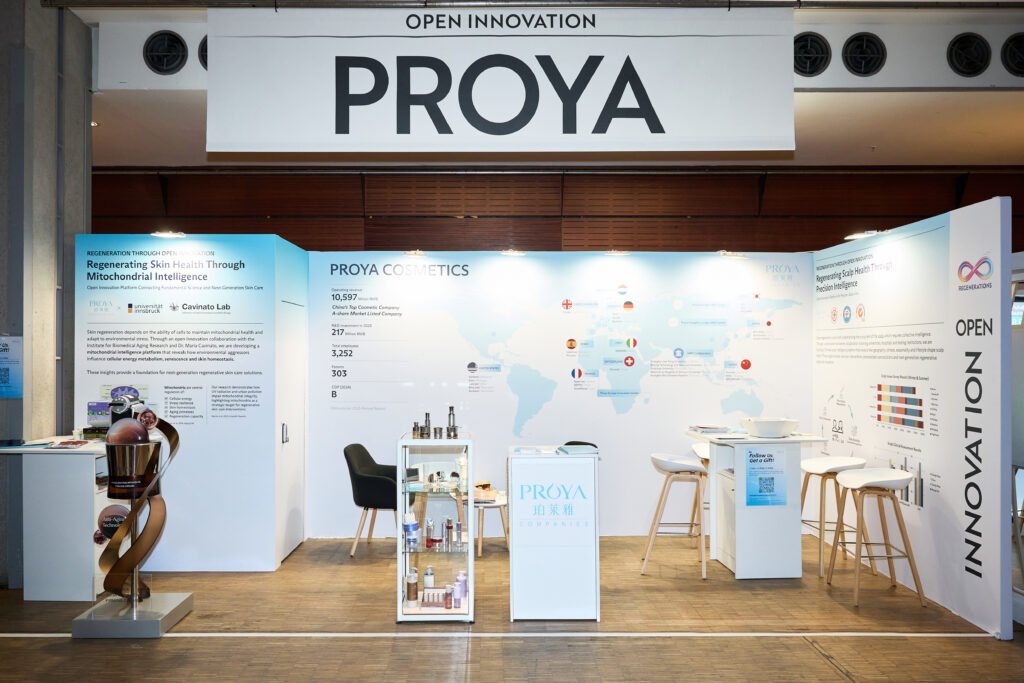
The company’s wider research direction was also presented at Cosmetic 360, the international cosmetics innovation trade show held at the Carrousel du Louvre in Paris on October 14 and 15.
During the event, Dr. Sun Peiwen, Proya’s Chief R&D and Innovation Officer, delivered a presentation titled From Efficiency to Regeneration, outlining the company’s exploration of low-carbon and resource-positive cosmetic manufacturing, intelligent production systems and sustainable development.
Dr. Lieve Declercq, Chief Scientific Advisor of Proya Cosmetics and Vice President of its European Innovation Center, also participated in a discussion on open innovation, examining how international research networks and emerging technologies can help translate scientific discoveries into practical consumer applications.
International Expansion and the Competition for Beauty Innovation
Founded in 2003, Proya Cosmetics has developed into one of China’s leading domestic beauty groups, with a portfolio spanning skincare, makeup, hair care and body care. Listed on the Shanghai Stock Exchange since 2017, the company reported revenue of RMB 10.597 billion in 2025 and states that it has ranked first among Chinese cosmetics companies by revenue for three consecutive years.
Its portfolio includes PROYA, TIMAGE, Off&Relax, Flower Knows and several other beauty brands, giving the company exposure to multiple segments of the cosmetics market.
The opening of the French laboratory aligns with Proya’s long-term international ambitions. Under its Double Tenstrategy, unveiled in 2025, the group aims to become one of the world’s ten largest cosmetics companies within a decade, supported by investment in research, talent, digital capabilities and international operations.
For Proya, establishing a stronger European research presence offers access to specialised expertise and potential scientific partnerships while creating closer links between product development and international markets. It also reflects a broader competitive shift, as Chinese cosmetics companies invest in proprietary research and technology to strengthen their position beyond price and domestic brand recognition.
The laboratory’s longer-term significance will depend on the research outcomes, partnerships and commercial applications it generates. While the opening represents an expansion of Proya’s international innovation infrastructure, its contribution to more sustainable cosmetic production remains to be demonstrated.
As competition in the global beauty industry increasingly extends to ingredient science, biotechnology and manufacturing innovation, Proya’s investment highlights the strategic importance of research capabilities in shaping the next phase of international growth.