Access to capital, creative partnerships and consumer trust shaped the discussions, while designers explored textile heritage, circular design and new expressions of identity.
The third day of Lagos Fashion Week 2026 examined the relationships and resources needed to build a resilient African fashion industry. Discussions on financing, regenerative collaboration and digital influence connected creative practice with the commercial decisions that determine how fashion businesses develop and reach their audiences.
On the runway, those questions found expression through collaborative collections, reconstructed garments and interpretations of regional textile traditions. The programme brought established labels and emerging designers into a wider conversation about how cultural knowledge can inform contemporary design and support lasting creative enterprises.
Financing Growth and Building Lasting Partnerships
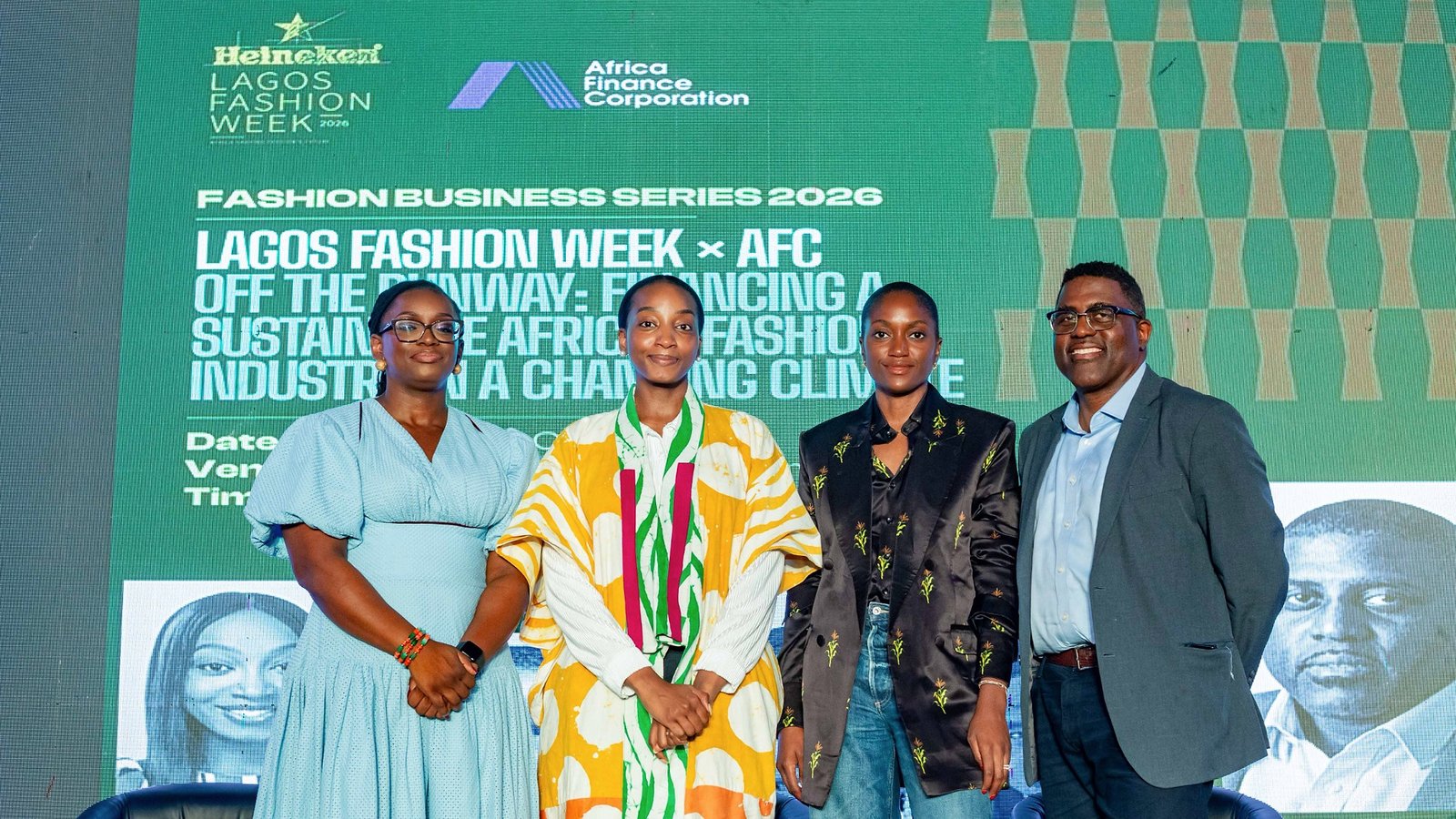
“Off the Runway: Financing a Sustainable African Fashion Industry in a Changing Climate” addressed the connections between creativity, capital and infrastructure. Moderated by journalist and editor Yinka Adegoke, the session featured Yewande Giwa, Senior Country Officer and Value Chain Lead at the International Finance Corporation; sustainable fashion and brand development specialist Zara Odu; and Timoni Akindolie, Head of Investor Relations at AFC Capital Partners.
The discussion examined three priorities: advisory support and capacity building, investment and access to capital, and regulatory and intellectual property frameworks. Together, these placed financing within a broader business environment, where access to funding depends partly on the skills, structures and protections that allow creative enterprises to develop.
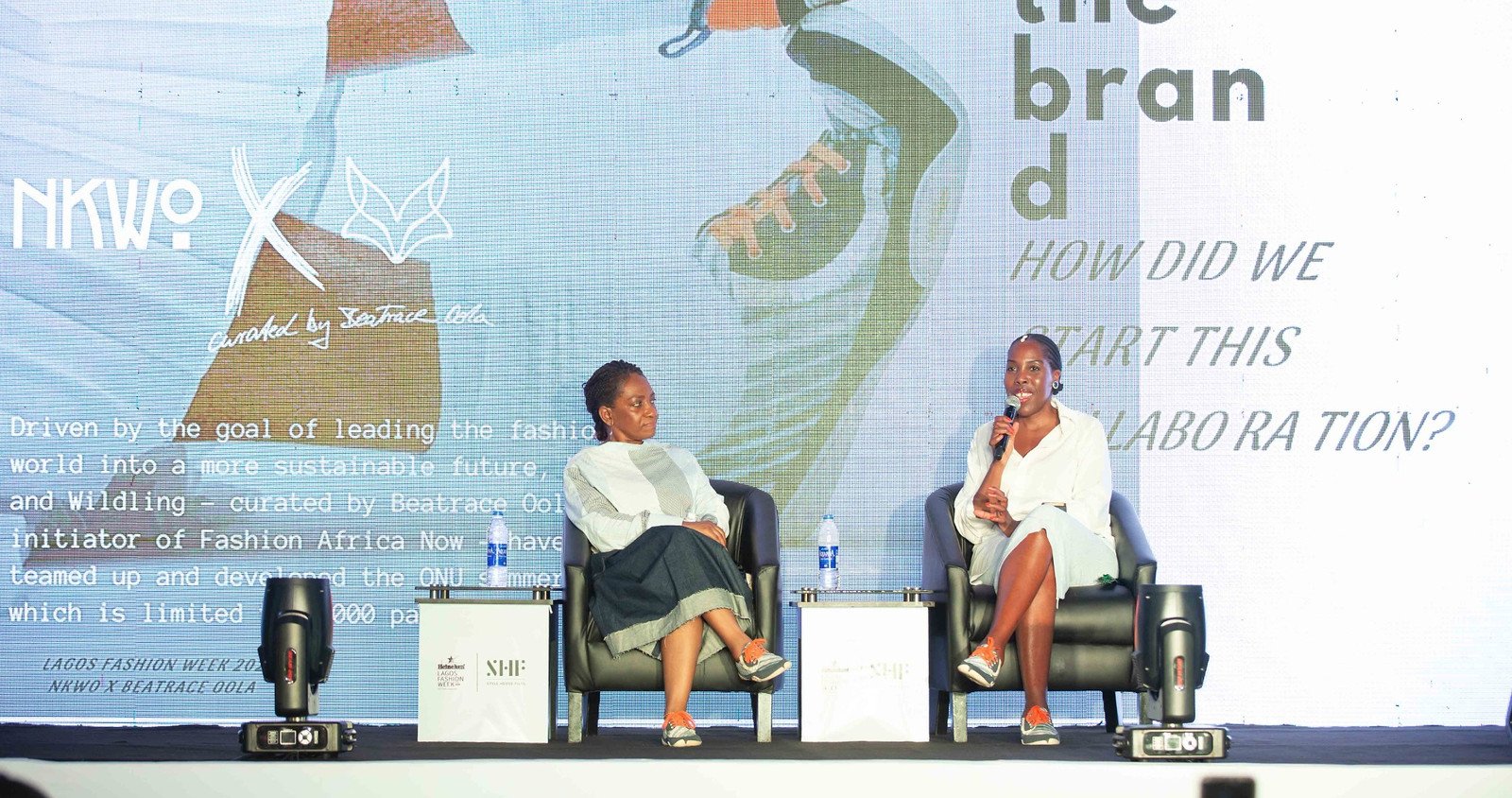
The relationships behind production came into focus during “Regenerative Collaboration: What If Fashion Was About More Than Just a Product?” Designer Nkwo Onwuka joined creative strategist Beatrace Oola, founder of Fashion Africa Now, to discuss their longstanding relationship and the thinking behind ONU, the footwear collaboration between NKWO and Wildling Shoes initiated and curated by Oola.
Their conversation considered how a product can become a starting point for cultural exchange, shared learning and sustained collaboration. Rooted in African approaches to circularity, the project brought attention to the people and knowledge behind design, extending the discussion beyond the finished object to the relationships through which it is made.
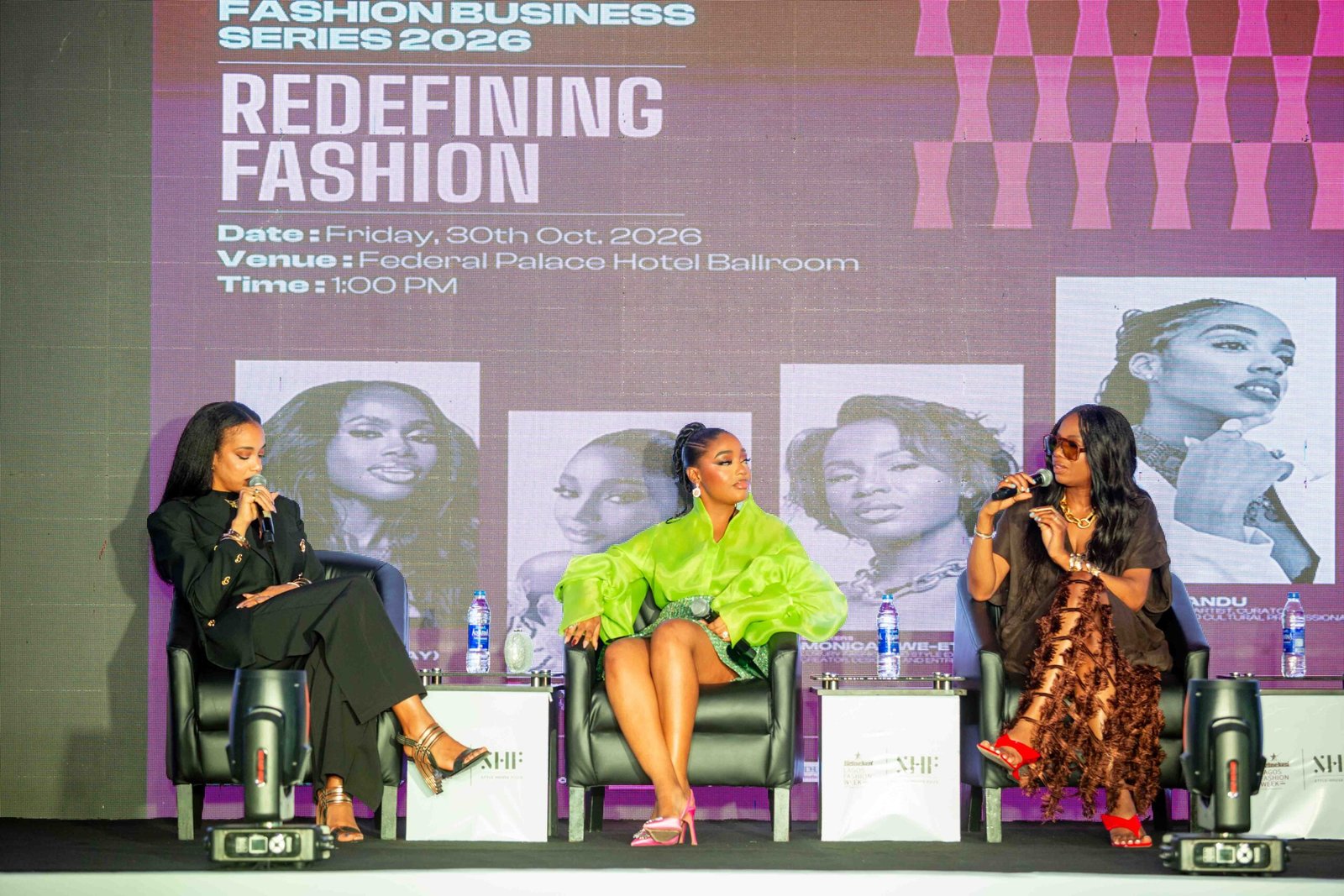
Consumer trust provided another perspective on the industry’s commercial foundations. In “Redefining Fashion: How Influencers and Fashion Tastemakers Shape How Consumers Discover, Engage With and Experience Style,” multidisciplinary artist and cultural professional Somi Nwandu moderated a conversation with Kiky Festus and Monica Awe-Etuk on personal style, digital influence and purchasing decisions.
The session explored how creators can encourage audiences to move beyond standard trends and invest in pieces intended for longer use. It also addressed the responsibility that accompanies that influence, particularly when personal recommendations become part of a paid partnership.
Festus emphasised the importance of declining collaborations that do not align with a creator’s identity or audience. The discussion also called for brands to allow greater creative freedom within advertising briefs, recognising that effective communication depends on an understanding of the communities creators have built over time.
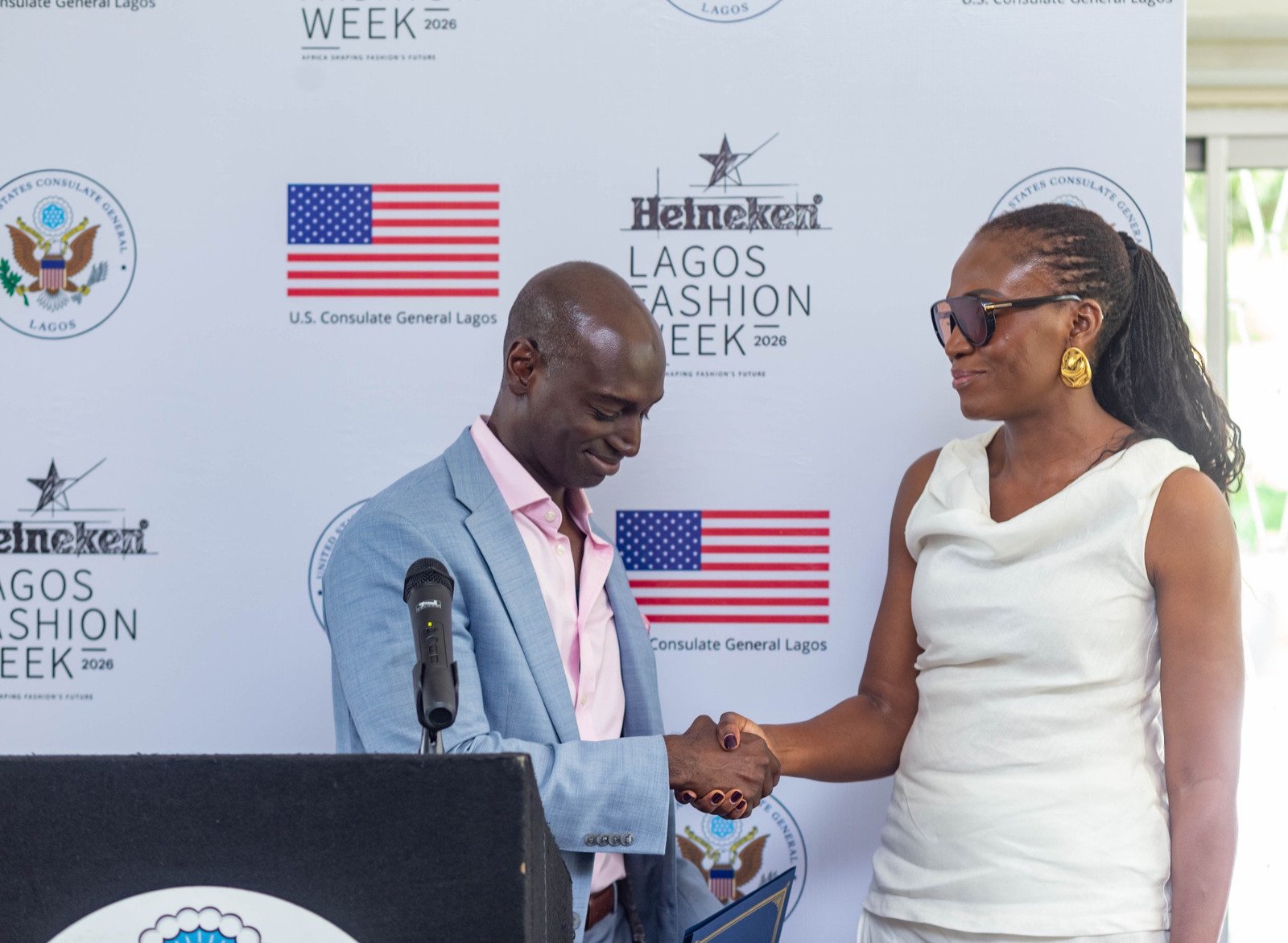
Institutional support formed a further part of the day’s activity. U.S. Consul General Brandon Hudspeth hosted a gathering bringing together designers, creative leaders and industry stakeholders, where Lagos Fashion Week founder Omoyemi Akerele received the Excellence in Commercial and Creative Leadership Award. The recognition acknowledged her work over 15 years in developing the platform and connecting Nigerian designers with international buyers, retailers and markets.
Heritage, Collaboration and New Design Languages
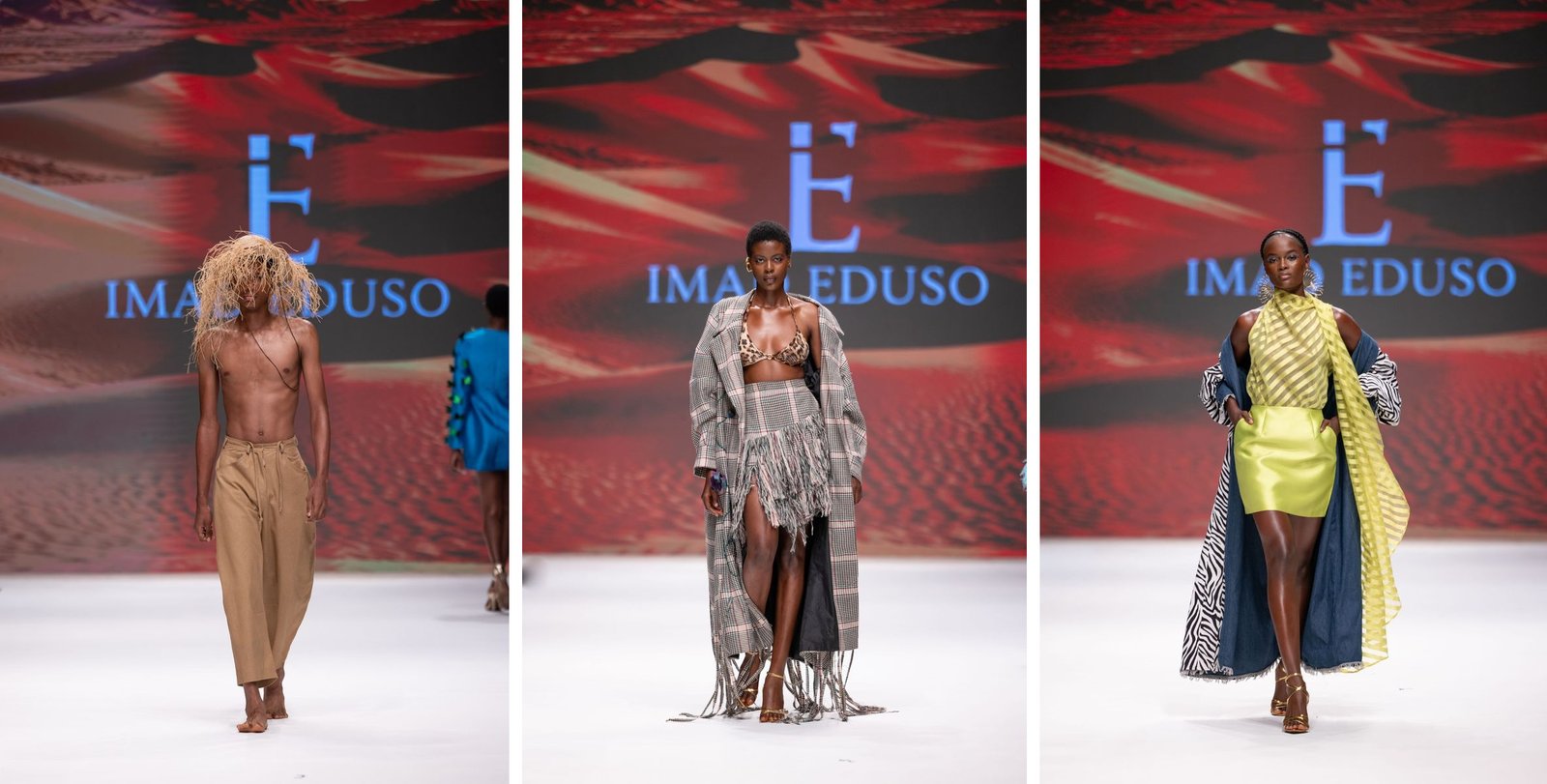
The evening’s runway programme opened with a ballet performance before Imad Eduso presented “Into the Wild,” introducing the label’s first menswear offering. Raffia hats, high-waisted trousers, rounded volumes and fringe accompanied womenswear featuring shimmering cheetah prints, lace dresses and the brand’s signature silhouettes.
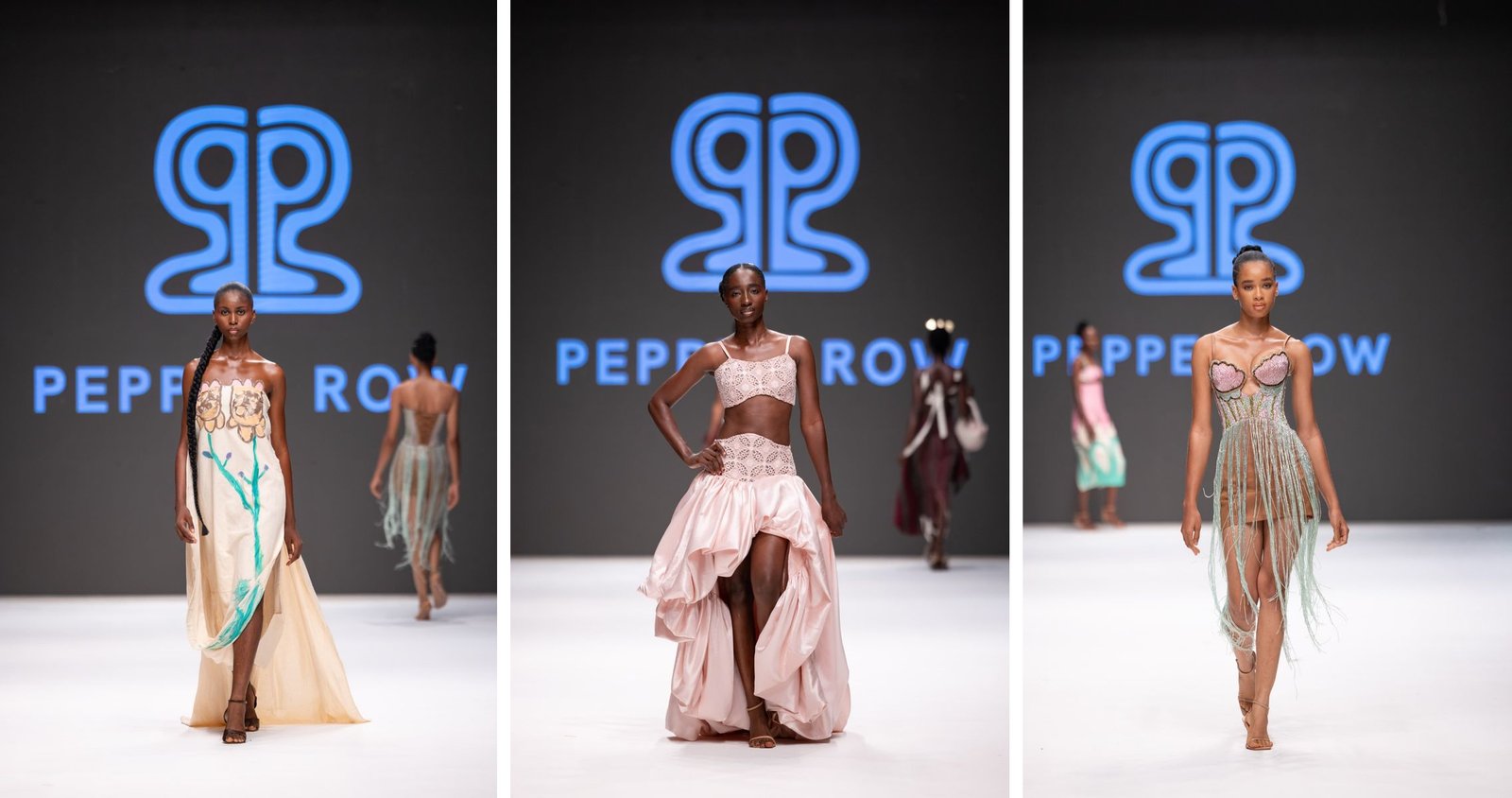
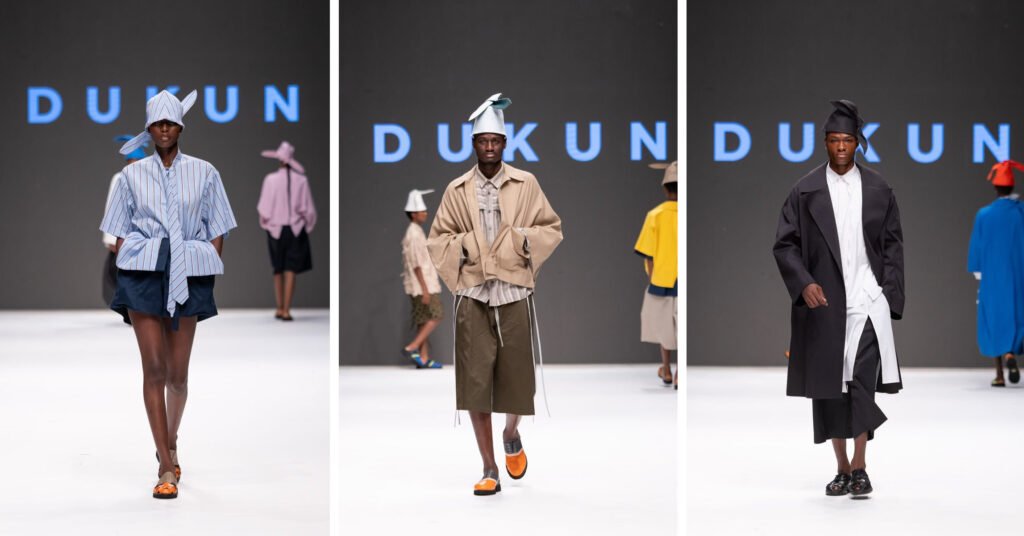
Pepper Row continued its exploration of hand-printed fabrics through floral motifs, beadwork and raffia detailing. Relaxed menswear contributed to a restrained collection in which surface treatments provided continuity across the looks. Dukun, making its Lagos Fashion Week debut, drew on Itsekiri traditions from southern Nigeria, combining deconstruction, fabric manipulation and layering in orange, yellow, white and cobalt blue.
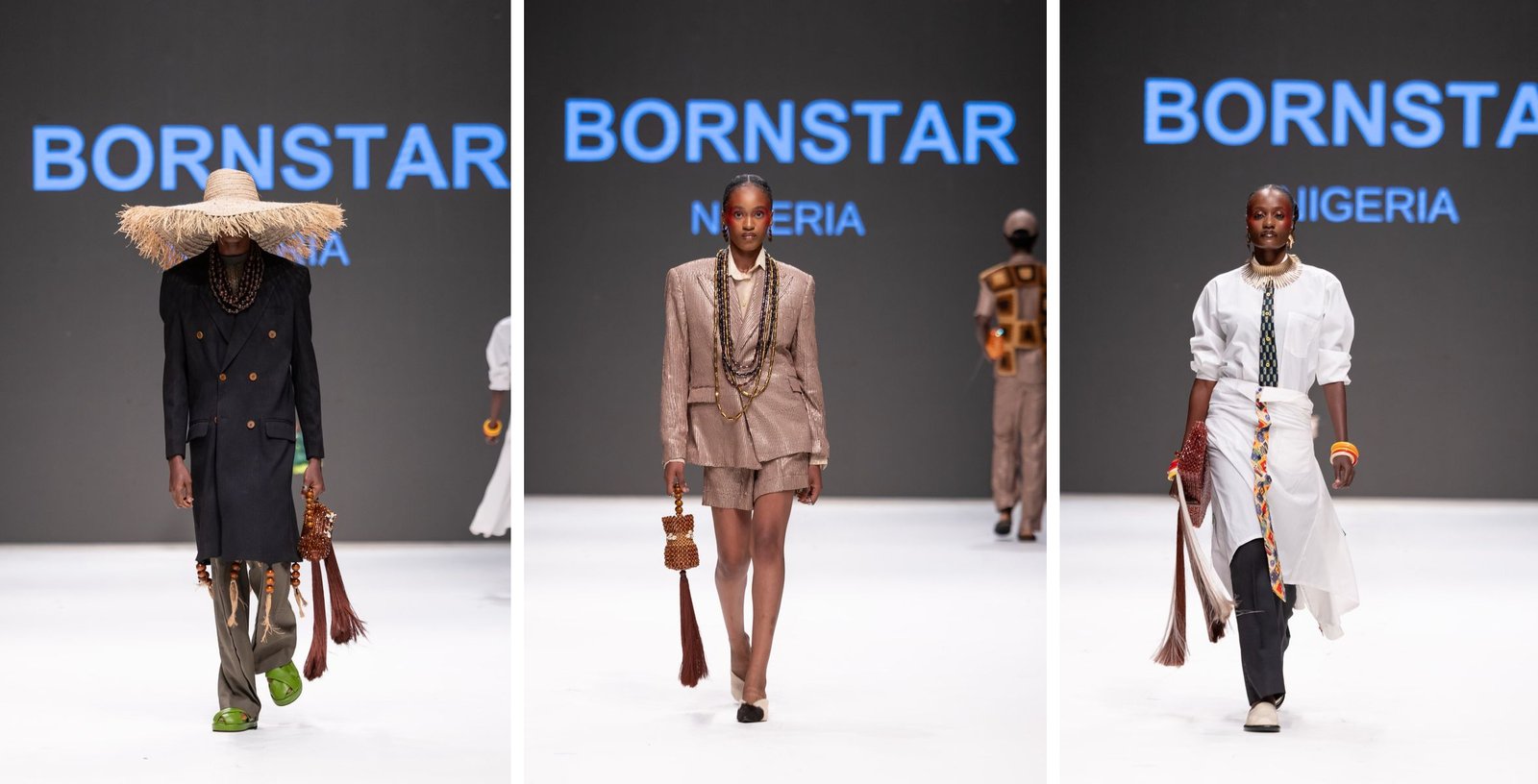
Bornstar Nigeria explored movement through neutral-toned ponchos and fringed tailoring, introducing brighter colours through menswear. Ibilola Ogundipe approached occasion dressing through cobalt blue, butter yellow and shimmering embellishment, placing colour and decorative detail at the centre of its presentation.
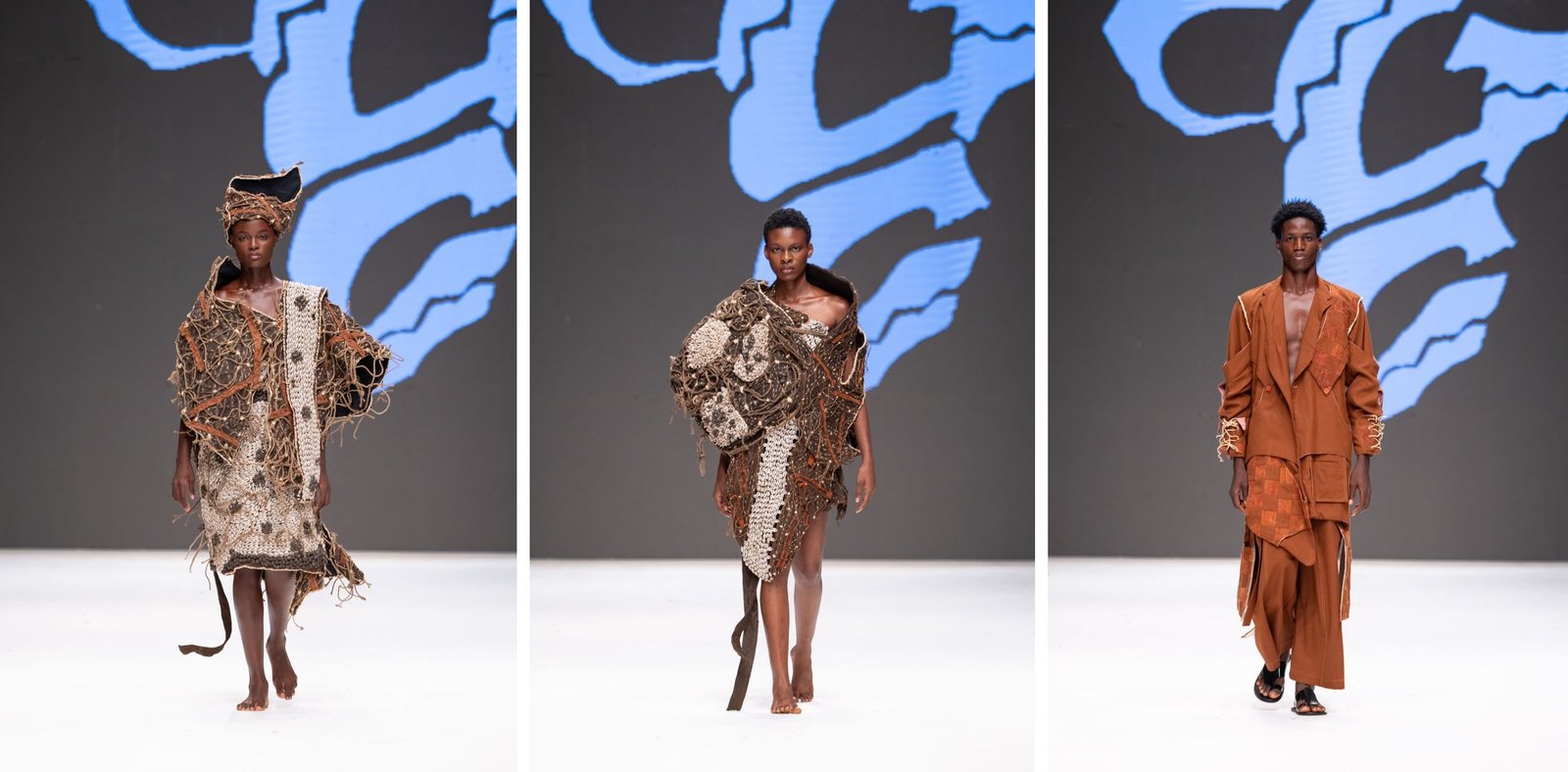
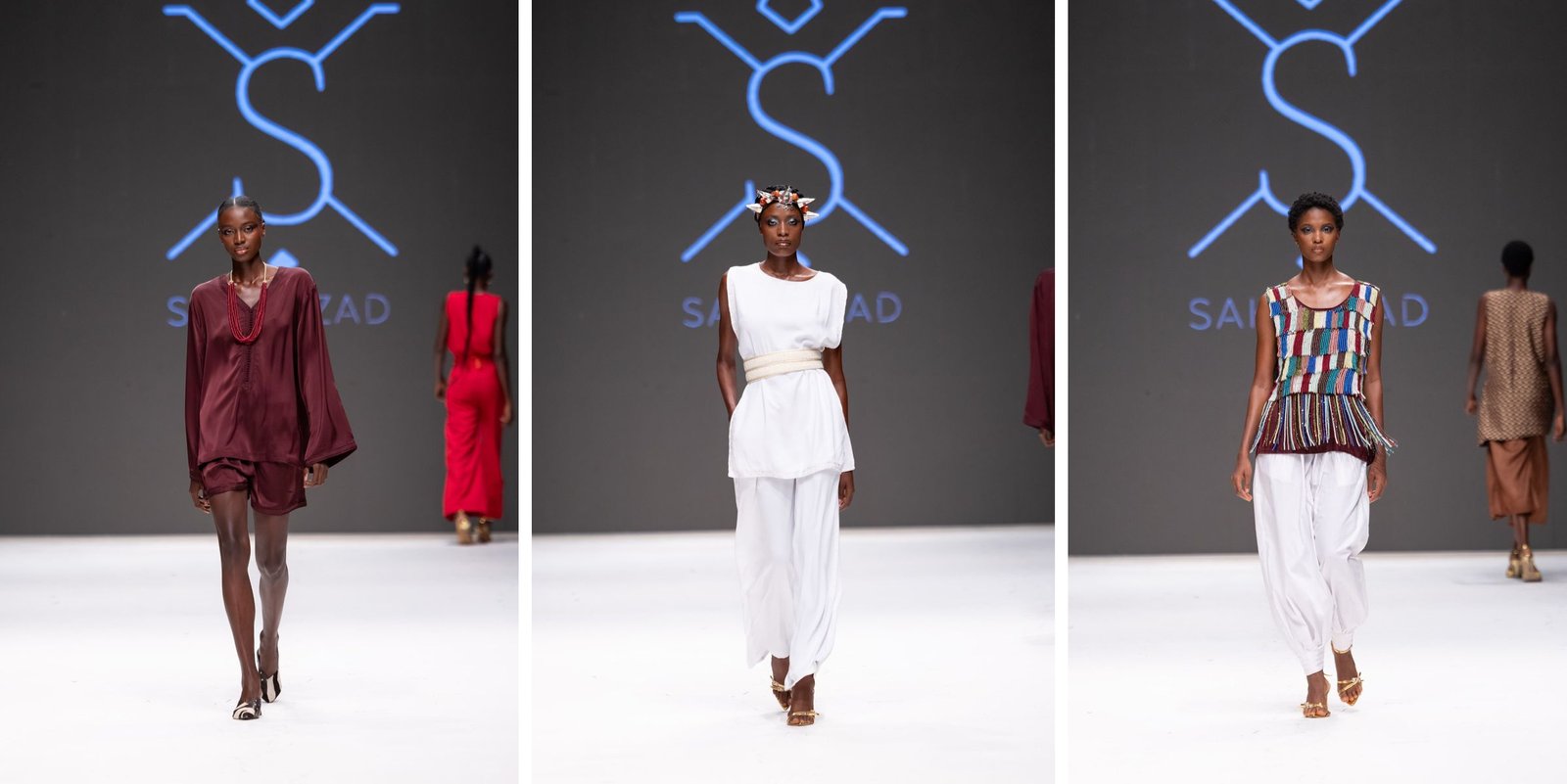
Regional textile references took distinct forms at IGC Fashion and Sahrazad. The Ugandan label incorporated barkcloth, cowrie embellishments and deconstructed shapes, while the Moroccan brand balanced contemporary tailoring with relaxed, fluid proportions. Stripes, textured fabrics and a palette moving between bold colours, earthy shades and neutrals gave Sahrazad’s collection a varied interpretation of everyday dressing.
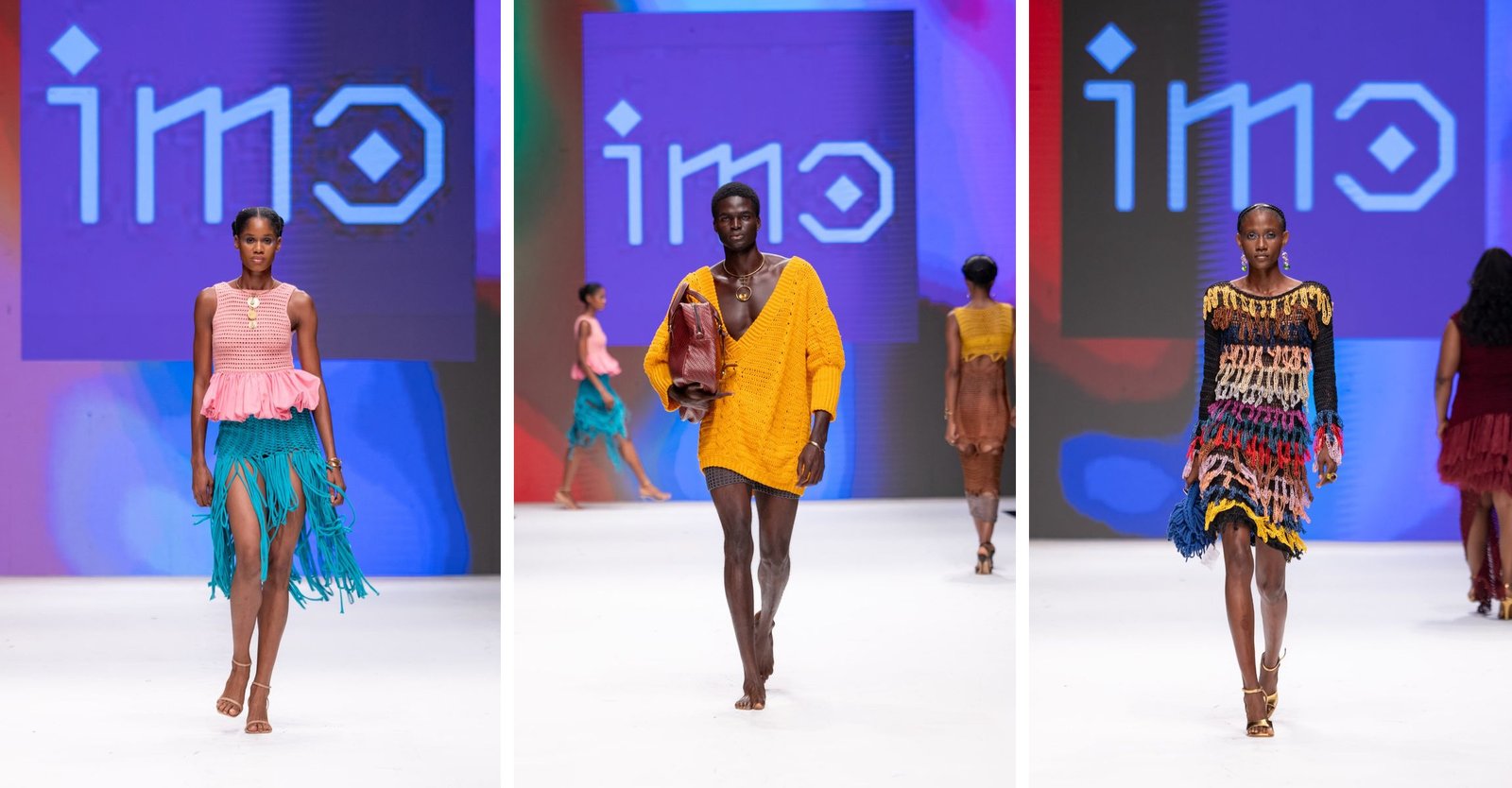
Collaboration was central to Studio Imo’s “Clan.” The label partnered with 21 Wool Street and Crochet Nigeria, bringing different approaches to texture and embellishment into a shared collection. Knitwear in hot pink, butter yellow and purple featured asymmetrical shapes, fringe and yarn tassels, with movement built into the construction and finishing of the garments.
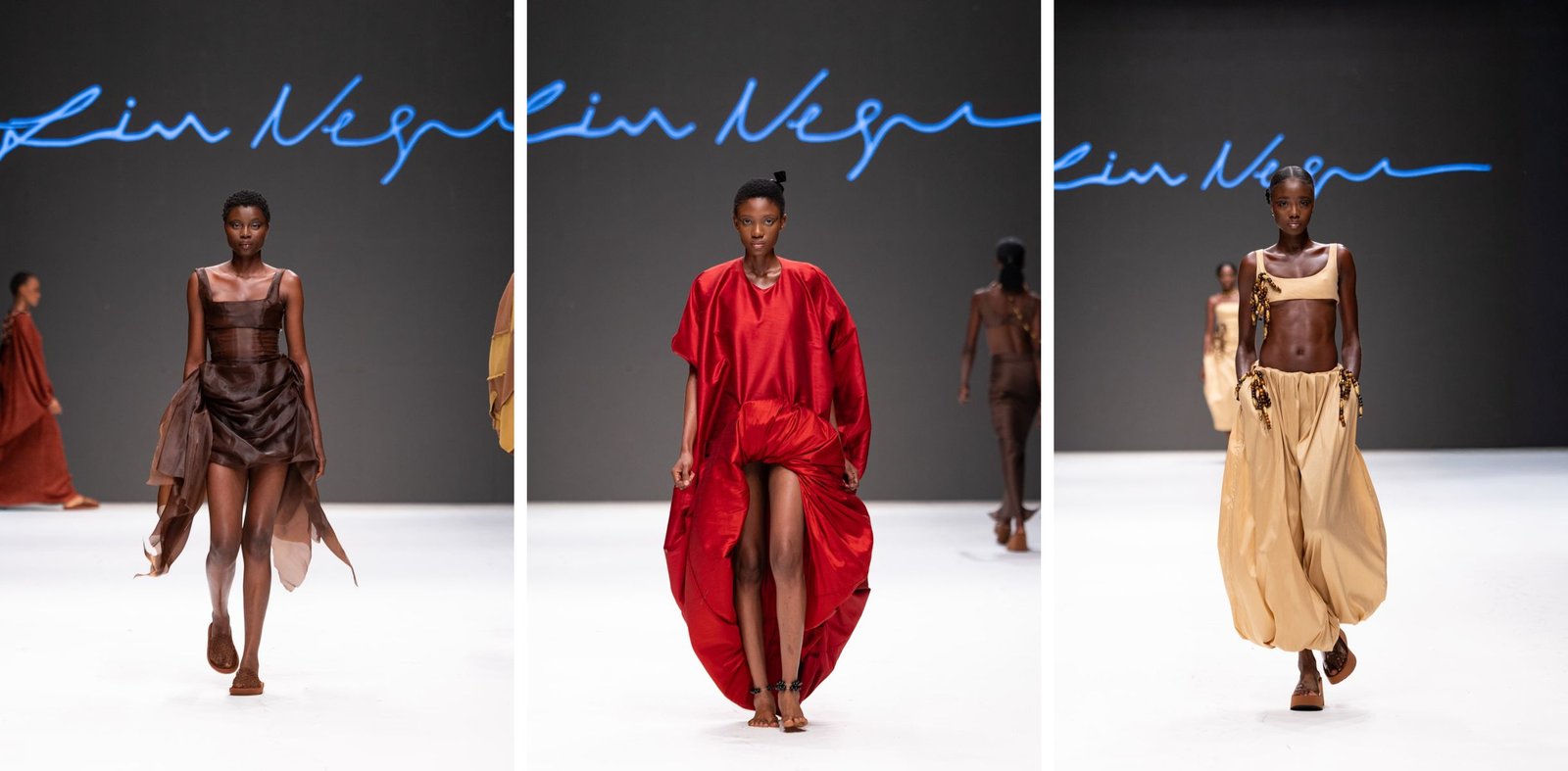
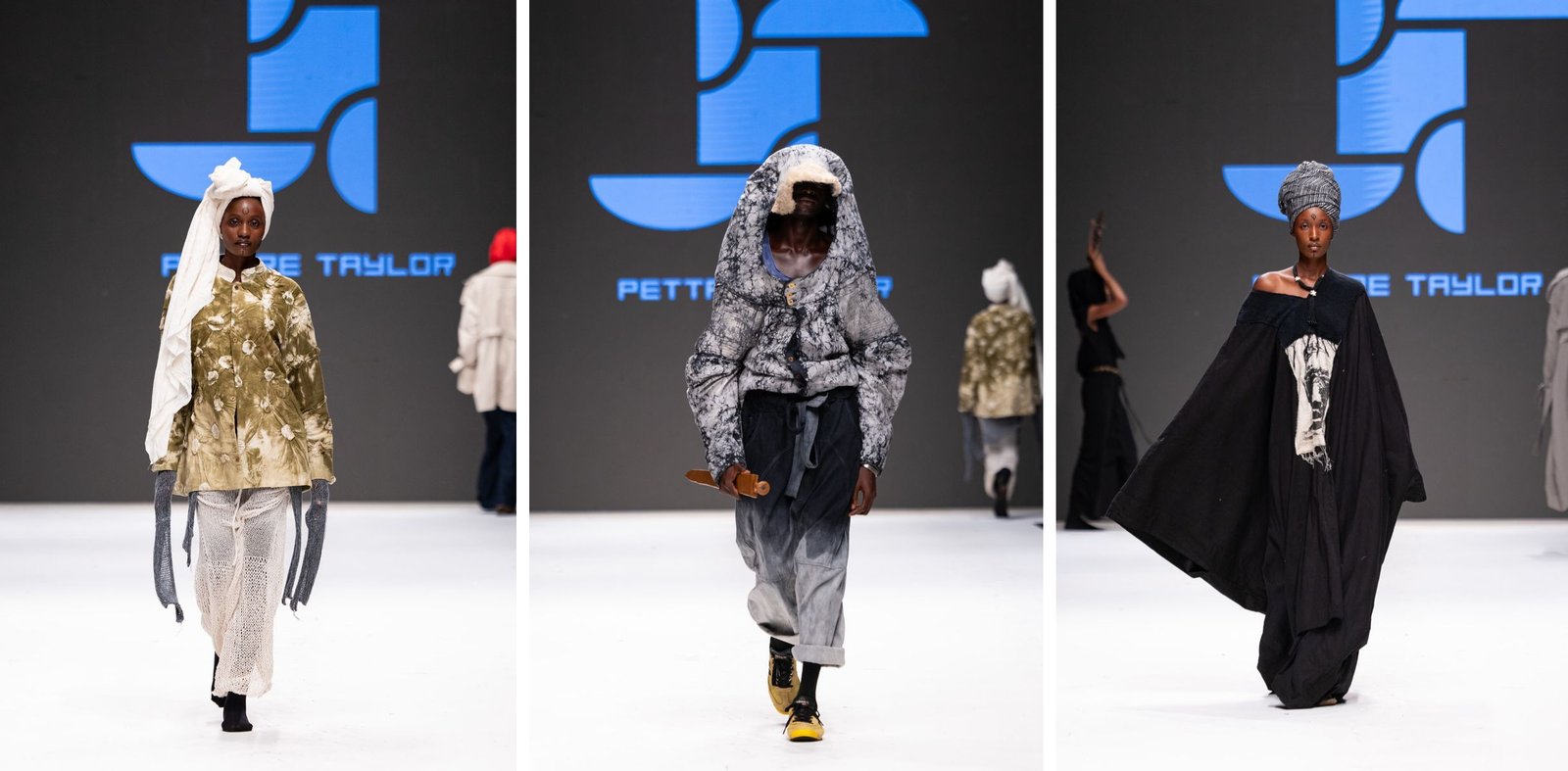
Angolan label Fiu Negru combined sheer organza, coral-beaded tops and voluminous hemlines, punctuating a largely neutral palette with red. Pettre Taylor developed texture through knitwear, layering, frayed edges and ruching, while Jermaine Bleu brought its Ghanaian heritage to the runway through kente fabrics and shimmering tassel finishes.
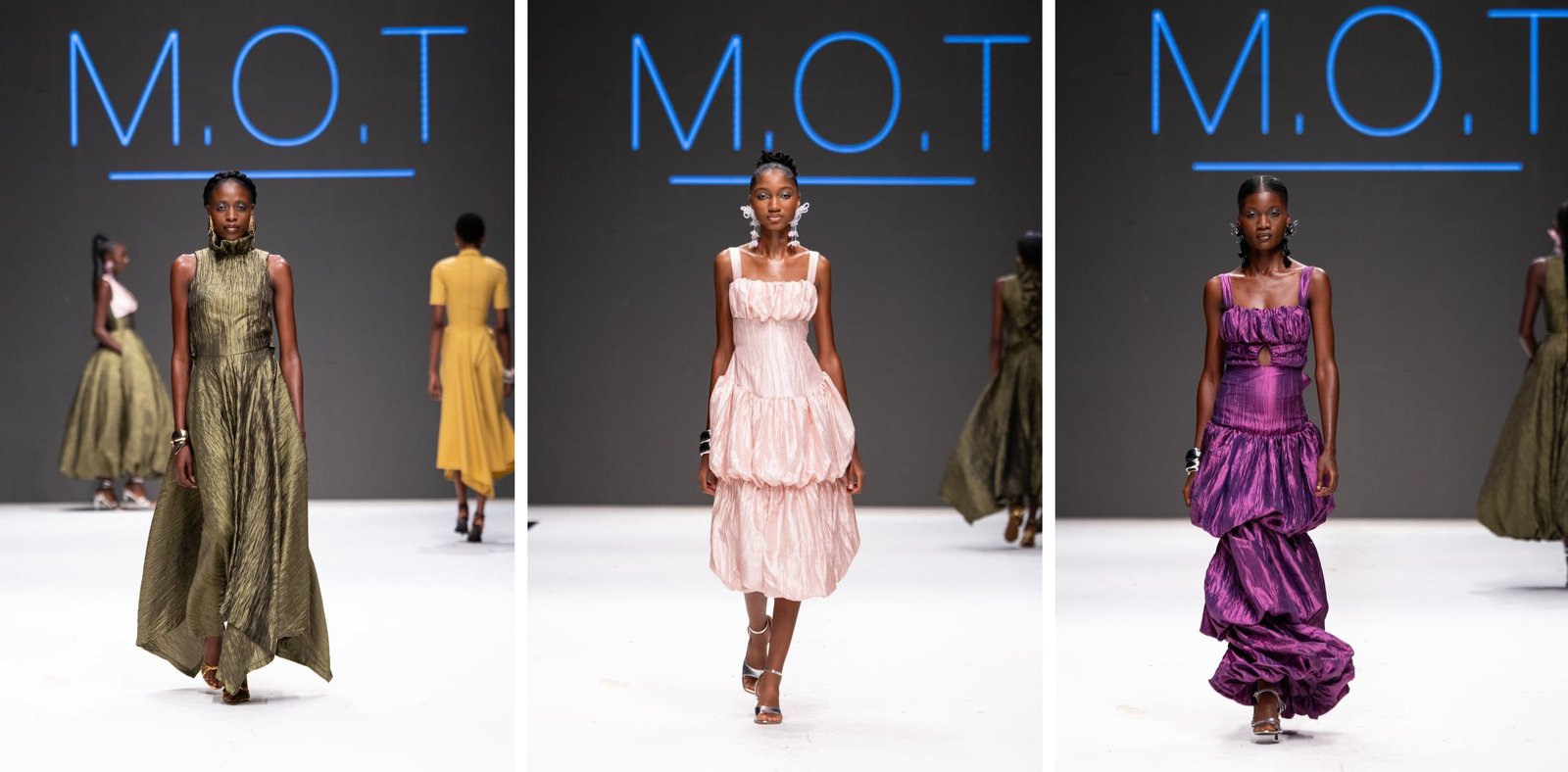
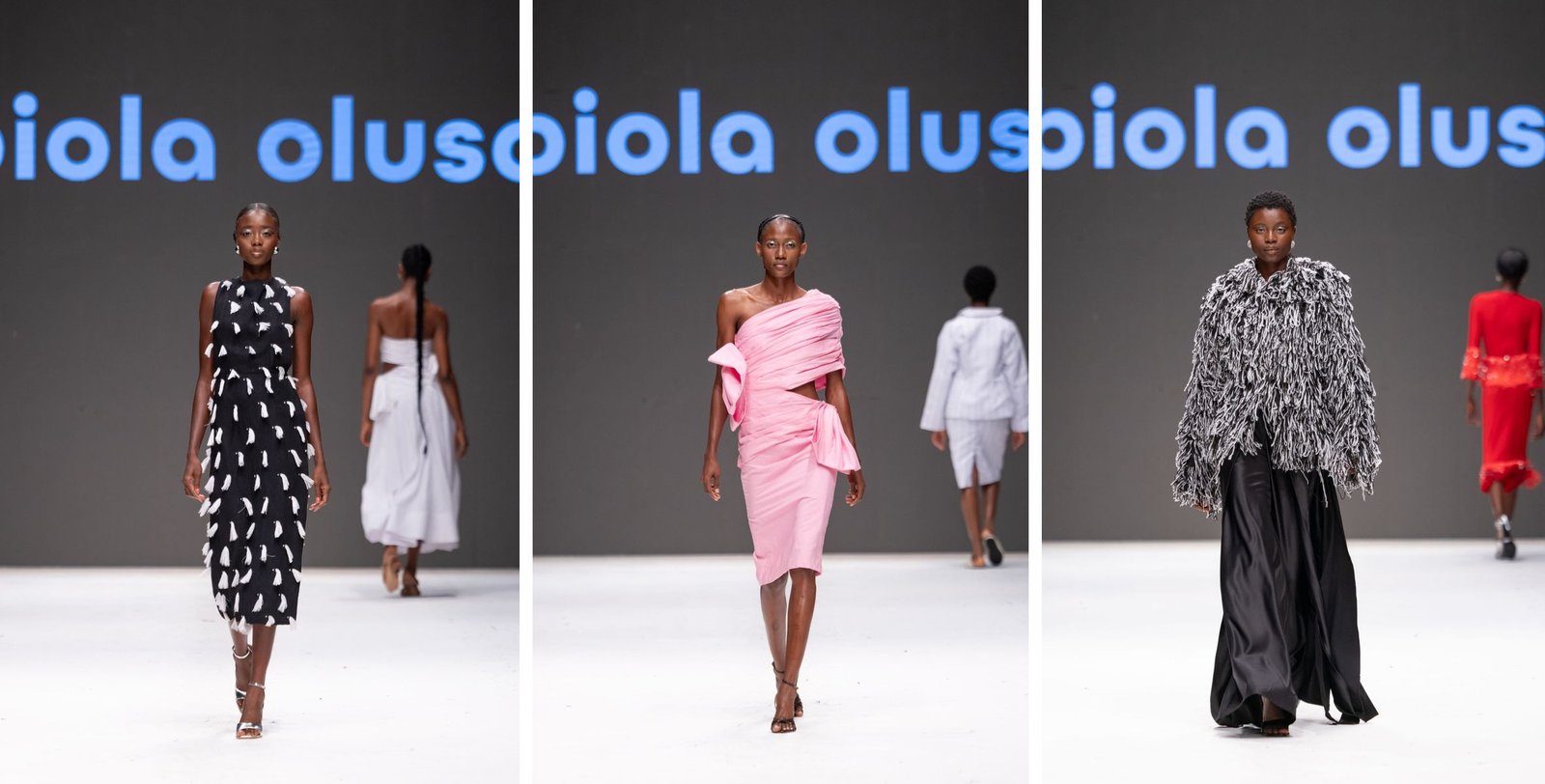
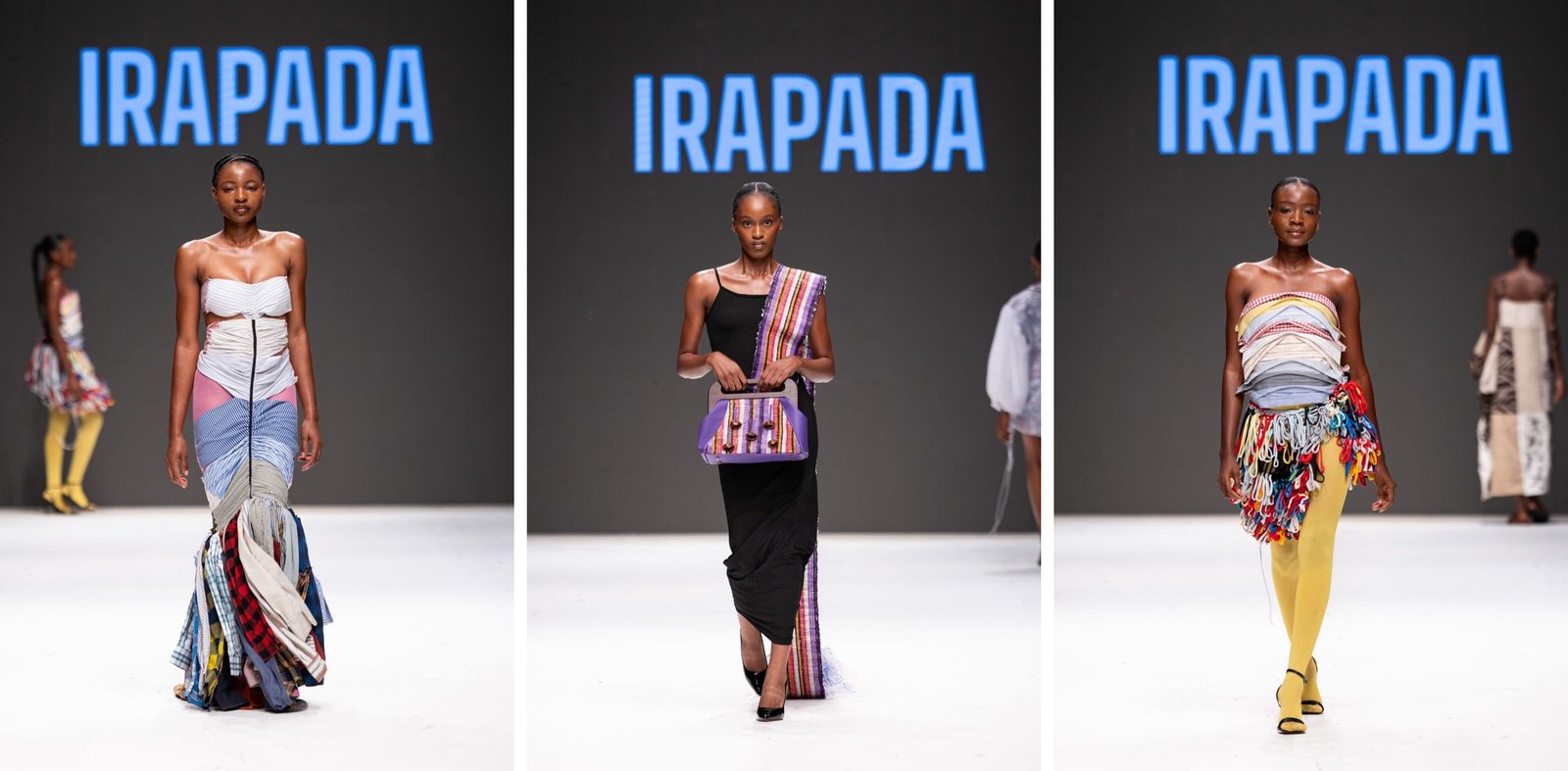
The programme also included M.O.T the Label and Abiola Olusola, whose soft, contemporary feminine silhouettes offered another approach to dressing. Alongside the individual collections, the Irapada circular design initiative presented pieces by Hertunba, IAMISIGO, Ajanéé and Éki Kéré, bringing several creative practices into a shared exploration of circular design.
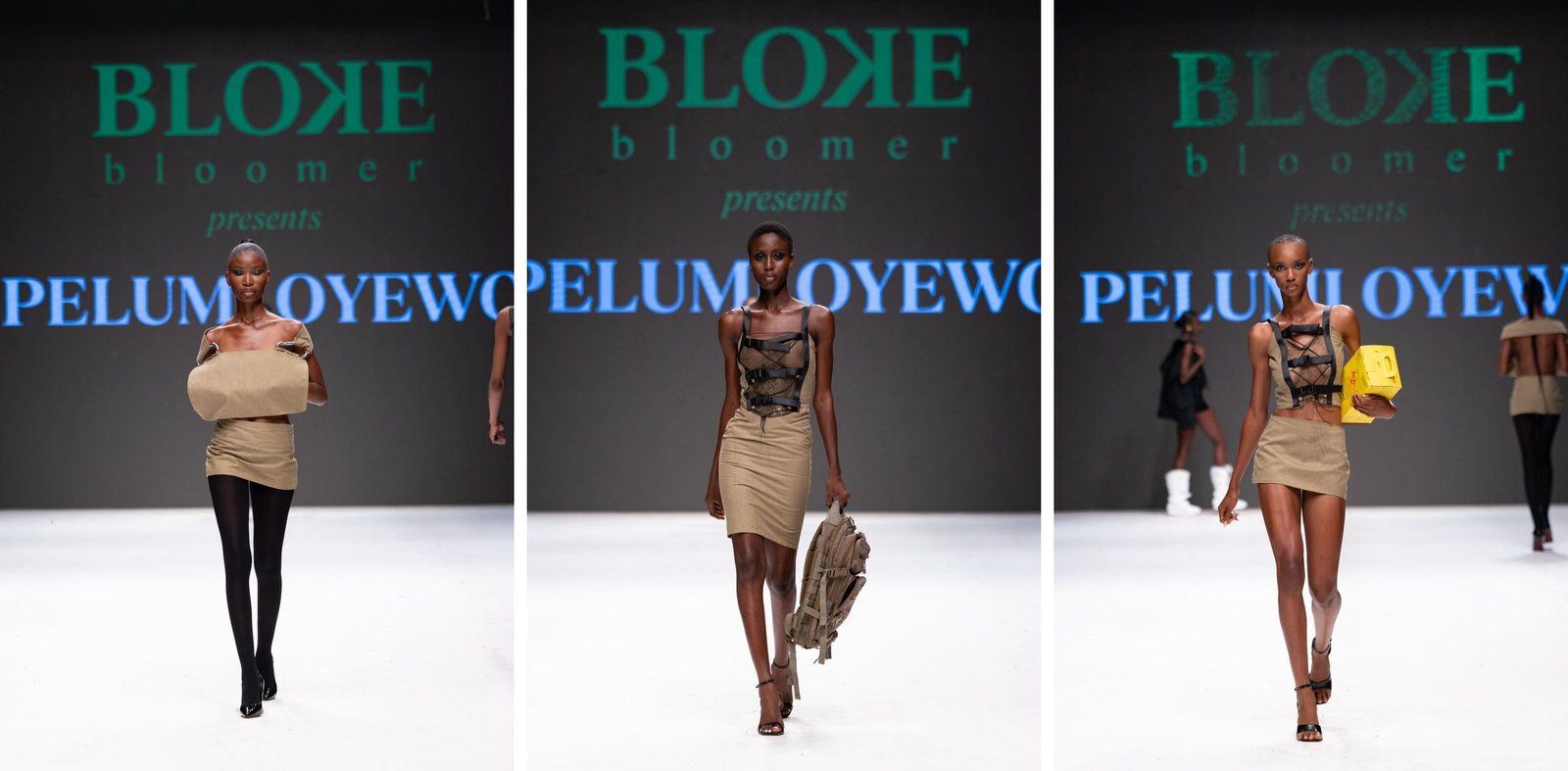
Bloke introduced a different collaborative framework through its inaugural designer residency, presenting Pelumi Oyewo’s “Tzar Bomba” under the executive curatorship of founder Faith Oluwajimi. The theatrical, futuristic presentation expanded the programme’s consideration of how an established brand can provide space for another designer’s creative vision.
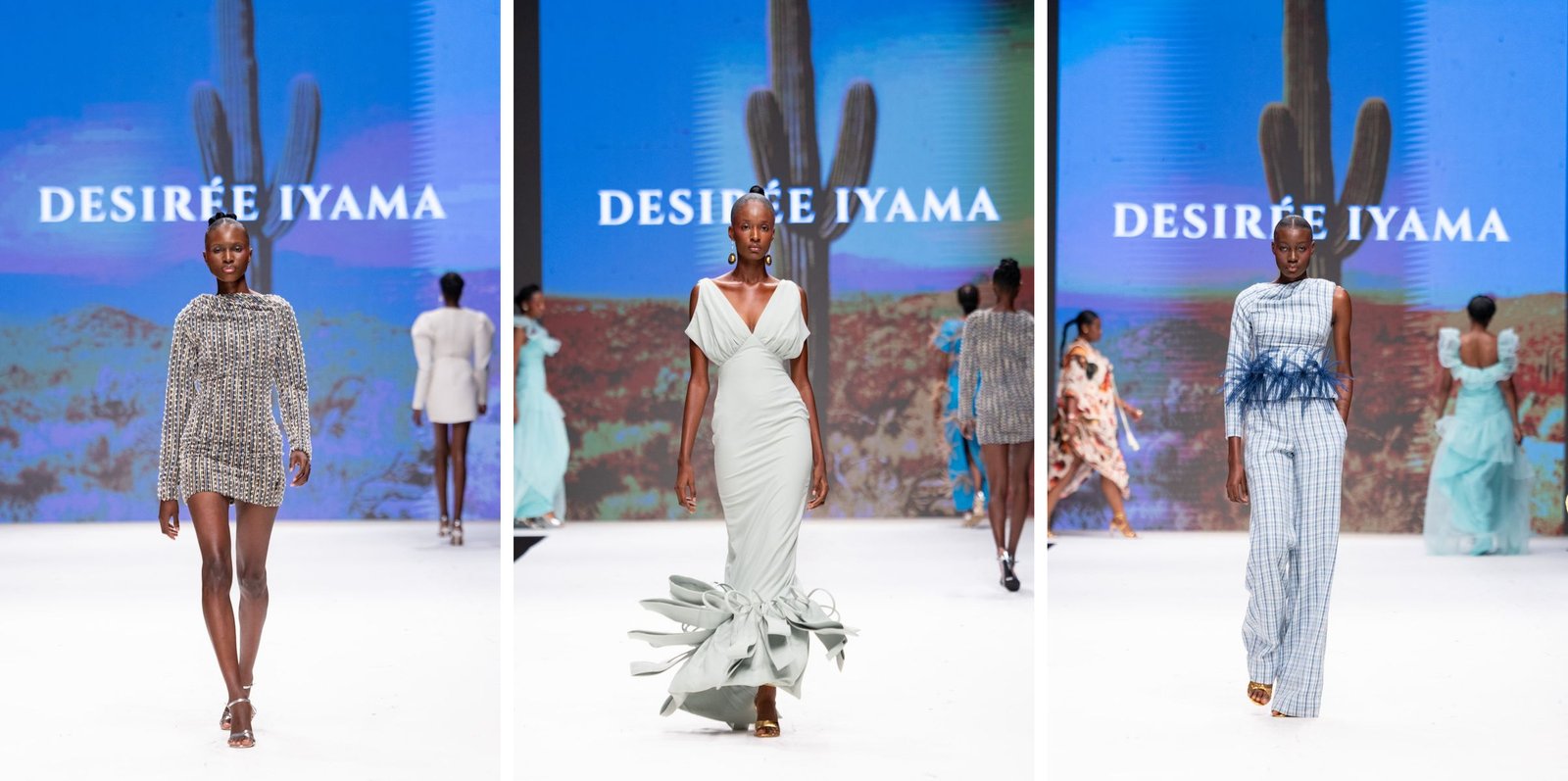
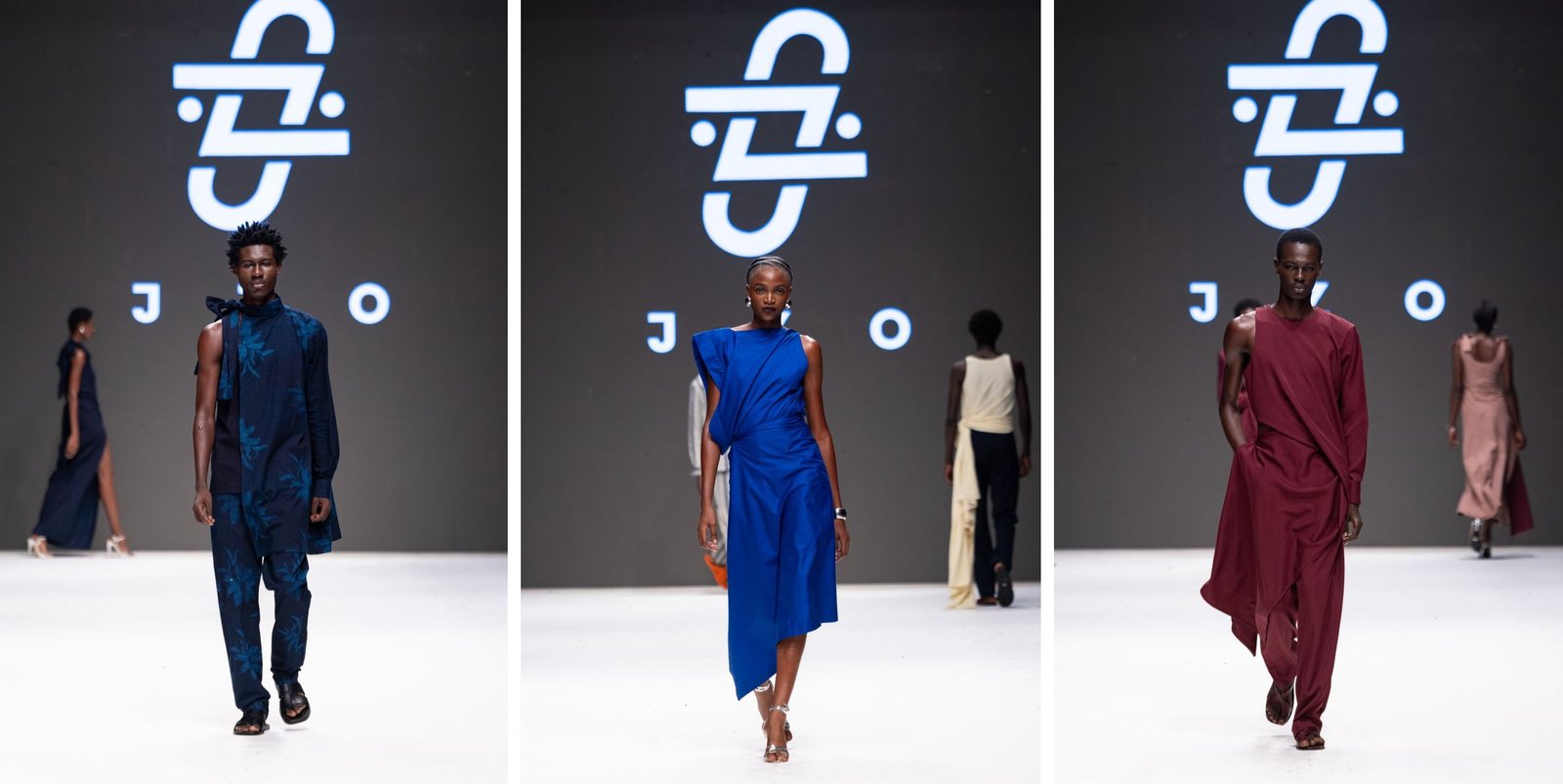
Désirée Iyama focused on the waist and hemline, using sculptural loops and rounded details to introduce volume into feminine silhouettes. JZO worked with irregular cut-outs and draped forms in grey, indigo, white and black, offering a more restrained study of proportion.
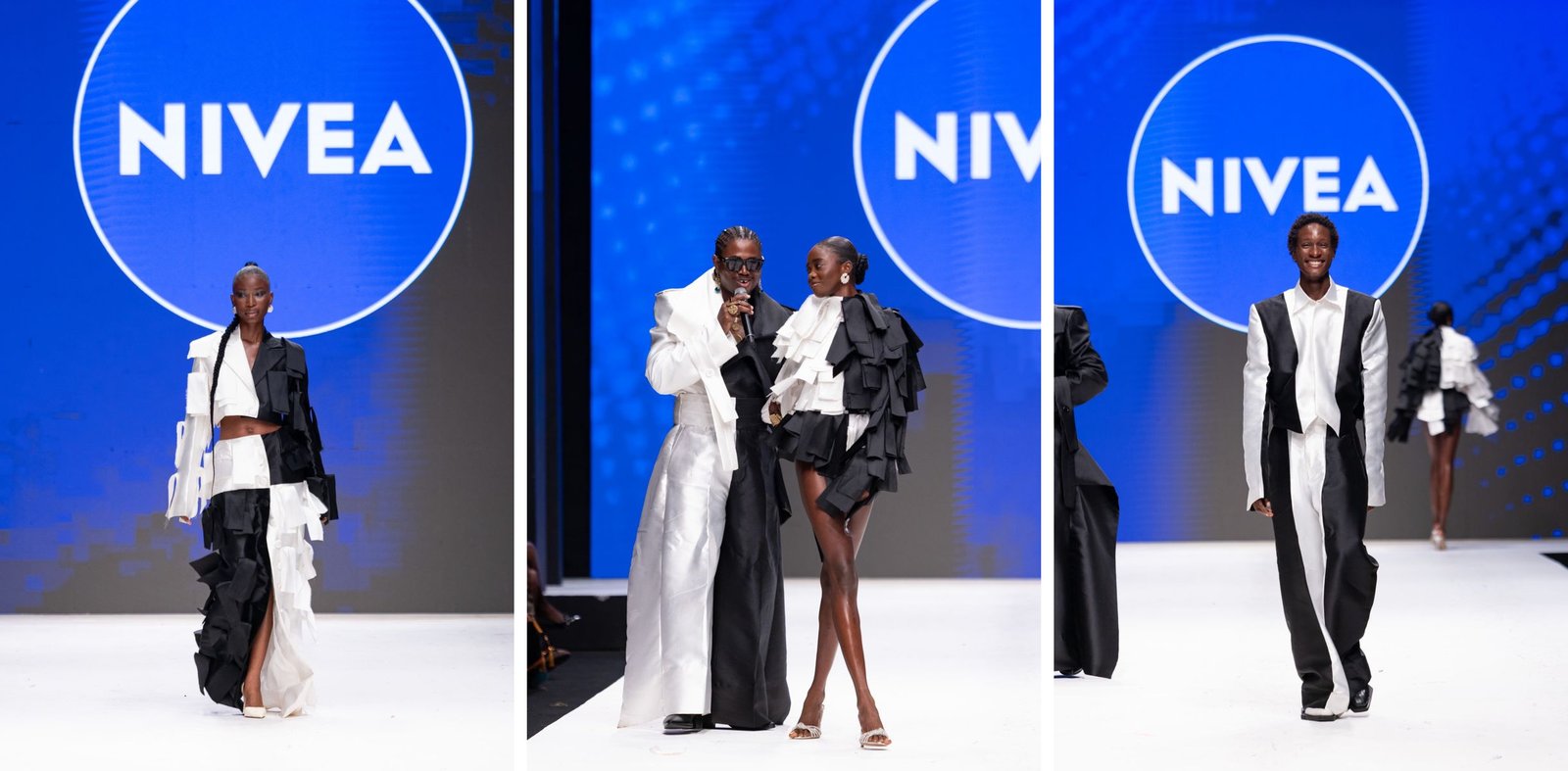
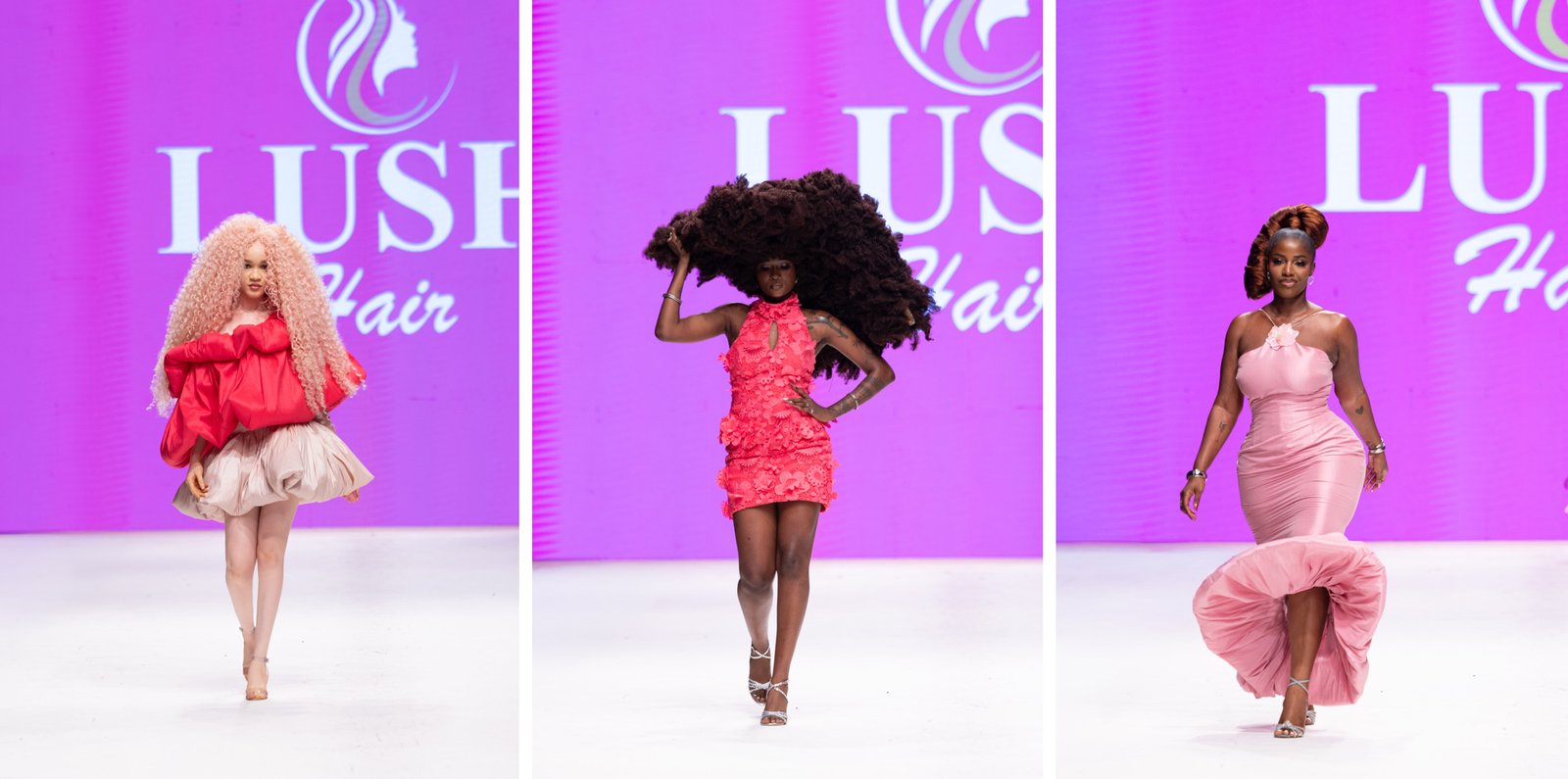
Brand presentations extended the programme into beauty and personal care. NIVEA brought its Black and White deodorant range to the runway through a monochrome showcase, with models carrying products alongside the clothing. Lush Hair closed the day with its ambassadors presenting Afrocentric and architectural hairstyles, accompanied by a live performance from Teni the Entertainer.
Across the discussions and presentations, collaboration emerged as both a creative method and a business consideration. Whether through investment, shared production, designer residencies or relationships with consumers, Day 3 placed the networks supporting fashion alongside the collections themselves.
The 2026 season is title-sponsored by Heineken, with partners including NIVEA, MTN, Bank of Industry, Lord’s Gin, Molped, Nigerian Exchange Group, Africa Finance Corporation and Lush Hair.
For updates, visit lagosfashionweek.ng and follow @lagosfashionweekofficial on Instagram.