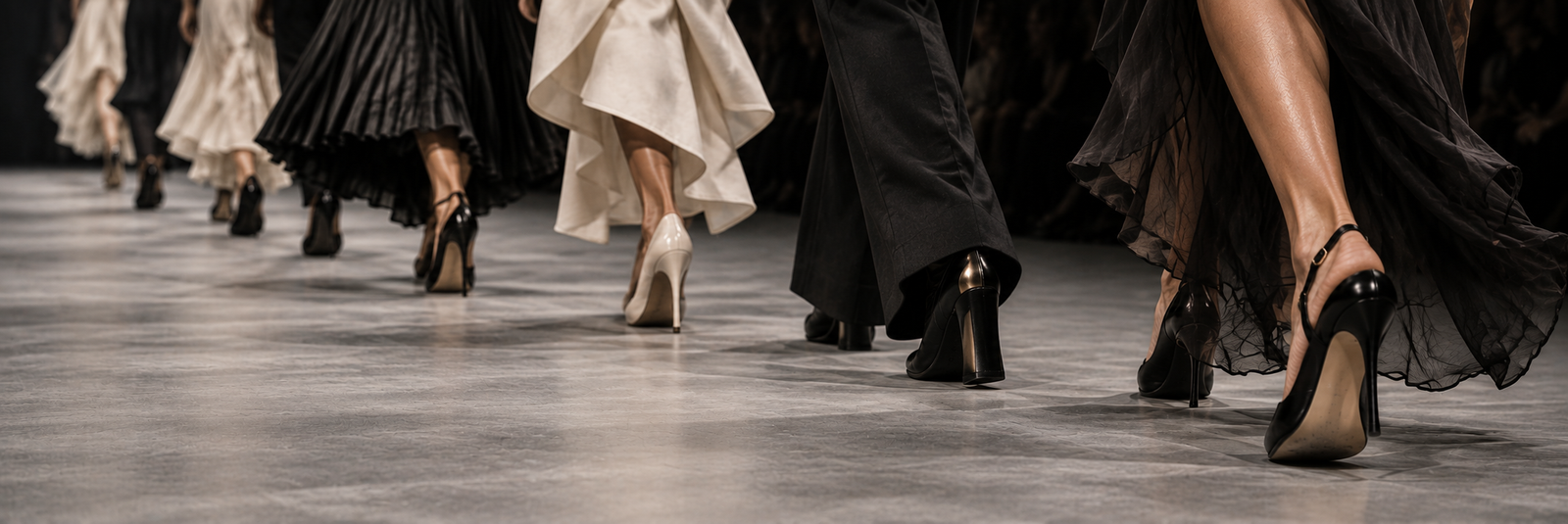
The final day of on-site shows connected discussions about capital, capacity and commercial discipline with collections exploring textile heritage, sculptural form and contemporary African design.
Lagos Fashion Week’s fourth day focused on what it takes to turn creative recognition into a lasting business. Across the Fashion Business Series, speakers examined funding, production capacity, customer demand and wholesale readiness. On the runway, designers explored how textiles, construction and cultural references could strengthen the identities that distinguish their work in an increasingly competitive market.
The programme extended beyond the main venue, with collections presented at the ALÁRA showroom and through Kadiju’s film screenings across Lagos. The on-site shows culminated in presentations from Ugo Monye and Heineken × This Is Us, with Lagos State Governor Babajide Sanwo-Olu making a surprise runway appearance during Monye’s show.
Turning Visibility into Lasting Growth
The day’s business discussions addressed the practical demands of expansion. In “Scaling with Invention: Capital, Capacity & Growth,” moderator Abby Ogunpolu joined Abiola Adelana, Head of Tourism and Creative Art Business at Sterling Bank, and Adeju Thompson, Founder and Creative Director of Lagos Space Programme. The conversation examined how founders can balance creative ambition with commercial viability, from evaluating funding options to managing production and international wholesale logistics.
Strategic relationships emerged as an essential part of building enduring African luxury businesses. Adelana also emphasised integrity and character alongside talent and intelligence, placing the values of founders within the broader discussion of business longevity. Growth, in this context, depended on the ability to build trust and deliver consistently as much as on securing capital.
“From Buzz to Business: Turning Demand into Lasting Growth” considered how labels can translate attention into a resilient operation. Moderated by Tejumola Maurice-Diya, Founder of The Fashioned Museum, the panel brought together Rukky Ladoja, Founder and Creative Director of Dye Lab; Kikelola Ojewale, Partner, Intellectual Property at Dentons ACAS-LAW; and Ijeoma Balogun, Founder and CEO of Redrick Public Relations.
For independent businesses working with limited budgets, Ladoja advocated marketing decisions grounded in customer data and measurable returns. Balogun outlined two approaches to collaboration: strengthening a brand’s position within its existing audience or entering a new customer segment through a carefully chosen partner. Both required a clear commercial objective, giving the discussion a practical focus beyond the publicity a partnership might generate.
Retail readiness was the subject of a fireside conversation between Ogunpolu and Olamoniso Nduka, Head of Commercial at Polo Avenue. Nduka highlighted the preparation required to enter multi-brand luxury retail, including standardised line sheets, scalable production and clearly defined wholesale margins. Together, the sessions established a consistent message: demand creates an opportunity, but operational discipline determines whether a label can sustain it.
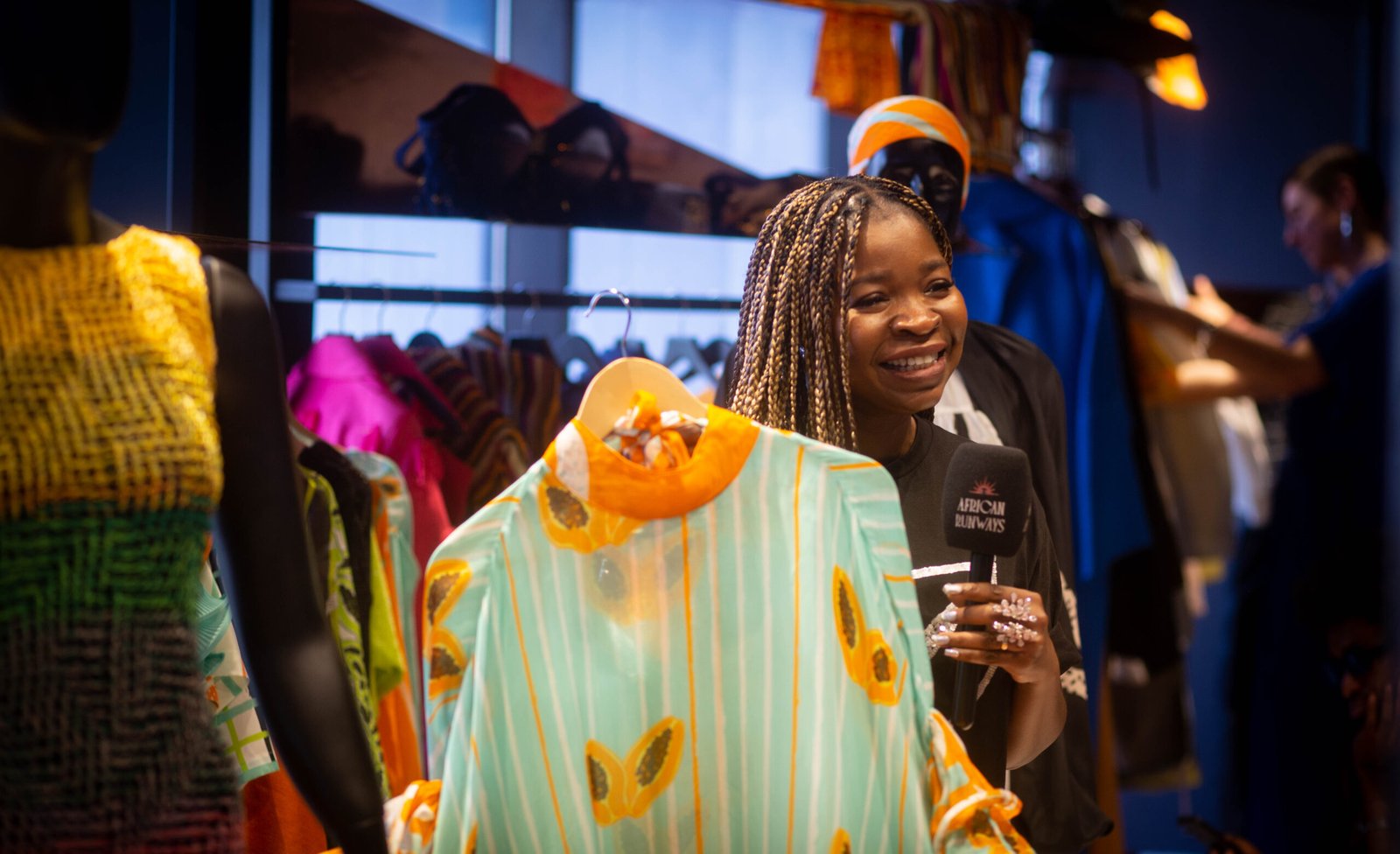
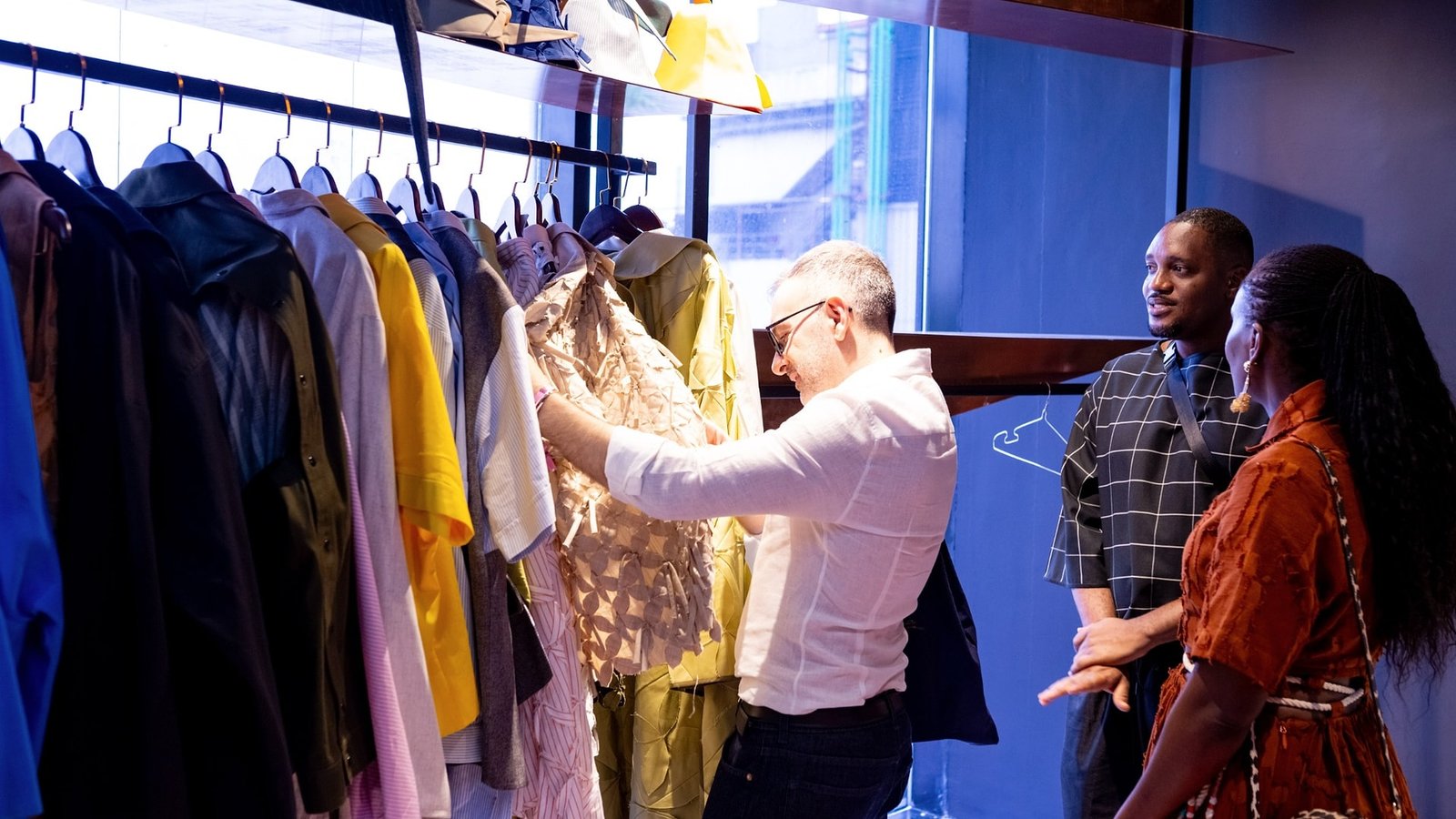
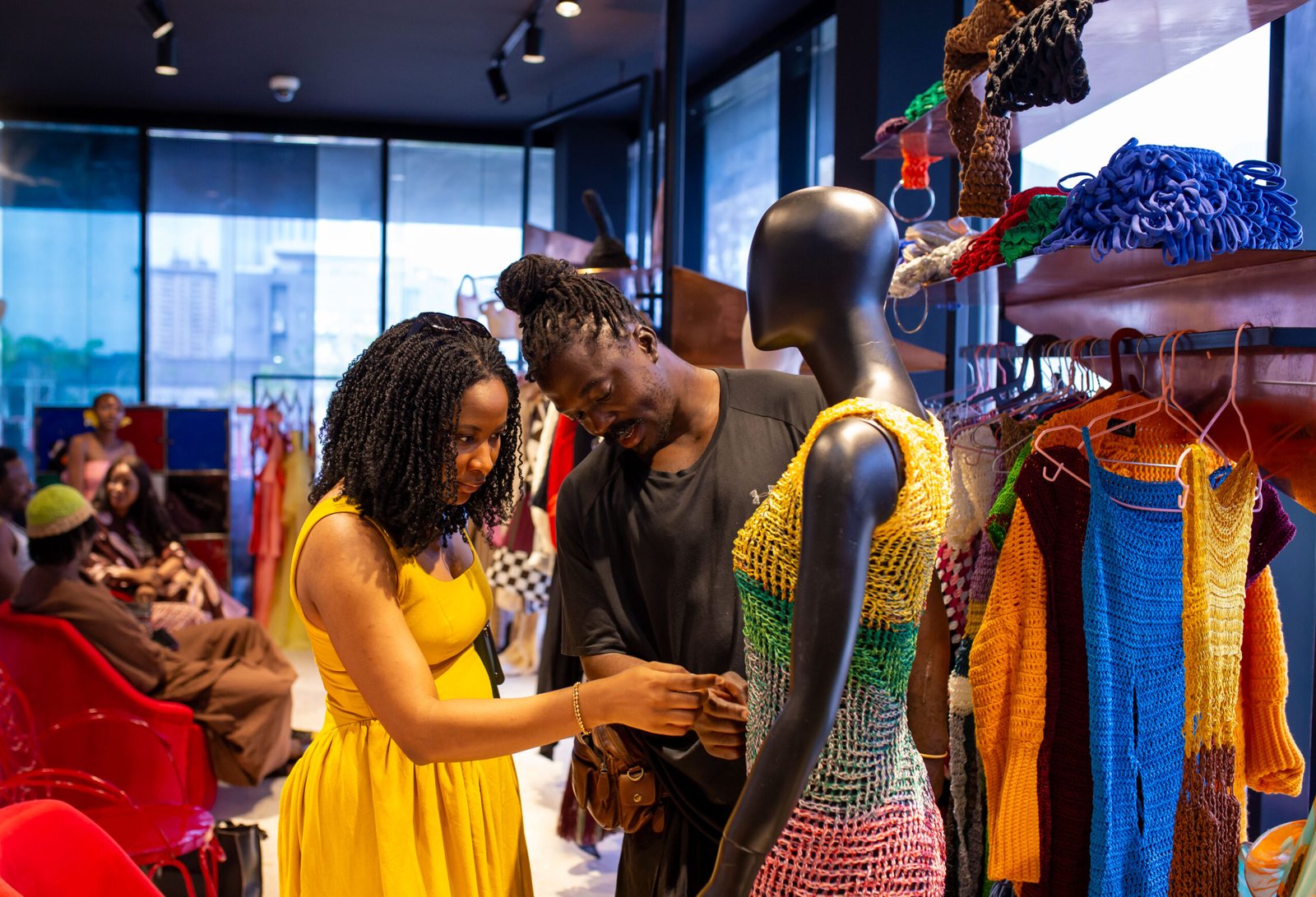
At ALÁRA, the showroom provided a setting for buyers and press to examine collections from Orange Culture, Oshobor, Ajanéé and Maliko more closely. Kadiju pursued a different presentation format, introducing its Spring/Summer 2027 collection, “Collection 009: In No Particular Order,” through an alternative short film screened at selected venues across Lagos. Both formats expanded the ways collections could be encountered beyond the main runway.
Heritage, Texture and Contemporary Form
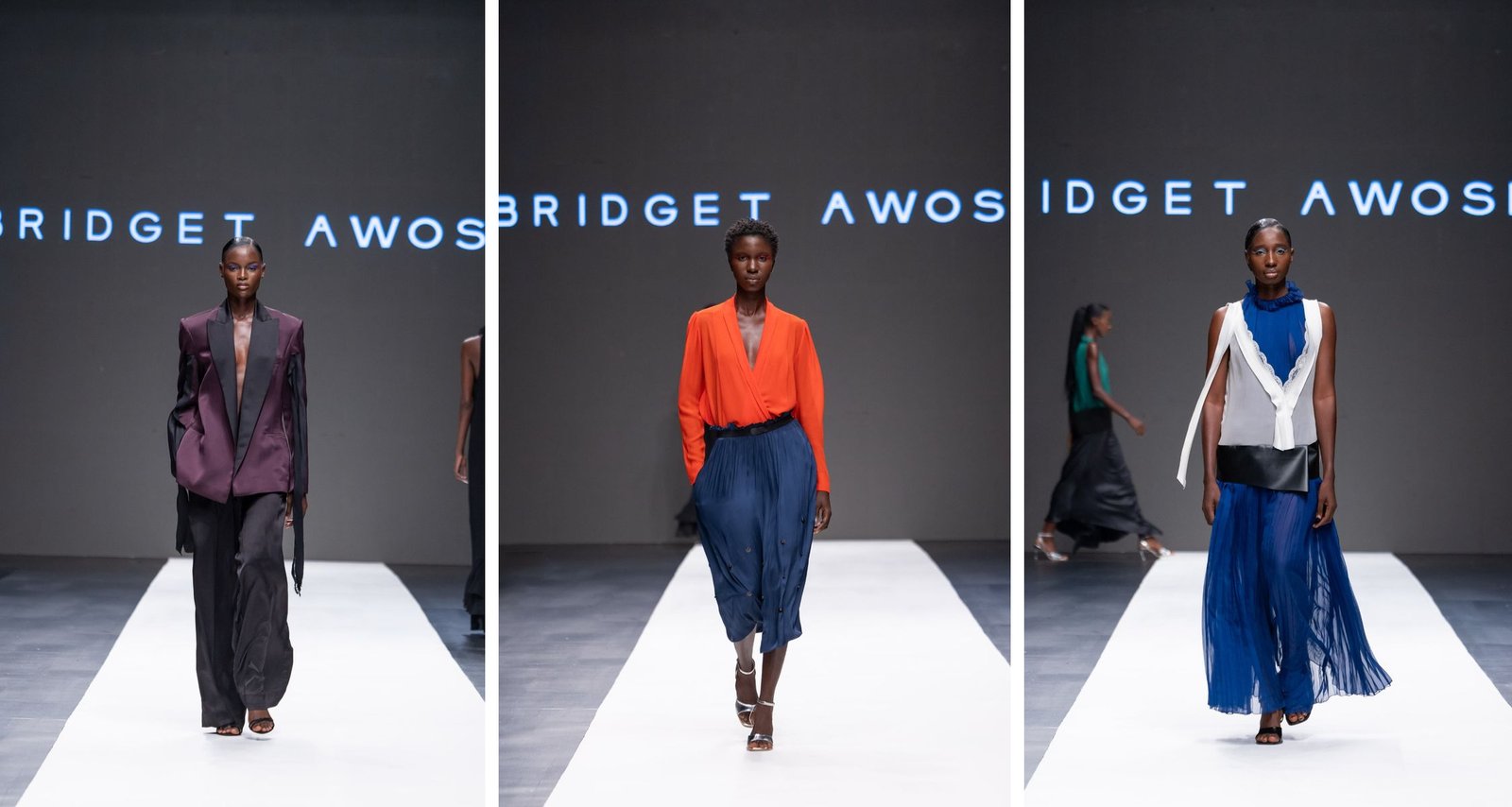
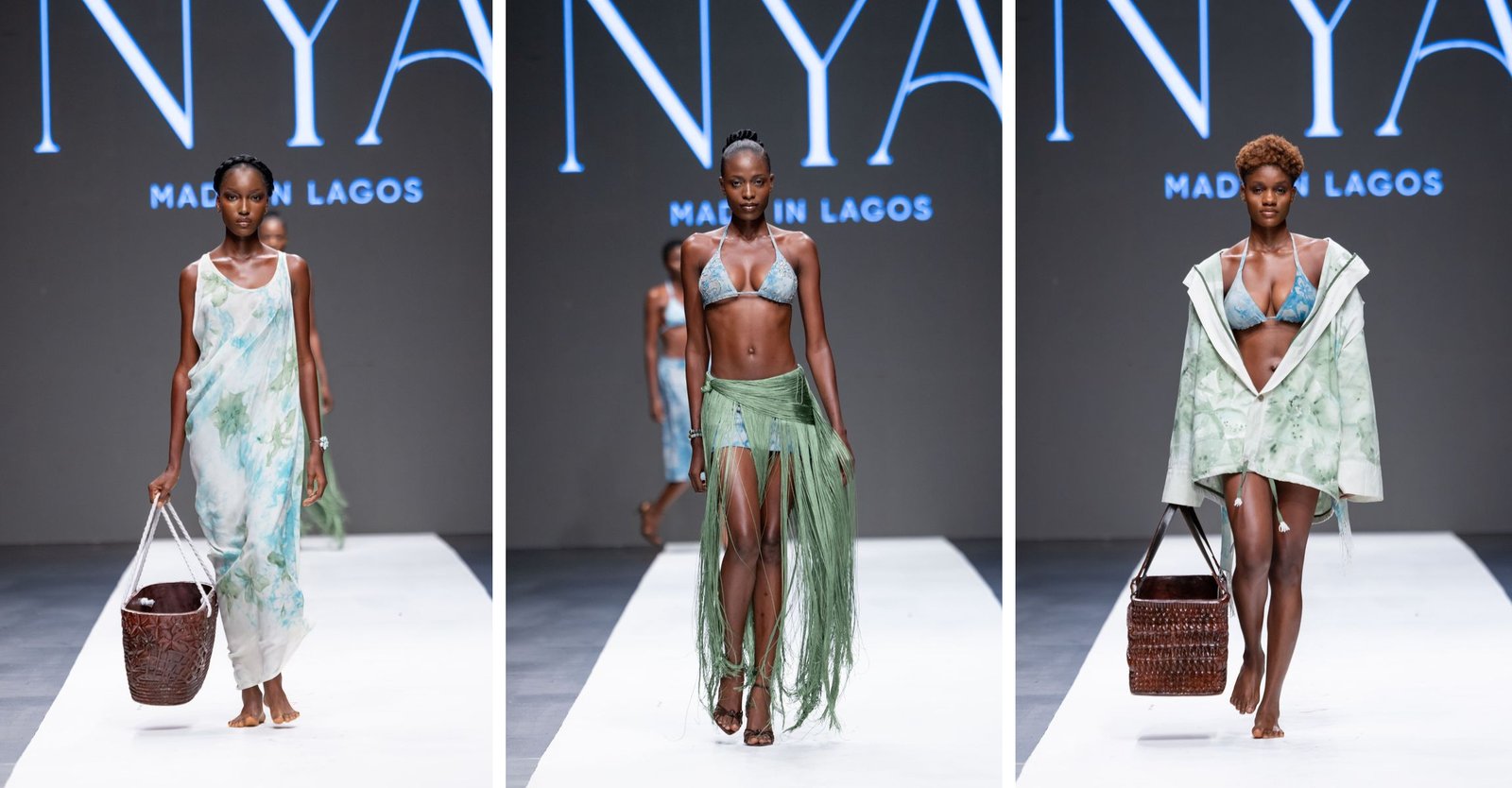
Bridget Awosika returned to Lagos Fashion Week to open the on-site runway programme with a collection exploring structure and fluidity. Gathered and folded waistlines, elongated hemlines and contrasting textures shaped a restrained approach to dressing. Nya’s “In Praise of Beauty” offered a different interpretation of ease, combining drop-waist silhouettes, embroidery and sheer layers with fringe, shimmer and oversized carved bags.
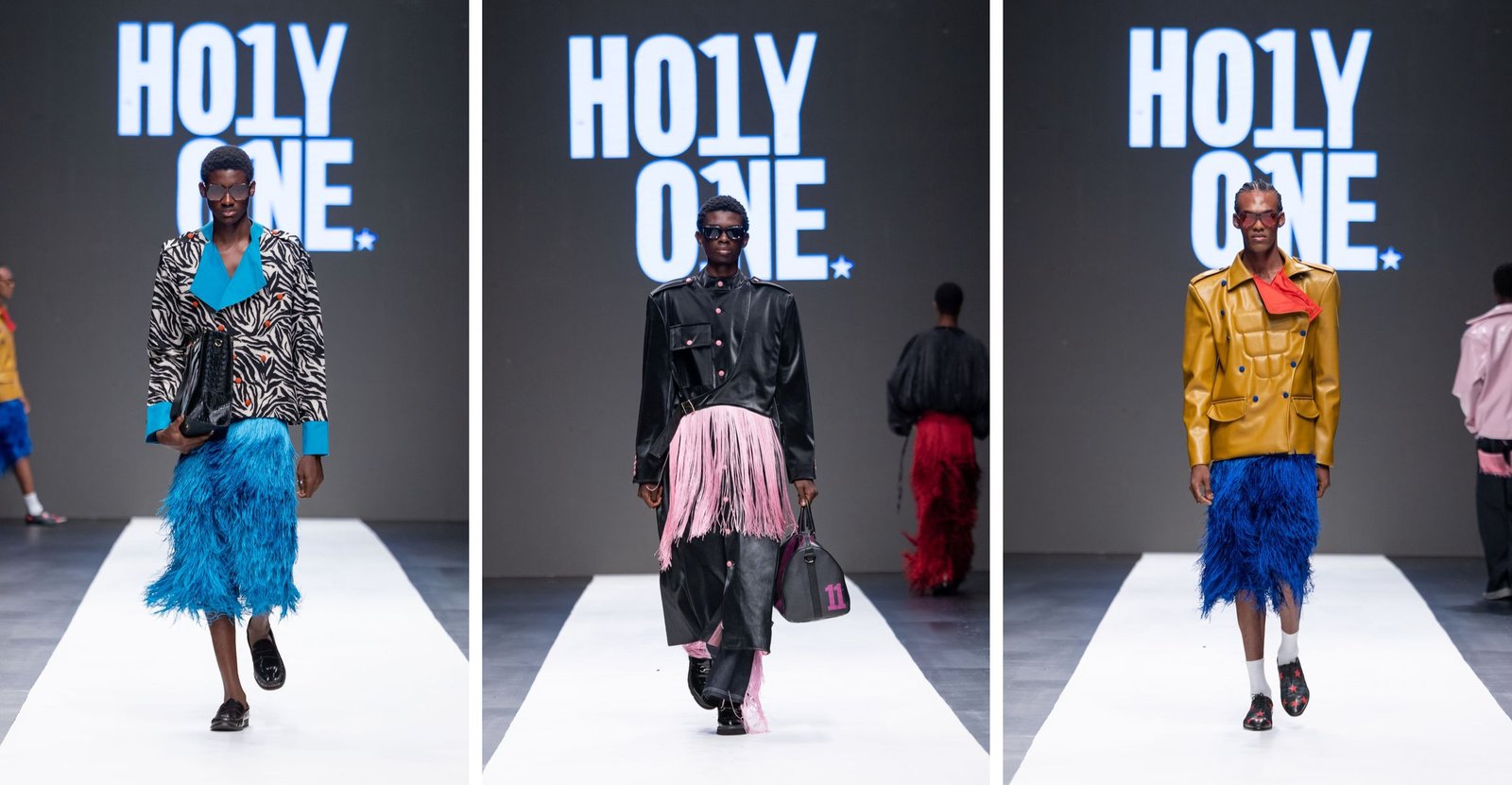
British-Nigerian label Holy One worked across womenswear and menswear with bold stripes, cascading frills, structured two-piece looks and leather. Softer textures and silhouettes broadened its menswear offering. Malité also explored contrasts, layering hand-printed fabrics over tulle and placing ruffles and fringe around necklines, waists and hemlines. Cut-outs and playful bags added variation across neutral and brighter shades.
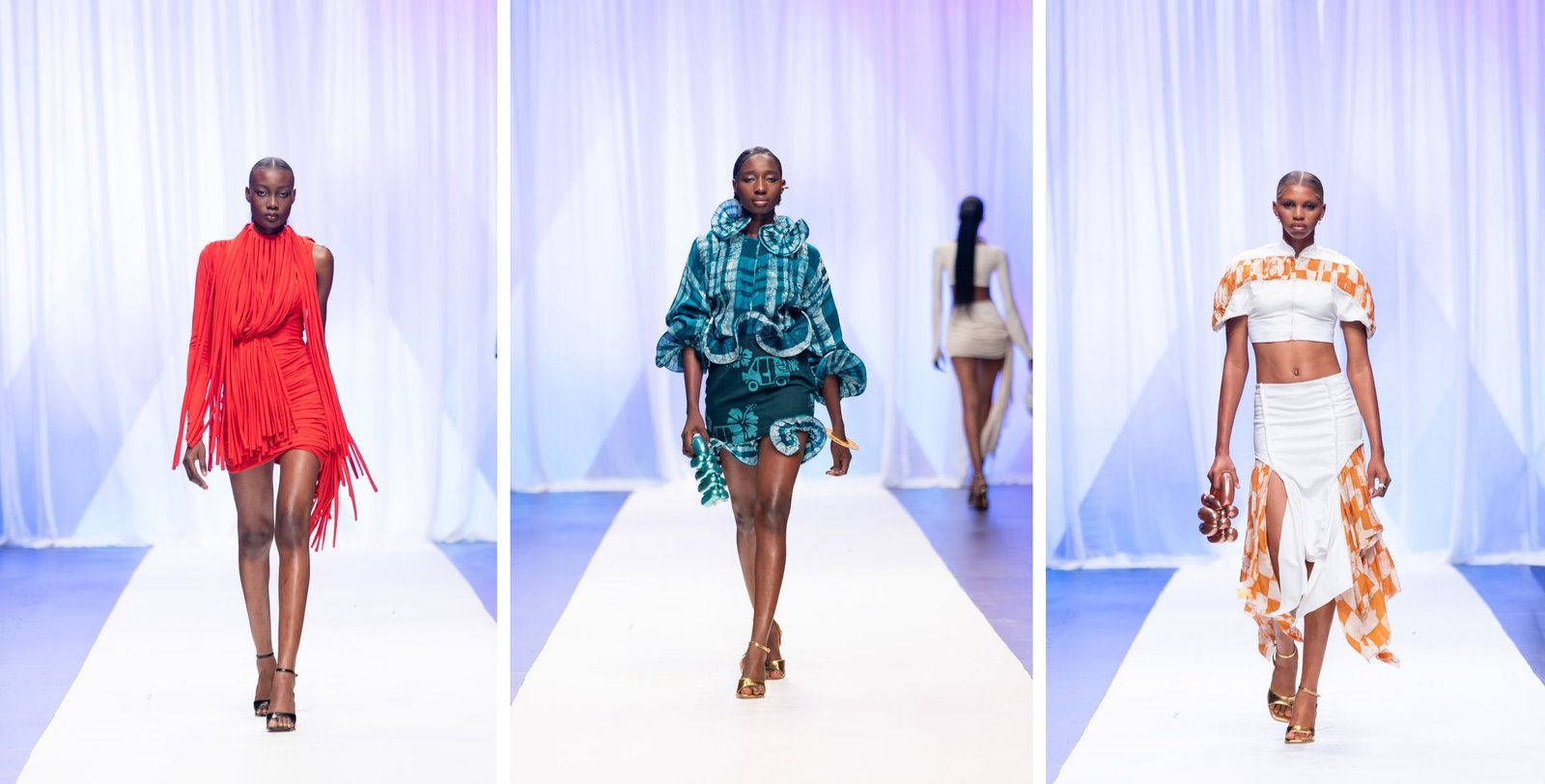
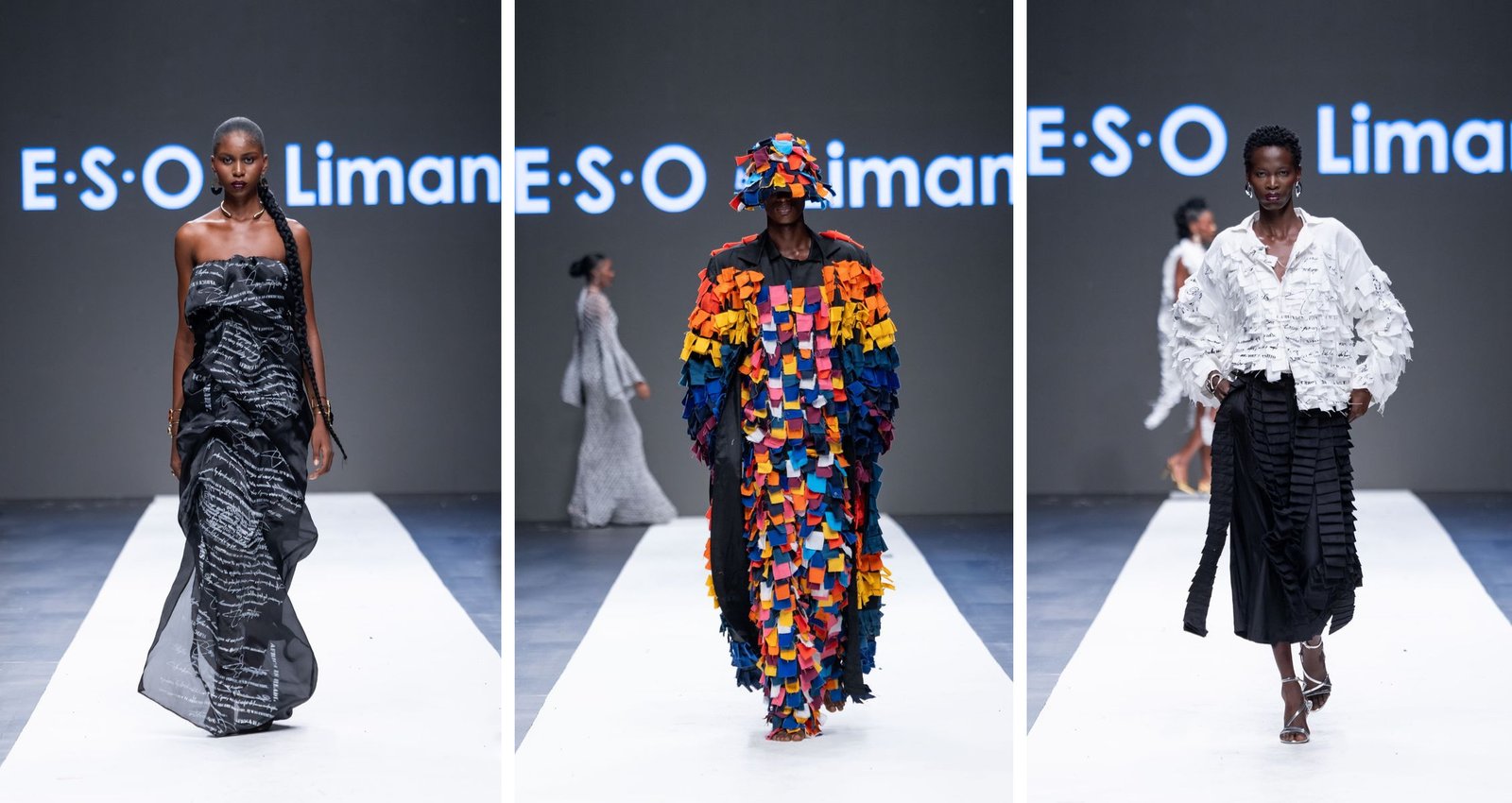
Pillz n Poizn moved between vivid colour and quieter tones, presenting floor-length gowns, cut-outs and irregular hemlines, with fringe introducing movement. Its menswear followed a more relaxed direction. At E.S.O By Liman, “Cosmic Bodies” drew on the personalities and lived experiences of Yoruba women. Hand-dyed fabrics, checks and textured surfaces appeared alongside reinterpretations of the iro and buba in lace, with expanded volumes at the waist and shredded fabric creating a fringed effect.
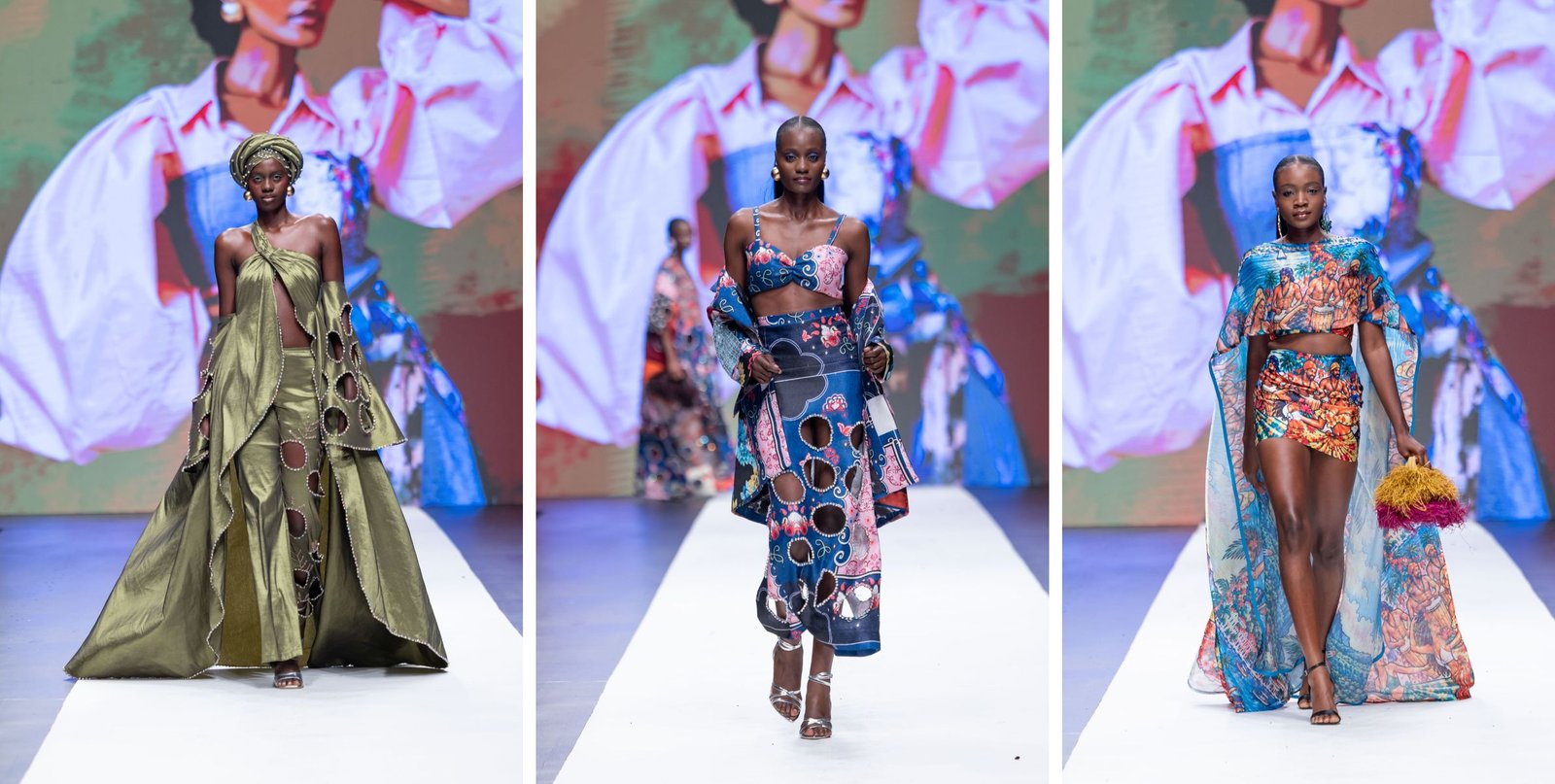
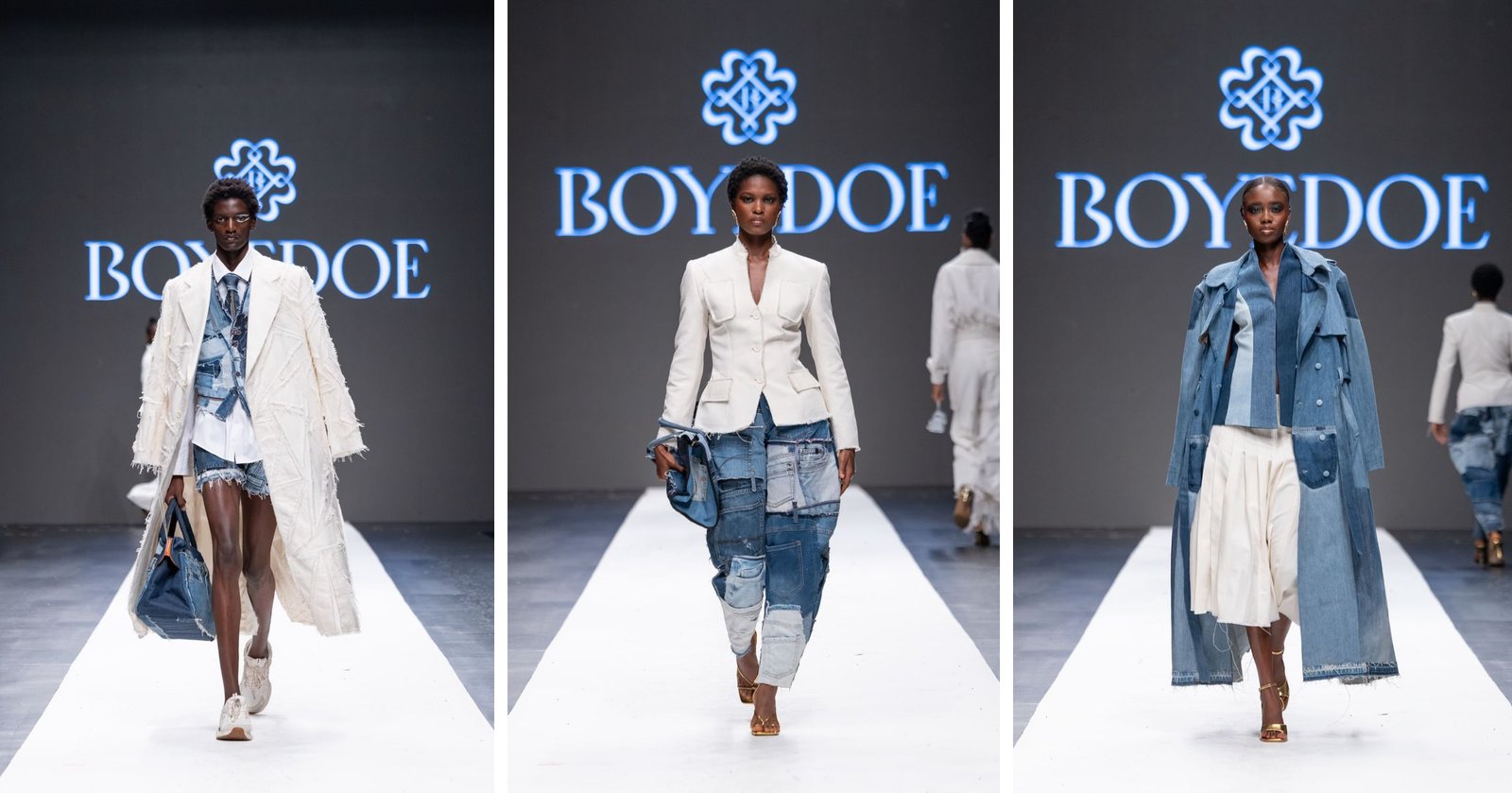
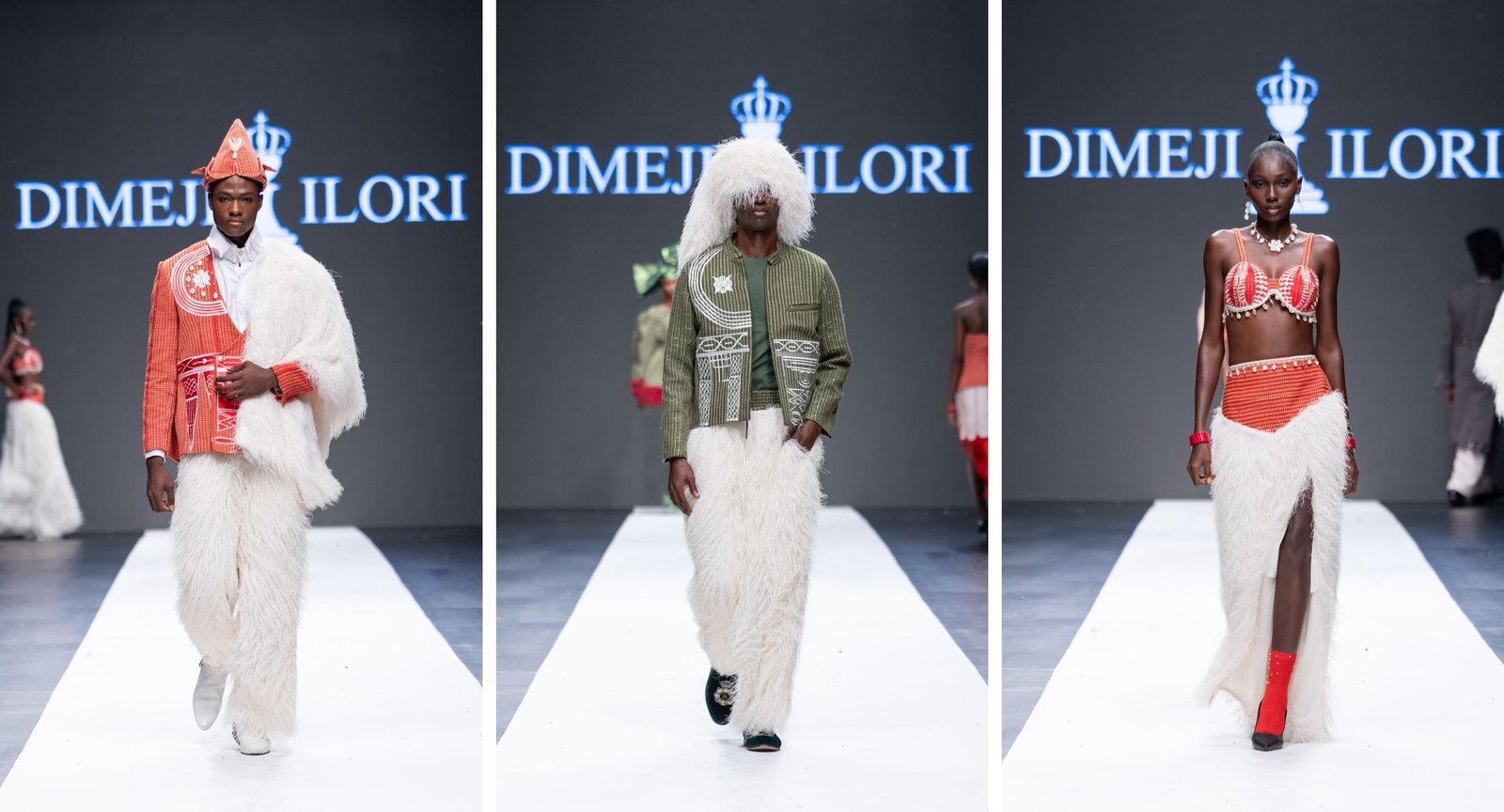
Ghanaian label Boyedoe introduced white into a palette of earth tones, dark denim and teal. Kente, frayed finishes and distressed denim appeared alongside sharp tailoring, bringing different textile treatments into structured silhouettes. Dimeji Ilori’s “Ancestral Intelligence” similarly examined how heritage could inform contemporary clothing, reworking traditional silhouettes and aṣọ òkè through embroidery, cowrie detailing and cascading frills.
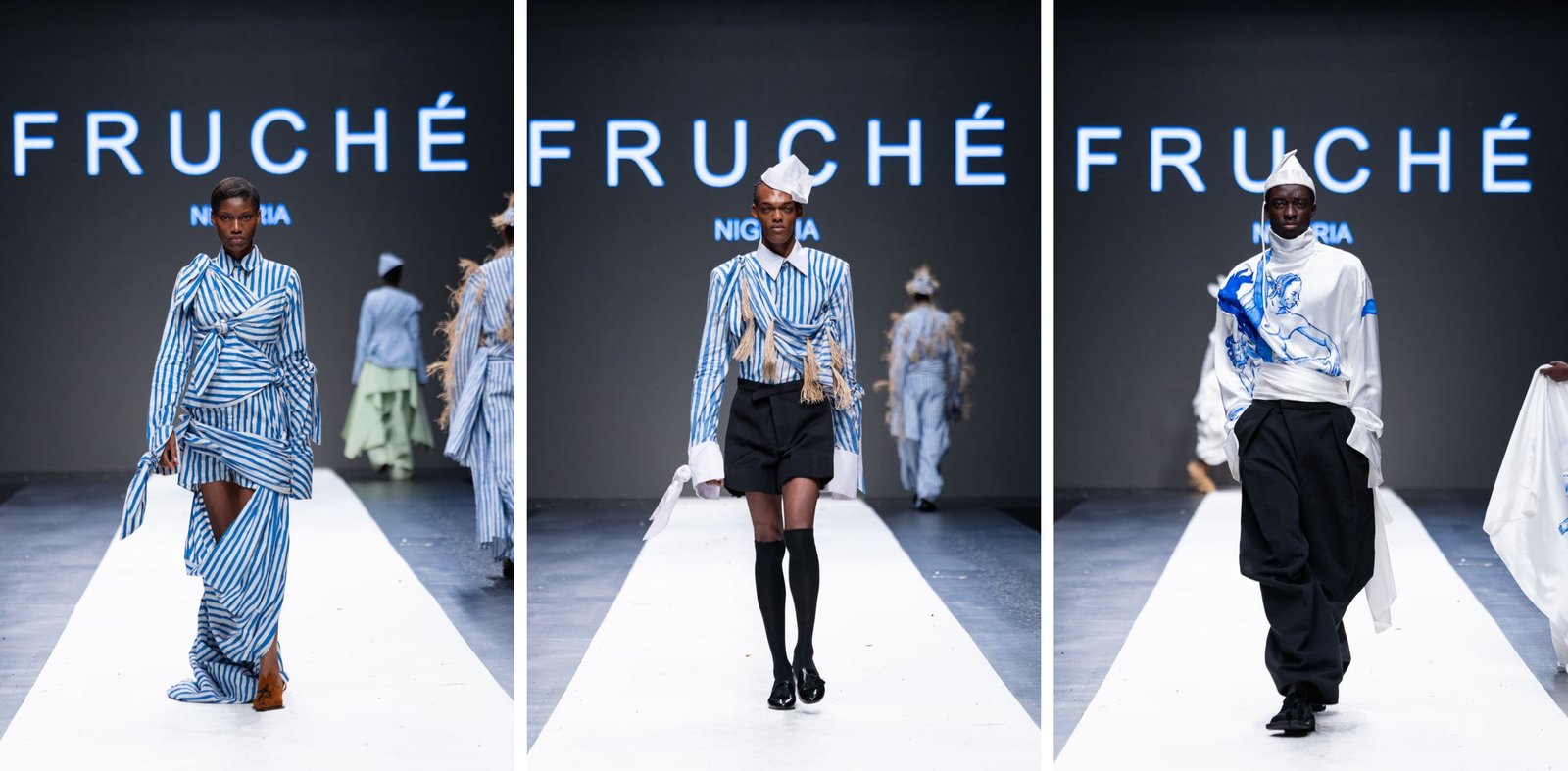
Fruché’s Spring/Summer 2027 collection, “KLEG,” extended the evening’s material experimentation. Gingham appeared across shirting and draped gowns, while skirts incorporating carved seed pods introduced an unexpected texture. A sculpted wooden bustier brought the relationship between clothing and object into focus, expanding the collection beyond conventional fabric construction.
Israella Kobla balanced structured shoulders with relaxed black-and-white dresses, while Kenyan label Studio Namnyak presented pinstripes, black separates and draped menswear in a palette that included orange, white and shades of blue. Across these collections, contrasting approaches to proportion ranged from controlled tailoring to shapes that allowed greater freedom around the body.
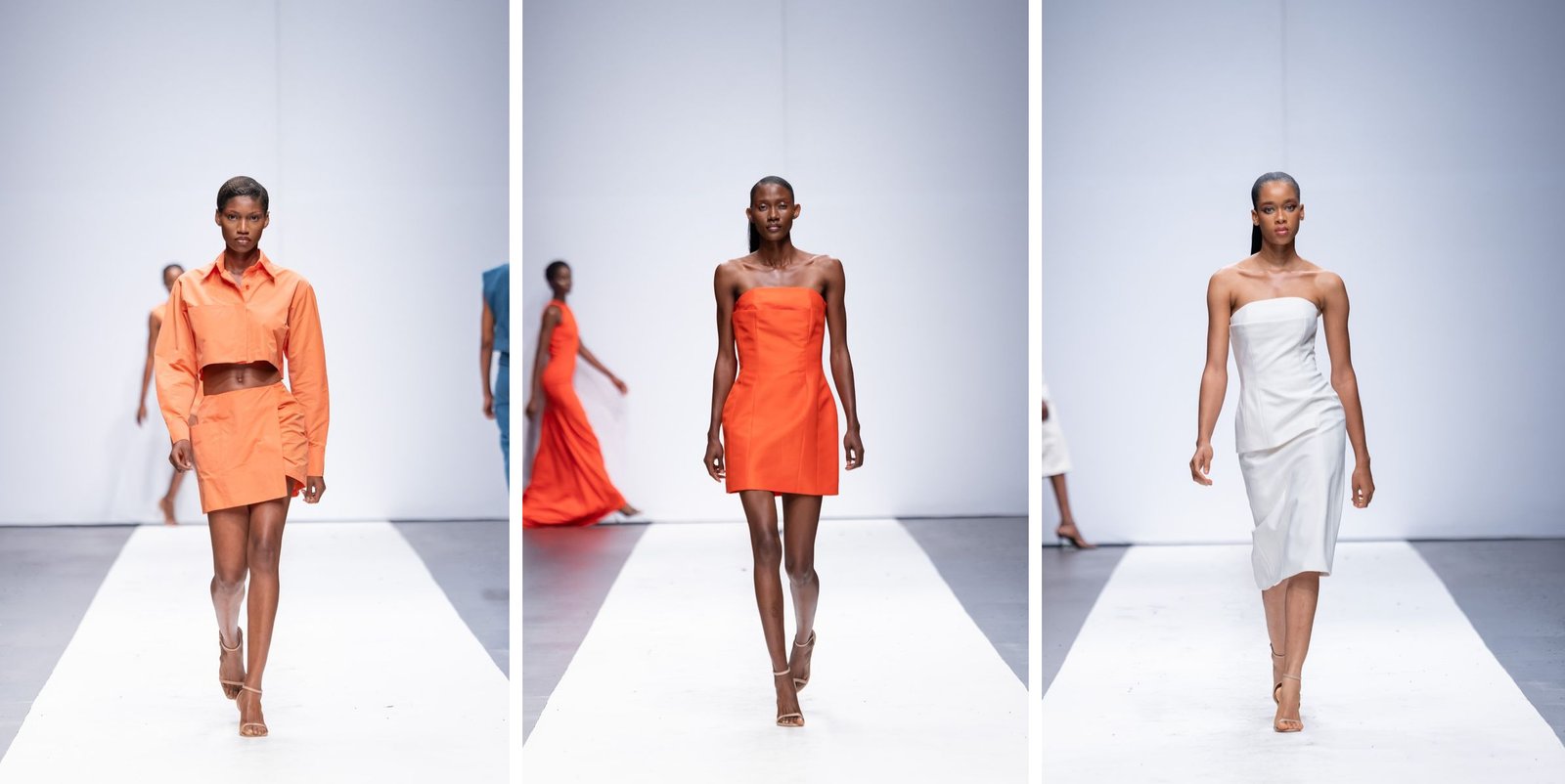
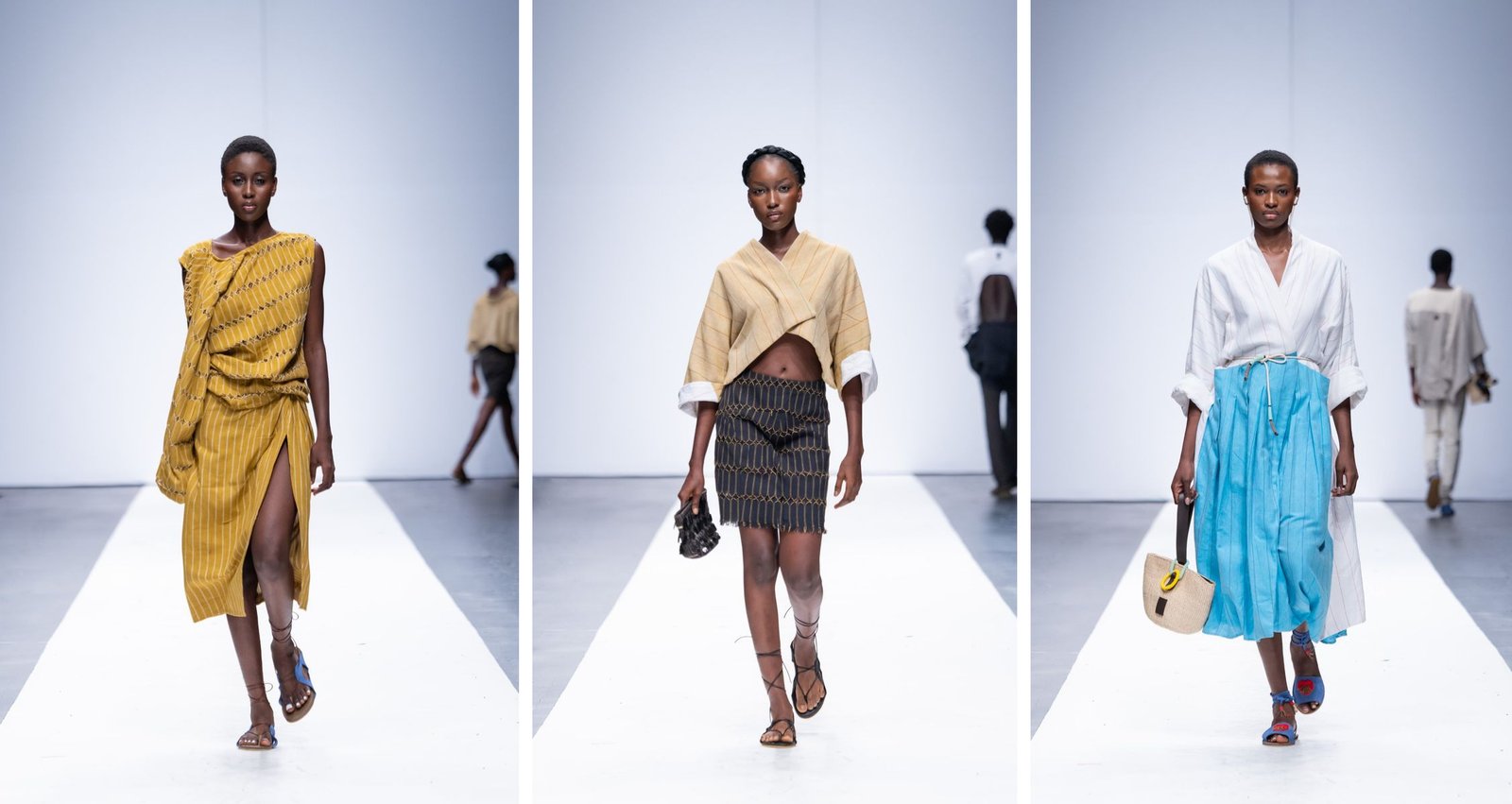
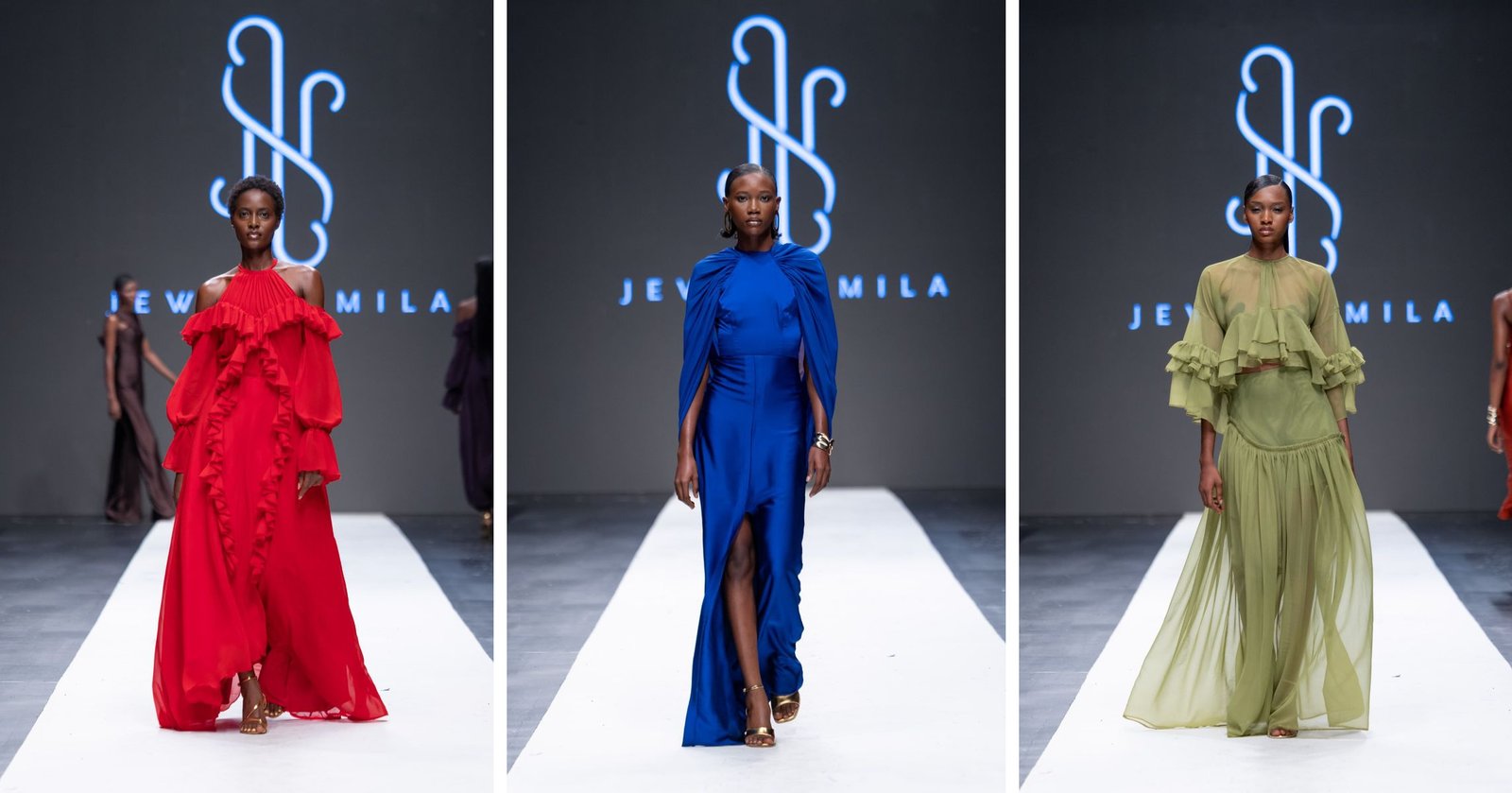
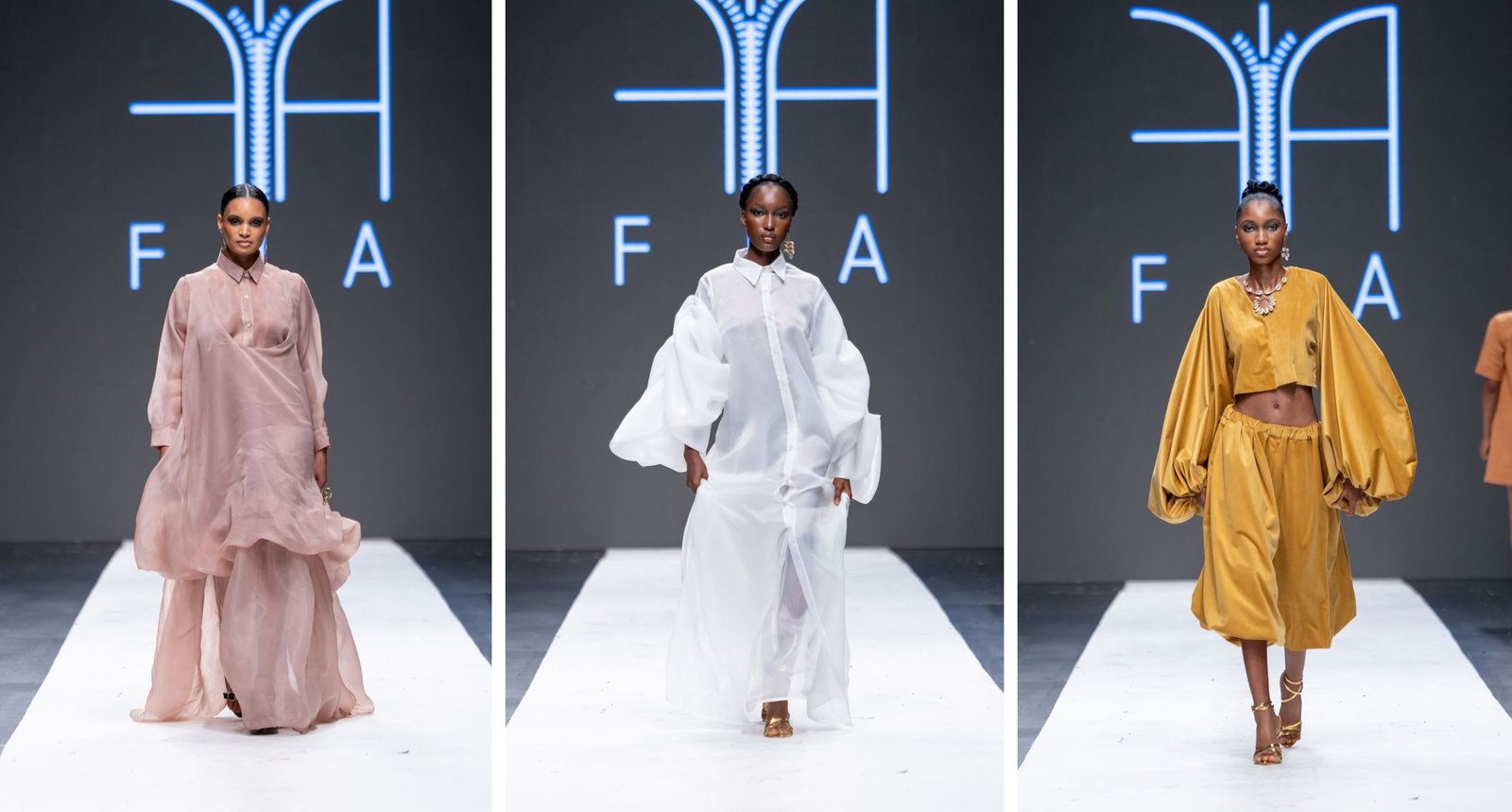
Occasionwear formed another thread through the programme. Jewel Jemila worked in burnt orange, blue, white, metallic gold and teal, using ruffles and fringe to animate evening looks. Fia moved between sheer fabrics, geometric cuts and structured tailoring, with checks and cotton adding variety. Elie Kuame paired blue and brown in layered looks that alternated between transparency and stronger construction.
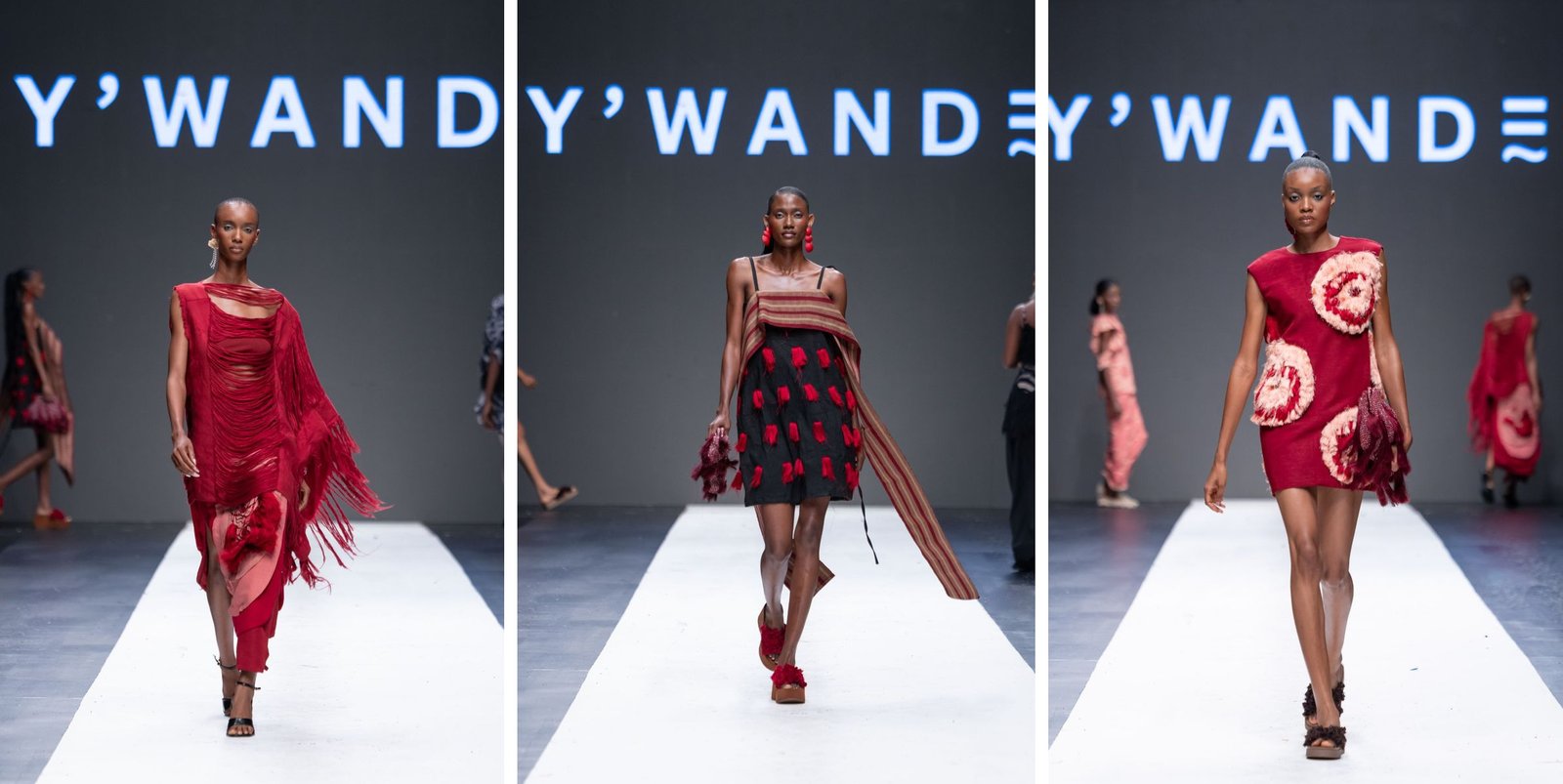
Y’Wande explored fluid silhouettes, earthy tones and textured detailing, punctuated by touches of red. Eki Silk placed greater emphasis on colourful prints and draping, moving between blue, turquoise and warm orange in relaxed, flowing shapes. These presentations offered distinct approaches to expressive dressing through colour, surface and proportion.
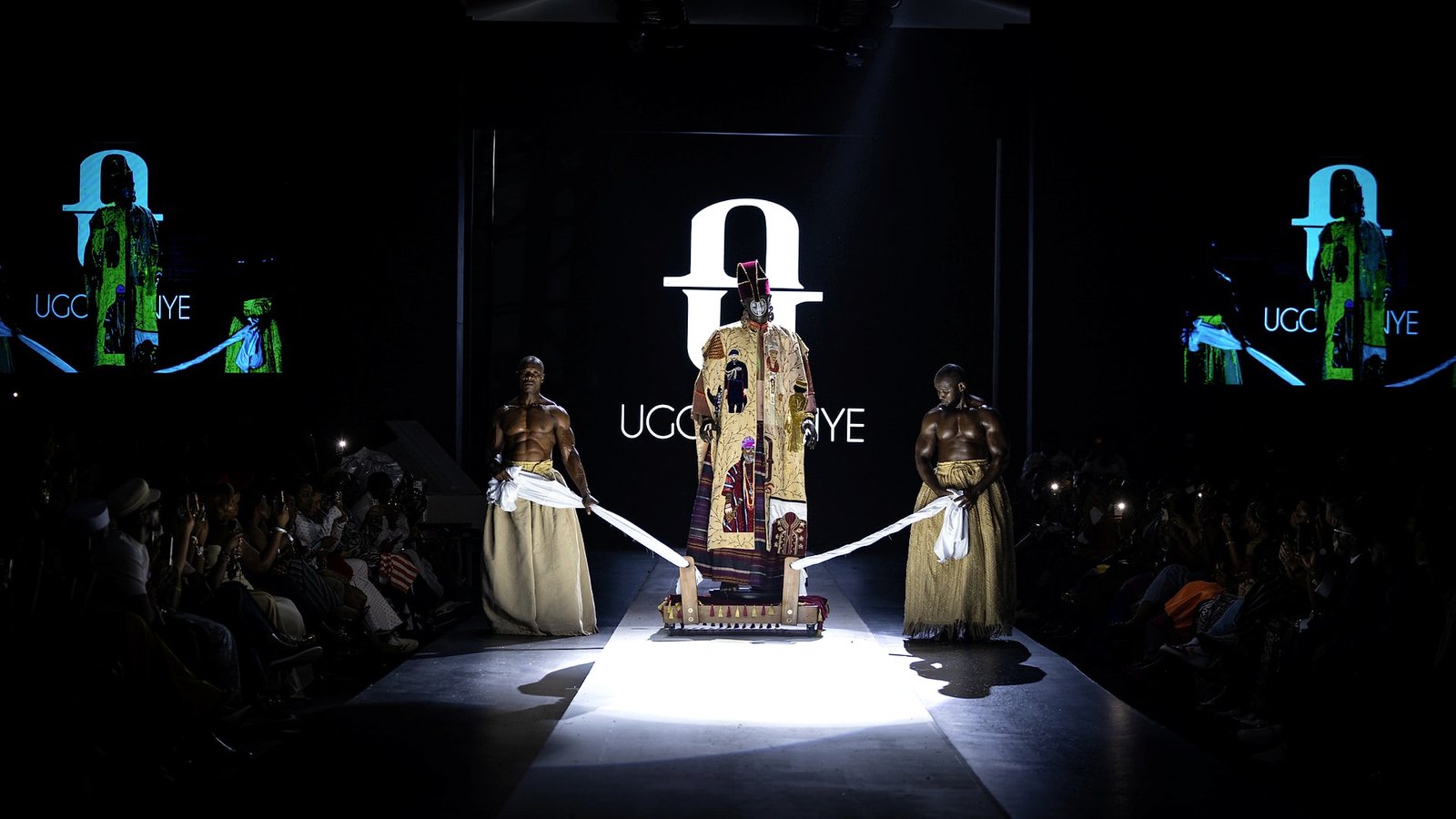
Ugo Monye brought architectural references and expansive menswear silhouettes to the closing stages of the programme. Sanwo-Olu’s runway appearance added a high-profile moment to a presentation defined by theatrical scale. Heineken × This Is Us brought the on-site shows to a close, followed by an after-party gathering designers, guests and event teams.
Beyond the collections, street style and partner activations contributed to the atmosphere across the venue. The wider programme brought fashion businesses, audiences and commercial partners into contact, complementing the formal discussions about how the industry can develop.
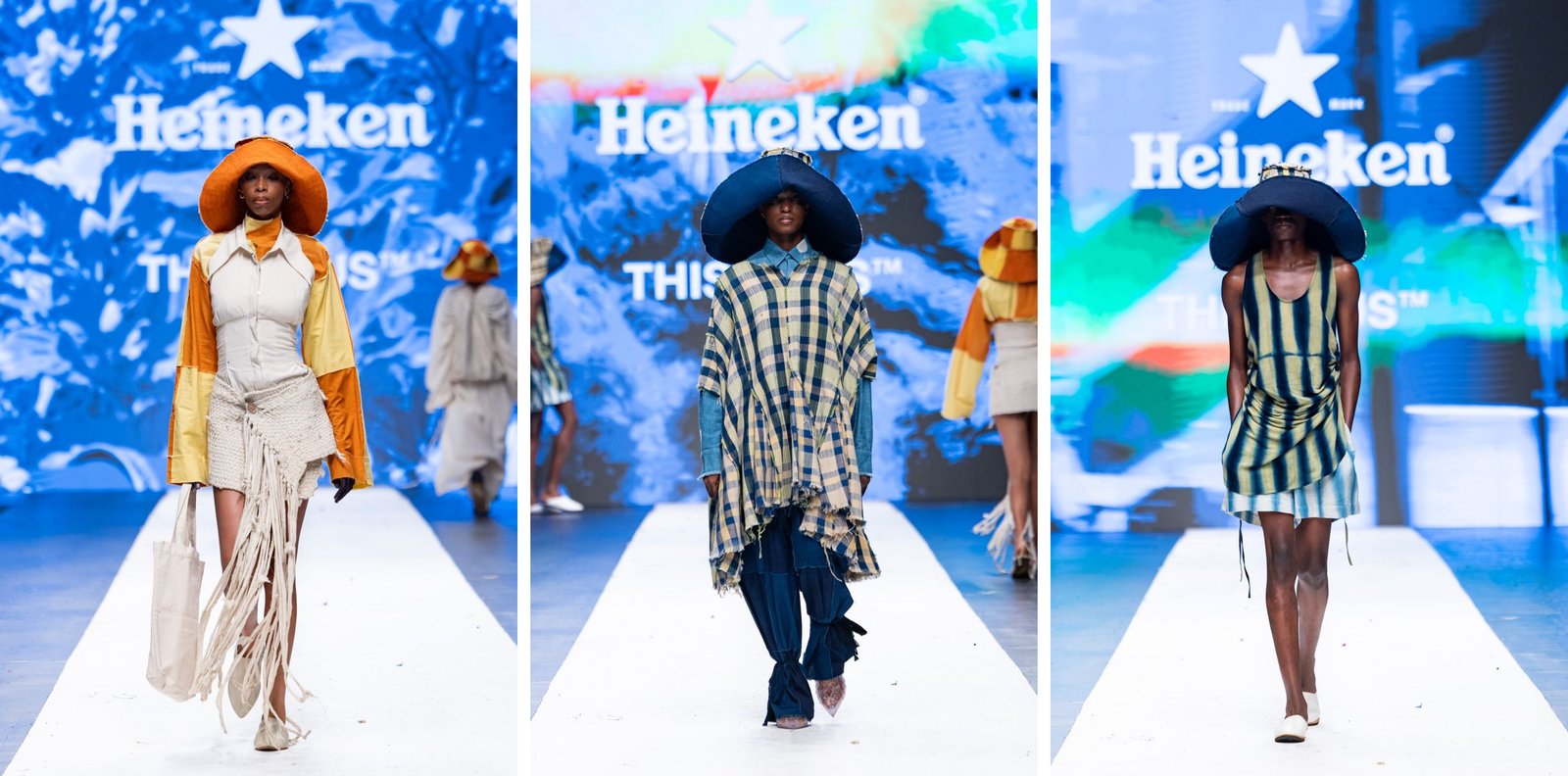
Day Four connected the creative range of contemporary African fashion with the demands of sustaining it. Designers demonstrated different ways to work with heritage, materials and silhouette, while the business sessions addressed the production systems, retail relationships and financial decisions needed to support that work. As the on-site programme concluded, the emphasis shifted from generating attention to building the capacity to turn it into lasting growth.
The 2026 season was title-sponsored by Heineken, alongside partners NIVEA, MTN, Bank of Industry, Lord’s Gin, Molped, Nigerian Exchange Group, Africa Finance Corporation and Lush Hair. For further information, visit lagosfashionweek.ng or follow @lagosfashionweekofficial on Instagram.
*Runway photography: Kola Oshalusi (Insigna Media), courtesy of Lagos Fashion Week.