
The New Vanguard of Sustainable Fashion- For a long time, sustainable fashion came with a recognisable visual code. Natural fibres, neutral colours and understated silhouettes were used to communicate environmental responsibility before a garment’s provenance was even explained. The aesthetic was well intentioned, but limiting. It suggested that fashion could be either desirable or responsible, rarely both without compromise.
A new generation of designers is dismantling that assumption. Rather than treating sustainability as a theme, they are using it as a creative framework—one capable of producing experimentation, technical ingenuity and a more individual approach to luxury.
Their work is not defined by a single look. It can be sculptural, romantic, confrontational or rigorously minimal. What connects it is a willingness to work differently: beginning with available materials, questioning conventional production cycles and allowing process to shape the final form. This is not the arrival of another trend. It is the emergence of a new creative culture within fashion.
When Limitation Becomes a Design Method
Traditional fashion development often begins with an unrestricted concept. Materials are sourced or manufactured to realise a predetermined design, frequently with little consideration for what already exists. Designing with deadstock, recovered textiles or limited local resources reverses that process. The material comes first. Its quantity, dimensions, imperfections and history determine what can be made.
This demands a different kind of creativity. A designer working with a finite roll of fabric cannot assume that an identical material will be available for further production. Patterns may need to be adapted around stains, fading or irregular edges. Collections become less uniform, and variation becomes part of the garment’s identity.
In this context, sustainability becomes a source of originality rather than a restriction placed upon it.
The result is not simply waste reduction. It is an alternative design language shaped by specificity. A recovered textile carries evidence of its previous life, while an unusual offcut can introduce proportions or details that would not have emerged from conventional sourcing.
The Return of Material Intelligence
The fashion system’s pursuit of speed has gradually separated many designers from the physical realities of making clothes. Digital development has improved efficiency, but it can also encourage garments to be understood primarily as images. Sustainable design is renewing attention to material intelligence: the practical understanding of how a textile behaves, ages, responds to construction and interacts with the body.
Designers are experimenting with regenerated fibres, agricultural by-products, recycled yarns and textiles developed through lower-impact processes. Yet the most compelling work does not depend on novelty alone. It emerges when material selection is inseparable from form. A rigid recycled textile may produce an architectural silhouette, while an irregular handwoven fabric can determine the scale of a coat or the placement of a seam. Bio-based materials may challenge conventional expectations of drape, texture and finish. The designer’s task is not to disguise those characteristics but to turn them into visual and tactile strengths.
This approach brings industry closer to craft, where the maker responds to the properties of a material rather than forcing it into a standardised result.
A New Expression of Luxury
Luxury has traditionally been associated with rarity, flawless finish and access to exceptional materials. Sustainable fashion is beginning to expand that definition. Rarity may now come from the inability to reproduce a recovered textile. Value may lie in the time required to repair, reconstruct or hand-finish an existing garment. Exclusivity can emerge from local knowledge, limited production and the visible touch of a maker.
This does not mean romanticising imperfection or presenting poor construction as authenticity. The new luxury still depends on technical excellence. Its difference lies in where that excellence is directed. A beautifully engineered repair can become a design feature. A garment created from several existing pieces can demonstrate greater skill than one cut from a new length of fabric. A made-to-order model can replace immediate availability with a more deliberate relationship between customer and maker.
Emerging Fashion Cities Change the Perspective
Under this definition, luxury is not measured only by what has been consumed to produce an object, but by the intelligence and care invested in preserving its value. The future of sustainable design will not be shaped exclusively by the traditional fashion capitals. Smaller creative centres are contributing perspectives grounded in local materials, regional craft and different relationships with production.
Tbilisi is particularly relevant within this conversation. The city’s fashion identity has developed through independence, experimentation and a visual language that does not always conform to established luxury codes. Its designers operate within a market that can encourage resourcefulness, collaboration and smaller-scale production.
This does not make every local practice sustainable, nor should regional identity be turned into a convenient ethical claim. What emerging fashion cities offer is a different creative context. Designers may work closer to manufacturers, develop direct relationships with craftspeople and respond to materials already circulating within their communities.
Creativity Beyond the Sustainable Uniform
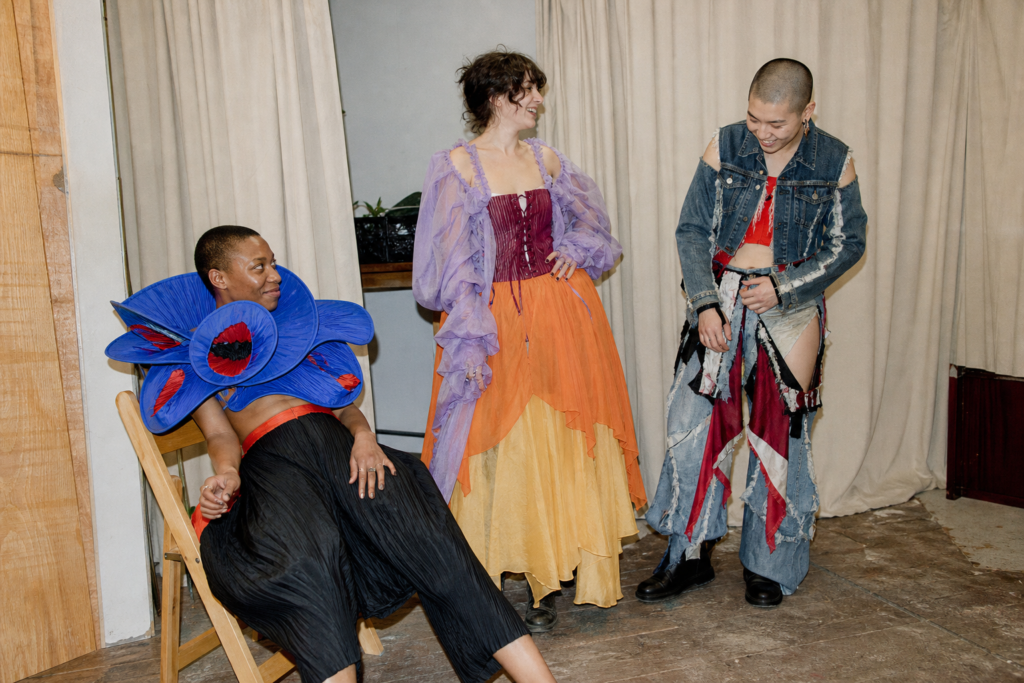
The new generation of responsible designers is rejecting the idea that sustainable fashion must conform to a recognisable look. Environmental responsibility no longer needs to be expressed through beige linen, botanical imagery or restrained minimalism. A garment can be colourful, technically complex or visually extravagant while still reflecting considered sourcing and production. This separation between appearance and responsibility is essential. Sustainability should exist within a product’s construction, materials and intended life—not function as a genre consumers are expected to identify on sight.
Fashion often presents unlimited choice as the foundation of creativity, yet many of its most original ideas emerge from restriction. Designers working with recovered materials, local resources and production limitations demonstrate that responsibility need not diminish imagination; it can sharpen it.
The objective is not to make fashion look sustainable. It is to transform material knowledge and practical constraints into something genuinely desirable—allowing responsible design to look like anything.